Recipes
Viking Herb Butter Recipe: Churn Your Own Butter from Cream
A Viking herb butter recipe that starts with the cream: churn real butter by hand, then fold in wild herbs. Ready in 30 minutes, with the history behind it.
Contents
Most compound butter recipes start in the wrong place: with a block of butter from the shop. This Viking herb butter recipe starts one step earlier, with a jar of cream and ten minutes of shaking, because that is where it gets interesting. Watch cream break into a golden lump and a puddle of buttermilk once, and you will never look at a 250 gram block the same way again. In the Norse world that transformation was a weekly chore and a form of wealth at once. Butter kept a household alive through winter, so it was salted hard, packed tight, and flavoured with whatever grew around the farm.
Butter as Currency in the North
Dairy mattered far more in the Viking Age than the usual images of roast meat and drinking horns suggest. Cattle, goats and sheep grazed summer pastures a long walk from the farmstead, and their milk was rarely drunk fresh. It was turned into sour milk, soft cheese, whey products such as Icelandic skyr, and butter. The logic is brutally simple. Fresh milk lasts hours without refrigeration. Salted butter lasts months.
The Old Norse word for it was smjǫr, still audible in Swedish “smör” and Norwegian “smør”. Butter went into wooden casks, heavily salted and pressed down to keep air out. In Ireland and Scotland, where Norse settlers put down roots, peat cutters still turn up wooden vessels packed with so-called bog butter. The finds span the Iron Age to the late medieval period, and several sit in the National Museum of Ireland today. Whether the bog worked as a larder, a hiding place or an offering site is still argued over. What is not in doubt is the underlying point: people buried butter because butter was worth burying.
Whoever controlled the stores held real power on a Norse farm. The mistress of the house carried the keys to the storerooms on her belt, and winter was decided less by weapons than by how many casks of butter, dried fish and grain stood in the dark.
What Herbs Did the Vikings Actually Have?
This is where kitchen romance meets archaeology. We know a surprising amount about the Norse spice shelf, because plant seeds survive beautifully in waterlogged settlement layers. Excavations at Hedeby, Birka, Viking Age York and the great ship burials have produced long seed lists.
| Herb | Evidence | Use |
|---|---|---|
| Leek and ramsons (geirlaukr) | saga texts, place names, common wild plant | seasoning, wound care |
| Dill | seed finds across northern European settlement layers | fish and dairy seasoning |
| Coriander | seeds in Viking Age trading contexts, including York | seasoning, partly imported |
| Mustard | seed finds, among them the Oseberg ship | sharp seasoning, paste |
| Garden cress (Lepidium sativum) | seeds from the Oseberg ship burial (buried 834) | fresh pepperiness |
| Angelica (hvönn) | protected as a garden crop in the Norwegian Gulathing law | vegetable, seasoning, medicine |
| Juniper | native across northern Europe, frequent in settlement debris | smoking and seasoning meat |
| Wild thyme | native to Scandinavia, no firm archaeological find | probably seasoning |
The leek deserves a closer look. Old Norse geirlaukr, literally “spear-leek”, shares its roots with English “garlic”, which descends from Old English garleac, and it turns up in a context you would not expect. In the Saga of Olaf the Holy, part of Snorri Sturluson’s Heimskringla, a healing woman tends the wounded through the night after the battle of Stiklestad in 1030. She feeds them a porridge of leeks and herbs.
If the smell of leek rose from a belly wound, the man was given up for lost. A crude test, but a clever one: it revealed whether the gut had been pierced.
Myth versus fact. The myth says Norse food was bland, unseasoned, all porridge and boiled meat. The fact is that they had salt, mustard, horseradish, leeks, dill, juniper and, along the trade routes, even coriander. What they lacked were the expensive eastern spices, pepper and cinnamon, which only arrived in quantity later in the Middle Ages. For the full picture of the northern spice cupboard, see our piece on herbs and spices in the Viking kitchen.
The Physics Behind the Viking Herb Butter Recipe
Butter is not magic, it is controlled damage. Cream is an emulsion of tiny fat droplets suspended in water, each wrapped in a fragile membrane. Agitate it long enough and those membranes rupture. The fat clumps together, the water is left behind, and cream becomes butter grains plus buttermilk. Norse households did this in wooden plunge churns, with far more patience than any of us have.
Two variables decide whether you get butter or frustration. Temperature first: cream churns best at roughly 15 to 18 degrees Celsius, or 59 to 64 Fahrenheit. Straight from the fridge it takes forever. Washing second: any buttermilk left in the grains will turn the butter rancid within days. The Vikings solved this with aggressive salting. We solve it with cold water and a spoon.
Ingredients
Makes about 250 g (roughly 9 oz):
- 500 ml (2 cups) heavy cream, at least 35 percent fat, ideally not ultra-pasteurised
- 1 heaped tsp fine sea salt
- 2 tbsp fresh ramsons or wild garlic, finely chopped (spring only; otherwise 2 small garlic cloves)
- 2 tbsp fresh dill, finely chopped
- 1 tbsp chives or young leek, thinly sliced
- 1 tsp mustard seeds, coarsely crushed in a mortar
- 4 to 5 juniper berries, ground fine
- 1 tsp honey (optional, softens the bite)
- Freshly ground black pepper to taste
You will also want a large screw-top jar or a stand mixer, a fine sieve, and a bowl of very cold water.
Instructions
- Temper the cream. Take it out of the fridge 30 to 60 minutes ahead so it comes up to cellar temperature. This is the step everyone skips and the one that matters most.
- Churn. Fill the jar no more than halfway, seal it, and shake hard. The cream stiffens, then goes grainy, then splits into a yellow lump swimming in thin white liquid. A stand mixer needs 5 to 8 minutes, a jar and a good arm 10 to 20.
- Drain the buttermilk. Pour everything through a sieve and keep the liquid. That is real buttermilk and it is superb in flatbread dough.
- Wash the butter. Drop the grains into cold water and press them against the side of the bowl with a spoon. The water clouds, so pour it off and repeat two or three times until it runs clear.
- Press and salt. Squeeze out the last moisture, pat the butter dry, and work in the sea salt thoroughly.
- Fold in the herbs. Add the ramsons, dill, chives, mustard seeds, juniper, honey and pepper, and knead it all through with a fork. Not in the machine, or the butter turns greasy and the herbs go to mush.
- Shape and chill. Roll the butter into a log in baking paper, twist the ends shut, and refrigerate for at least two hours. The flavours only come together once it has rested.
Tips & Variations
- Smoked version. A pinch of smoked salt or a spoon of finely crumbled smoked fish gives you a butter that tastes of firewood and salt water.
- Winter version. When nothing green is growing, dried herbs work, but use half the quantity and give the butter a full night in the fridge to open up.
- Honey and juniper butter. Halve the salt, double the honey, drop the green herbs entirely. Outstanding on warm bread and with game.
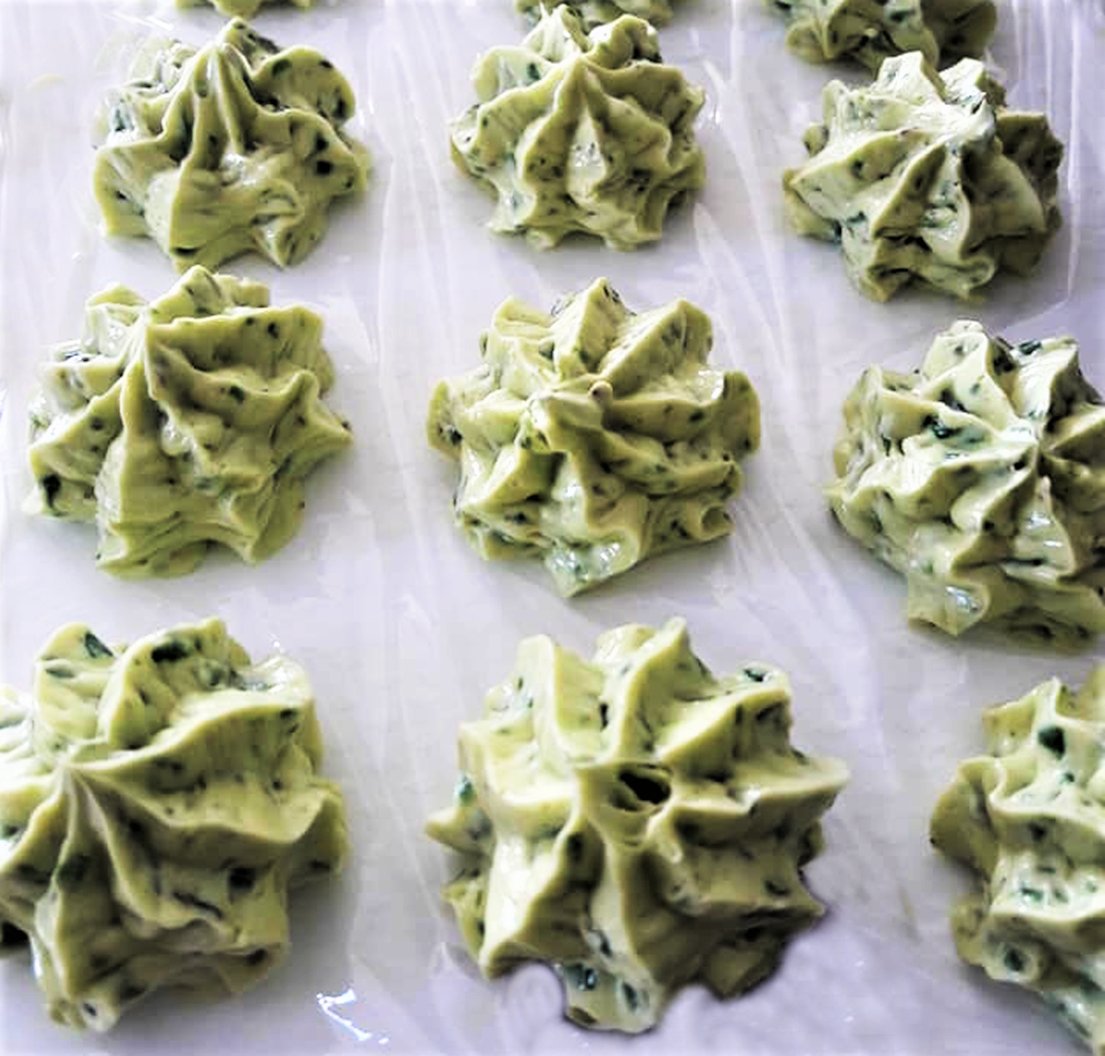
- Portion it. Pipe the butter into small rosettes on baking paper and freeze them: months of single servings for hot steak or baked fish.
- Keeping. Well washed and properly salted, it holds about a week in the fridge, three months in the freezer.
- Butter refusing to form? The cream was too warm or too lean. Below 30 percent fat little happens, and the leaner the cream, the less butter you are left with at the end. Ultra-pasteurised cream often will not churn at all.
If this has given you an appetite for more: the recipe is a taste of a much larger collection. Our cookbook “Viking Feast” gathers 141 recipes from the Norse kitchen, from flatbread and feast-day roasts to brewing your own mead. See the cookbook
Why It Is Worth the Effort
Our honest verdict after several rounds of testing: the historical thrill is not in the herb blend. Good herb butter tastes of green, salt and fat, and it always has. The thrill is in the churning. Once you have felt how long half a litre of cream takes to yield a good 200 grams of butter, you understand why butter counted as wealth in the North. A single cask represented weeks of a farm’s milk.
There is a second, practical payoff. Home-churned butter tastes stronger than the industrial version because nothing about it is standardised. It shifts with the cream, the season and what the cow has been eating. That variability, which the dairy industry spent a century engineering away, was simply normal to the people who made it a thousand years ago.
It is at its best on something equally honest. A warm barley flatbread straight out of the pan, a thick smear of herb butter melting into it, and the evening is sorted. The flatbread takes 30 minutes and is written up in our Viking flatbread recipe.
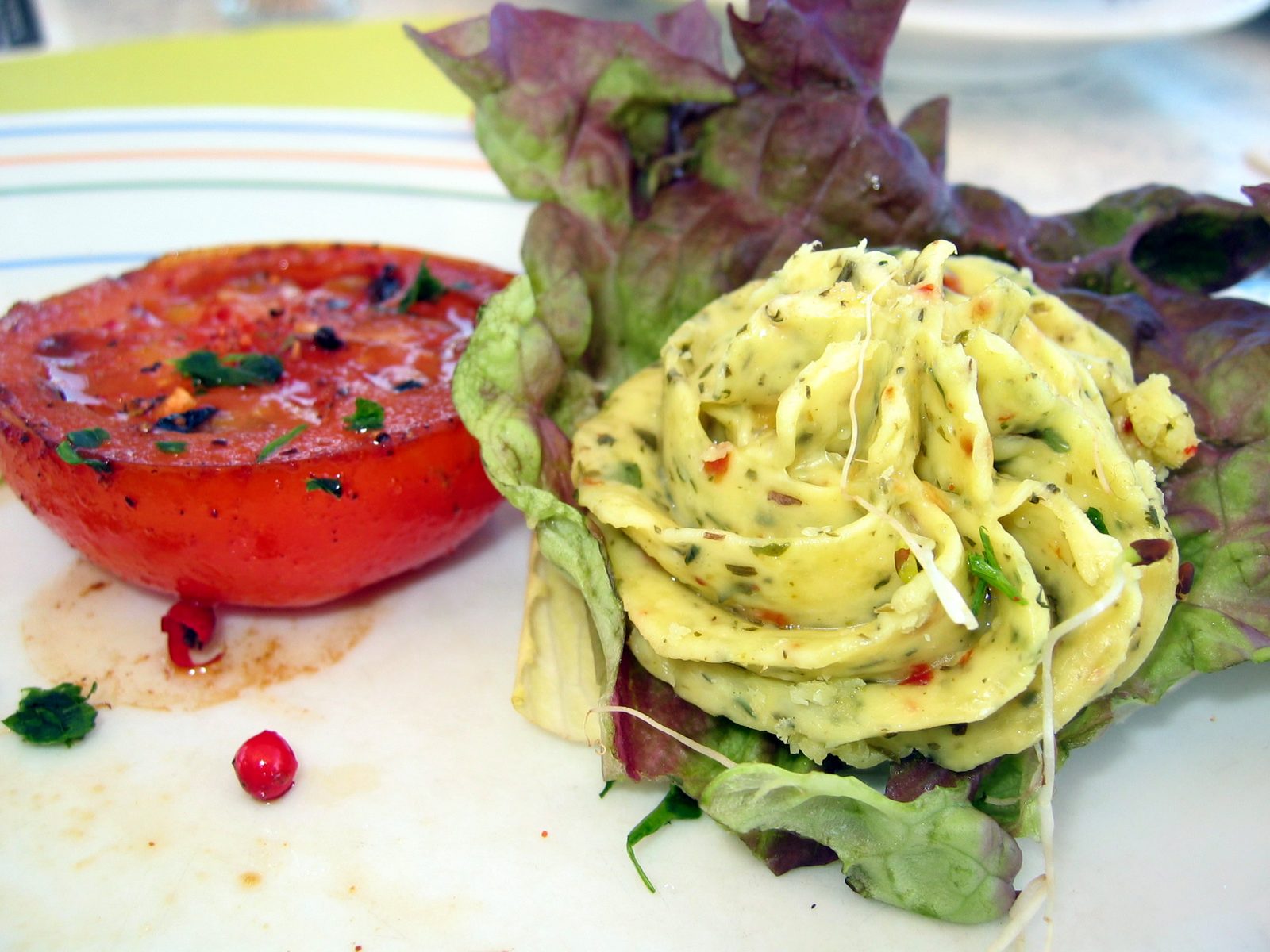
Images: cover by ChrisHH (CC BY-SA 3.0), wild garlic butter by Sacha47 (CC BY-SA 4.0), via Wikimedia Commons