Recipes
How Did Vikings Season Their Food? Herbs and Spices of the North
Viking herbs and spices in real Norse cooking: salt, dill, juniper and mustard, what the finds really show, plus a recipe for Nordic herb salt with juniper.

Contents
There is a stubborn picture in most people’s heads: the North ate grey. Boiled meat, thin porridge, a pinch of salt on a lucky day. Sieve through what archaeologists pull from Norse settlement layers and that picture falls apart. Viking herbs and spices existed, and cooking in the North had flavour, just not the flavours in our spice rack today. It seasoned differently, not less.
And it leaned hard on one thing we now take for granted: salt. At the end of this article you will find a recipe built around exactly that, a Nordic herb salt with juniper and dill, twenty minutes of work for a jar that lasts months.
Salt Was the Most Expensive Seasoning in the North
Salt in the Viking Age was not a shaker on the table. It was infrastructure. It decided whether a household made it through winter, because salted fish and meat meant stores, and stores meant survival.
The problem is geography. Scandinavia has no convenient inland salt deposits, so salt had to be made, in two laborious ways. One was boiling seawater in shallow vessels until only a crust remained. The other was burning salt-rich seaweed, leaching the ash and boiling down the brine. Both eat firewood: making salt meant burning for days the wood you needed for cooking and heating.
That explains a great deal about Norse food. It is why the North became so good at low-salt preservation: fish wind-dried into stockfish, meat smoked over the hearth, dairy soured in whey. Salt went where it was truly necessary; leftovers went into flavour.
The Nordweg editorial team keeps noticing how thoroughly popular culture inverts this. The imagined Viking buries a mountain of meat in salt. The likelier reality is the opposite: salt was scarce enough to ration, which is exactly why a well-seasoned dish quietly announced a prosperous household.
Viking Herbs and Spices: What Norse Cooking Really Used
The second half of the answer comes out of the soil. Archaeobotany, the study of seeds and plant remains from settlement and burial layers, has identified a set of flavouring plants across the Norse world. The names that recur are dill, mustard, horseradish, caraway, juniper and coriander, plus wild mugwort and ramsons (wild garlic), which nobody had to cultivate because they grew along the wood edge anyway.
One especially well known context is the Oseberg burial in Norway. Alongside timber, textiles and equipment, the ship grave held plant remains, among them cress and caraway. Such finds never tell us how a dish tasted, but they do tell us these plants were part of daily life and worth taking along.
The written sources barely help. The Icelandic sagas describe feasts, ale and arguments across the table, but stay nearly silent on seasoning. Be sceptical of any article painting a detailed Viking spice cupboard: no source supports that. Seeds, pollen and plant fragments are what we actually have.
Kitchen and medicine were not cleanly separated here either: the same plants that went into the pot served as household remedies. For the wider context, see our overview of the Viking diet.

Image credit: Bff (CC BY-SA 3.0), via Wikimedia Commons
| Herb/spice | attested in the North as | Flavour | how to use it today |
|---|---|---|---|
| Dill | plant and seed remains from settlement layers | fresh, faintly aniseed | fish, herb salt, sour cream |
| Mustard | seed finds in settlement contexts | sharp, nutty once toasted | herb salt, cures, roasts |
| Horseradish | plant remains from Norse layers | burning heat, sweet finish | freshly grated over fish and beef |
| Caraway | seed finds, including the Oseberg burial | earthy, warm | cabbage, bread, cheese, herb salt |
| Juniper | berries and wood at Norse sites | resinous, woodland, slightly bitter | game, sauerkraut, herb salt |
| Coriander | seed finds in settlement and trading-site layers | citrus, warm | herb salt, bread, root vegetables |
| Mugwort | wild plant, remains at settlement sites | bitter, strongly aromatic | very sparingly with fatty roasts |
| Ramsons | wild plant, remains in settlement contexts | garlicky but mild | butter, curd cheese, spring salt |
| Cress | seeds in the Oseberg burial | sharp, peppery | fresh over eggs, bread and soup |
Pepper, Cinnamon and the Long Road North
So what about the classics? Pepper and cinnamon were known in the North. Viking Age trade routes ran a long way, down the Russian rivers to Byzantium and into the Islamic world, and silver and silk were not the only cargo. Spices travelled too.
But everything arriving that way was luxury. A pouch of pepper carried a value no farm would waste on a weekday meal. Such imports belonged to the people who wore silk and silver, and they turned up at feasts, not in the daily porridge. Recreate Viking cooking with them and you are recreating an aristocratic table, not an ordinary one.
You do not need them anyway. Juniper, dill, mustard and caraway carry a dish on their own, and they are superb with a warm Viking flatbread from the pan. The recipe below is a modern kitchen version, not a surviving original from the Viking Age, because no such thing exists. What is old about it are the plants and the principle.
Ingredients
For one jar, about 125 g of herb salt:
- 100 g coarse sea salt
- 2 tbsp dried dill tips (about 6 g)
- 1 tbsp juniper berries (about 8 g, roughly 15 berries)
- 1 tsp whole caraway seeds
- 1 tsp yellow mustard seeds
- 1 tsp coriander seeds
- 1 tsp dried ramsons, or dried chives
- 1 small pinch of dried mugwort (optional, very sparingly)
You will also need a mortar and pestle and a clean, bone-dry screw-top jar. On ratios, if you want to improvise: roughly four parts salt to one part dried herbs and seeds by weight. More herbs taste stronger but clump more easily, because herbs carry residual moisture.
Instructions
- Toast the seeds. Toast the juniper berries, caraway, mustard and coriander seeds in a dry pan over medium heat for 1 to 2 minutes, until clearly fragrant. Tip them onto a cold plate to cool.
- Crack the juniper. Crush the berries roughly, never to a powder. Juniper is resinous and should stay in small pieces so it releases flavour during cooking.
- Grind with the salt. Add the toasted seeds to the mortar with the coarse sea salt and work them together. The salt acts as an abrasive and soaks up the oils as they release. Keep the mixture visibly coarse.
- Fold in the herbs. Only now stir in the dill, ramsons and mugwort with a spoon. Grinding turns the leaves to dust and the blend goes grey instead of green.
- Dry it out. Spread the mixture thinly on a baking tray and dry it at 50 C for about 10 minutes, oven door propped open, then cool completely. This pulls the last moisture out of the herbs and is the trick behind a jar that keeps.
- Jar it. Transfer the cold salt into a dry screw-top jar, seal and store cool and dark. It stays aromatic for around six months. Salt cannot spoil, but the herbs lose their perfume.
Tips & Variations
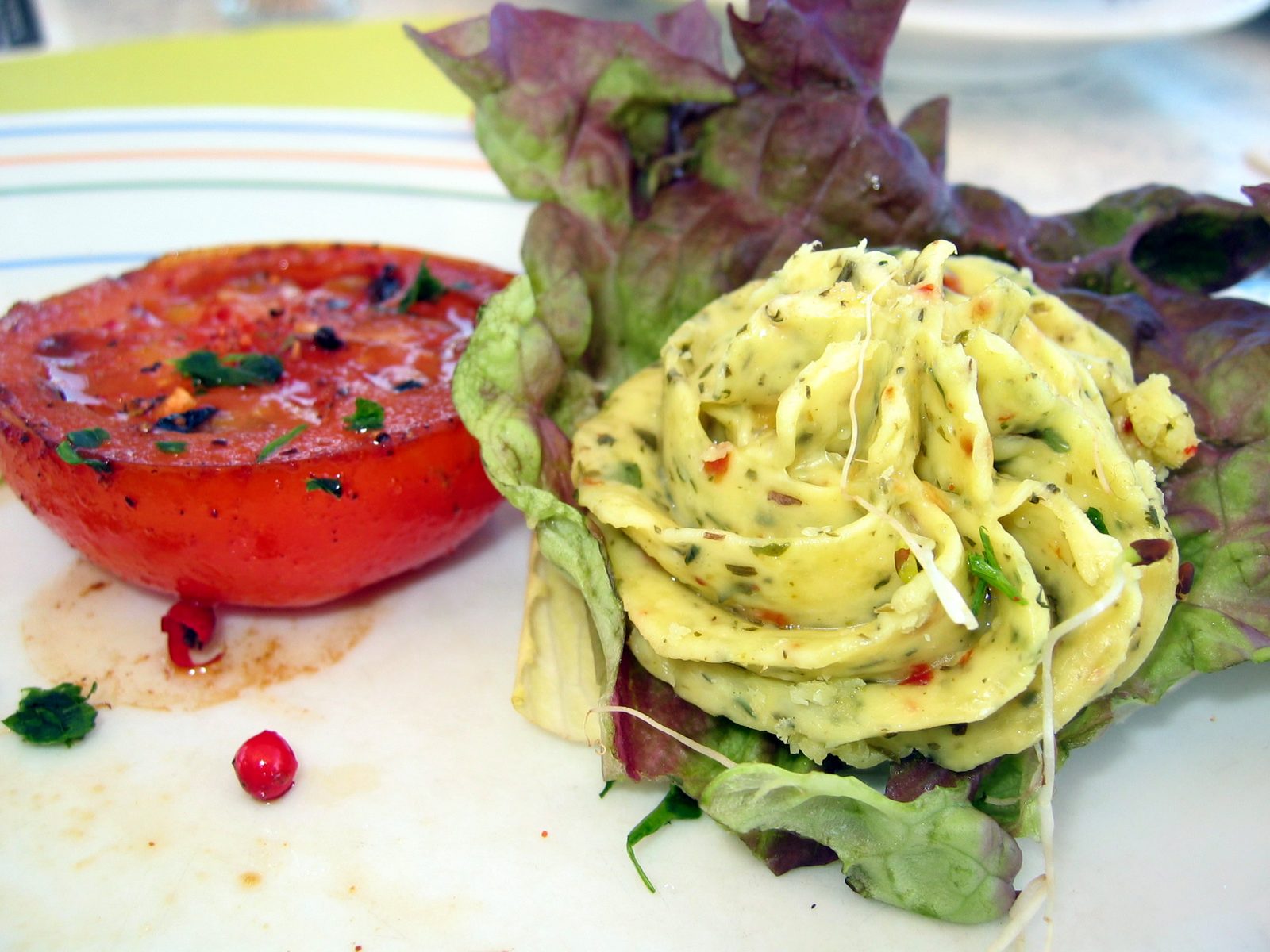
- Turn it into herb butter: Beat 250 g soft butter with 2 heaped tsp of the herb salt, 1 tbsp chopped dill and 4 crushed juniper berries. Roll it in cling film and chill at least 2 hours. It keeps a week in the fridge, three months frozen. On fish, on lamb, or melting into warm flatbread, it is hard to beat.
- Using fresh herbs: Swap the dried dill for 20 g fresh dill, but mix it into the salt first and dry the batch at 50 C for 60 to 90 minutes. Skip that and the jar will clump and eventually mould.
- Horseradish version: Stir in 1 tsp horseradish powder after grinding. Freshly grated horseradish has no place in a storage jar, so add that just before serving.
- Coarse grilling salt: Crack everything briefly and keep the grind rougher. Scattered over meat off the grill at the last second, it is a small revelation.
- Clumped? Residual moisture got in, usually off a damp spoon. Spread the blend out for another 10 minutes at 50 C, cool it, break it up and refill the jar. Only ever use a dry spoon.
If this has given you an appetite for more of the northern kitchen, it comes from the same workshop as our collection. The cookbook “Viking Feast - The Great Viking Cookbook” gathers 141 recipes, from stews and breads to roasts and the drinks that belong with them. To the cookbook
A Jar of the North on Your Shelf
The honest answer to how Vikings seasoned their food: with whatever grew outside the door, and with salt they had worked hard to make. No cinnamon, no peppercorn rack, but juniper from the woods, dill from the garden, mustard from their own fields.
That is why this herb salt works. It does not pretend to be a thousand years old. It takes the plants genuinely in use back then into a kitchen with an oven and a screw-top jar. Scatter it over fried fish and somebody on the Oslofjord a thousand years ago would have recognised the flavour at once.