Recipes
How to Make Skyr: A Recipe from the Viking Age
How to make skyr at home: an easy recipe with just 3 ingredients, plus the real story of the Viking dairy that sailed to Iceland and survived 1,000 years.
Contents
Walk into any supermarket today and you will find skyr sitting somewhere between the yogurt and the cottage cheese, usually wearing a label that shouts about protein and Iceland. What the label never tells you is that this quiet white tub holds one of the oldest foods of the North. Norse settlers carried skyr across the Atlantic in the 9th century, and on their island at the edge of the habitable world it survived, almost unchanged, for more than a thousand years. Here is the part we love most: learning how to make skyr takes exactly three ingredients - milk, a starter cup of skyr, and patience. No machines, nothing exotic.
What Skyr Actually Is
Technically speaking, skyr is not yogurt at all. It is a fresh cheese. The milk is soured with live cultures, traditionally set with a tiny amount of rennet, and then strained until only a thick, silky mass remains. That straining step is what separates skyr from yogurt: most of the liquid whey drains away, leaving concentrated milk protein behind - roughly ten grams per 100 grams, with almost no fat.
The leanness is no modern diet trick. On a Norse farm, cream was far too precious to leave in the milk. It was skimmed off and churned into butter, one of the great trade and storage goods of the Viking Age. Skyr was made from what remained - skimmed milk - and that thrifty leftover logic accidentally produced the kind of food every fitness app celebrates today.
| Skyr | Yogurt | Quark | |
|---|---|---|---|
| Method | cultured, rennet, strained | cultured, not strained | set with rennet, strained |
| Milk | traditionally skimmed | whole or skimmed | whole or skimmed |
| Texture | very thick, creamy | pourable to set | thick, slightly grainy |
| Flavour | mildly tart | tangy | neutral to mild |
| Protein | very high | medium | high |
The Dairy That Crossed the North Atlantic
When settlers began leaving Norway for Iceland around the year 870, their ships carried more than tools and timber. They carried cattle, sheep, and goats, because everyone understood that grain would struggle on the new island. Livestock became the backbone of Icelandic life, and summer milk its most valuable harvest. Fresh milk, of course, does not keep. The Norse answer was controlled souring: milk became butter, cheese, and skyr, which could sit in a cool storeroom for months.
The sagas show how completely skyr belonged to everyday life. In Egil’s Saga, the poet Egil Skallagrimsson arrives at the farm of a man named Armod, who serves the thirsty travellers big bowls of skyr while claiming there is no ale in the house. The evening famously ends in one of the most disgusting scenes in saga literature, but the telling detail is how ordinary the skyr is - the plain food you give guests you do not want to impress. Grettir’s Saga goes one better: during a scuffle between Grettir and the farmer Audun, a leather bag of skyr bursts over the hero, and the saga notes drily that Grettir considered the mess a greater insult than many a wound.
Archaeology backs up the stories with unusual precision. In the valley of Thjorsardalur in southern Iceland, an eruption of the volcano Hekla buried several farms under ash in 1104, among them a farmstead called Stong. When archaeologists excavated the site in 1939, they found a pantry beside the main hall with large vats sunk into the floor - generally interpreted as containers for skyr and for provisions preserved in soured whey. A Viking Age dairy cellar, sealed like a northern Pompeii.
And here is the strangest turn in the whole story: mainland Scandinavia eventually forgot skyr altogether. Only Iceland kept making it, household by household, century after century, until the settlers’ survival food resurfaced as a global trend product. If you want the wider picture of what actually landed on Norse tables, our guide to the Viking diet lays it all out.
Did you know? The whey left over from skyr-making was nearly as important as the skyr itself. Fermented into sour “syra”, it served as a drink, was mixed with water as a thirst-quencher during haymaking, and worked as a preservative in which meat and fish kept for months.
How to Make Skyr: What You Need for This Recipe
First, the good news: a single cup of plain store-bought skyr is all the culture you need. It contains live bacteria that will seed your milk, exactly the way Icelandic farm wives stirred a remnant of the old batch into the new one for centuries. Check the label - it should say “plain” or “natural”, and the ingredient list should name nothing but milk and cultures.
Second, a kitchen thermometer. The cultures do their best work between 100 and 104 F (38 to 40 C), and they die above about 113 F (45 C). If you have ever tried making mead at home, you already know the rule: fermentation means giving tiny living things good working conditions and then leaving them alone.
Optional, but traditional: a few drops of liquid rennet from a pharmacy or online shop. Rennet sets the skyr firmer and brings it closer to the Icelandic original. The recipe works without it - the result is simply softer, more like an extra-thick yogurt.
Ingredients
Makes about 800 g (1.75 lb) of skyr:
- 2 liters (8.5 cups) low-fat milk (traditionally, skimmed milk is used)
- 150 g (2/3 cup) plain skyr with live cultures (as a starter)
- 3-4 drops liquid rennet (optional, for the classic firm texture)
You will also need: a large pot, a kitchen thermometer, a fine sieve, a clean muslin or tea towel, and a large bowl.
Instructions
- Heat the milk. Slowly bring the milk to about 195 F (90 C) and hold it there for 5 minutes, stirring so nothing scorches. This step gives you a thicker, more stable set later.
- Let it cool. Take the pot off the heat and let the milk cool to 100-104 F (39-40 C). Depending on your kitchen this takes 30 to 45 minutes - trust the thermometer, not the clock.
- Stir in the starter. Whisk the skyr with a little of the warm milk in a cup until smooth, then stir it back into the pot. Add the rennet now, if using.
- Let it ripen. Cover the pot, wrap it in a blanket or set it in the oven with just the light on, and leave it for 5 to 12 hours until the milk has set. The longer it ripens, the tangier it gets.
- Strain. Line the sieve with the cloth and hang it over the bowl. Spoon in the set milk and let it drain in the fridge for 6 to 12 hours.
- Check and whisk. Your skyr is ready when it is thick and spreadable. Whisk it briefly until smooth; a small pinch of salt rounds out the flavour nicely.
- Jar it. Fill into clean jars. It keeps in the fridge for about a week - and 150 g of it is your starter for the next batch.
Tips & Variations
- Creamier: Whole milk gives a softer, rounder skyr - less traditional, entirely delicious.
- Firmer: Strain longer. After 24 hours in the cloth you get an almost cream-cheese texture that even works for dips.
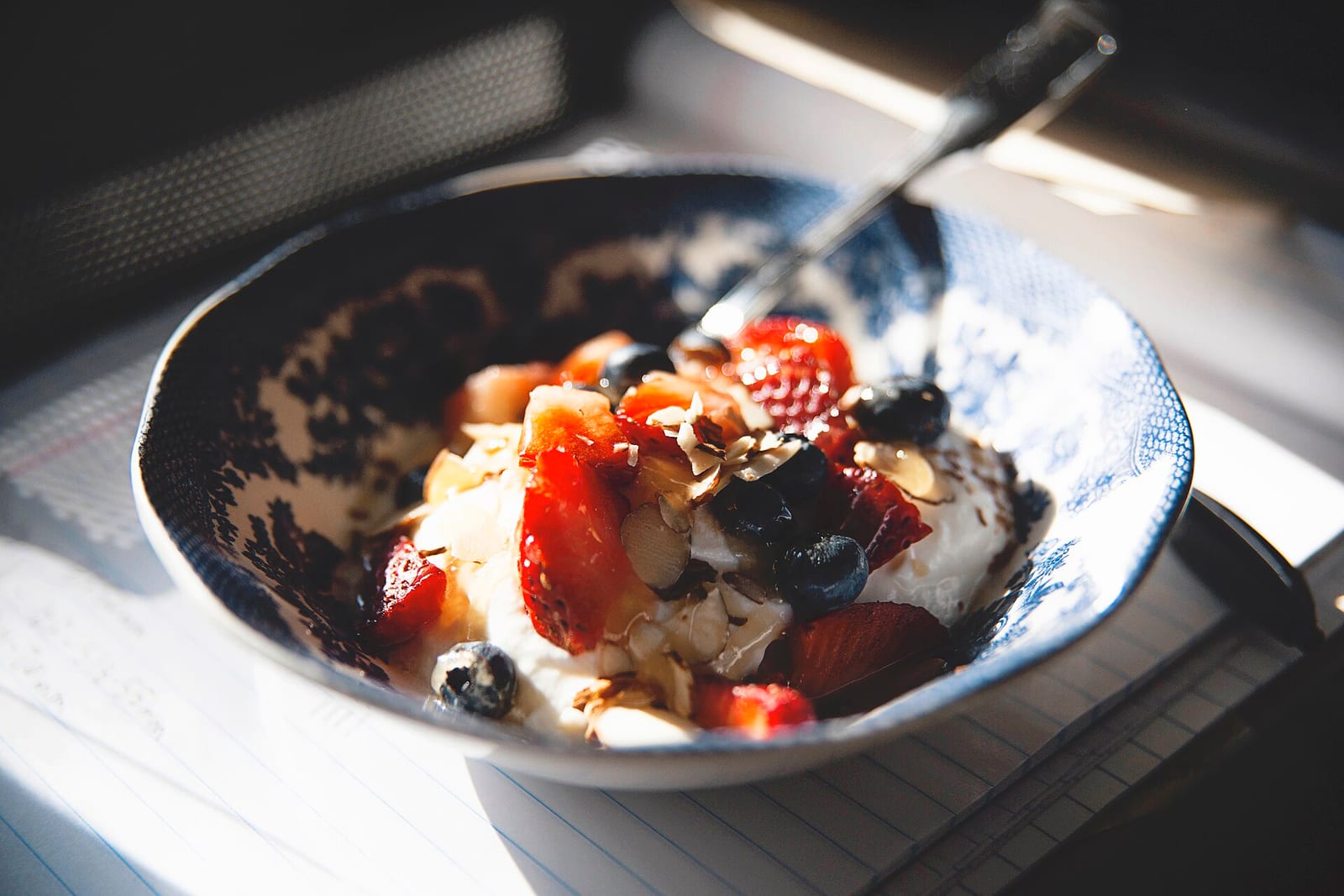
- Serve it the Norse way: With fresh berries, a spoonful of honey, and a few rolled oats. Icelanders still love a splash of cream poured over the top.
- Keep the whey: It replaces water in bread dough, sharpens up smoothies, and adds depth to soups.
- Didn’t set? The milk was probably still too hot when you added the starter and the cultures died. Next time, cool it stubbornly below 108 F (42 C) before inoculating.
- Too sour? Shorten the ripening time and move the batch to the fridge earlier - cold stops the souring.
If this recipe leaves you hungry for more, it is only a taste of the collection: our cookbook “Viking Feast” gathers 141 recipes of the Norse kitchen, from flatbread and feast-day roasts to mead. See the cookbook
A Spoonful of the Viking Age
Our honest verdict: homemade skyr does not taste like the supermarket version - it is a little rougher, tangier, and frankly more interesting. The mild industrial skyr of today is a modern interpretation; the historical descriptions and Iceland’s own tradition point to a noticeably sourer product, closer to syra and soured milk. Your homemade batch lands somewhere in between, and it almost certainly comes nearer to what sat in the vats of a farm like Stong than anything you can buy.
It is also a small masterclass in Norse storeroom logic: skimmed leftover milk becomes a food that fills you up, keeps for ages, and hands you a useful second product on the way out. Watch one batch of your own drip slowly through the cloth and you will understand why Icelanders held on to this craft for a thousand years. A recipe that carried a famine-prone island through its dark winters has more than earned a spot in a modern kitchen.
Image source: Peter Hershey (CC0), via Wikimedia Commons