Recipes
Fried Herring Recipe: The Fish That Fed the Viking North
A fried herring recipe done the Nordic way: rye flour, butter and juniper, plus the long history of the humble fish that fed northern Europe for centuries.
Contents
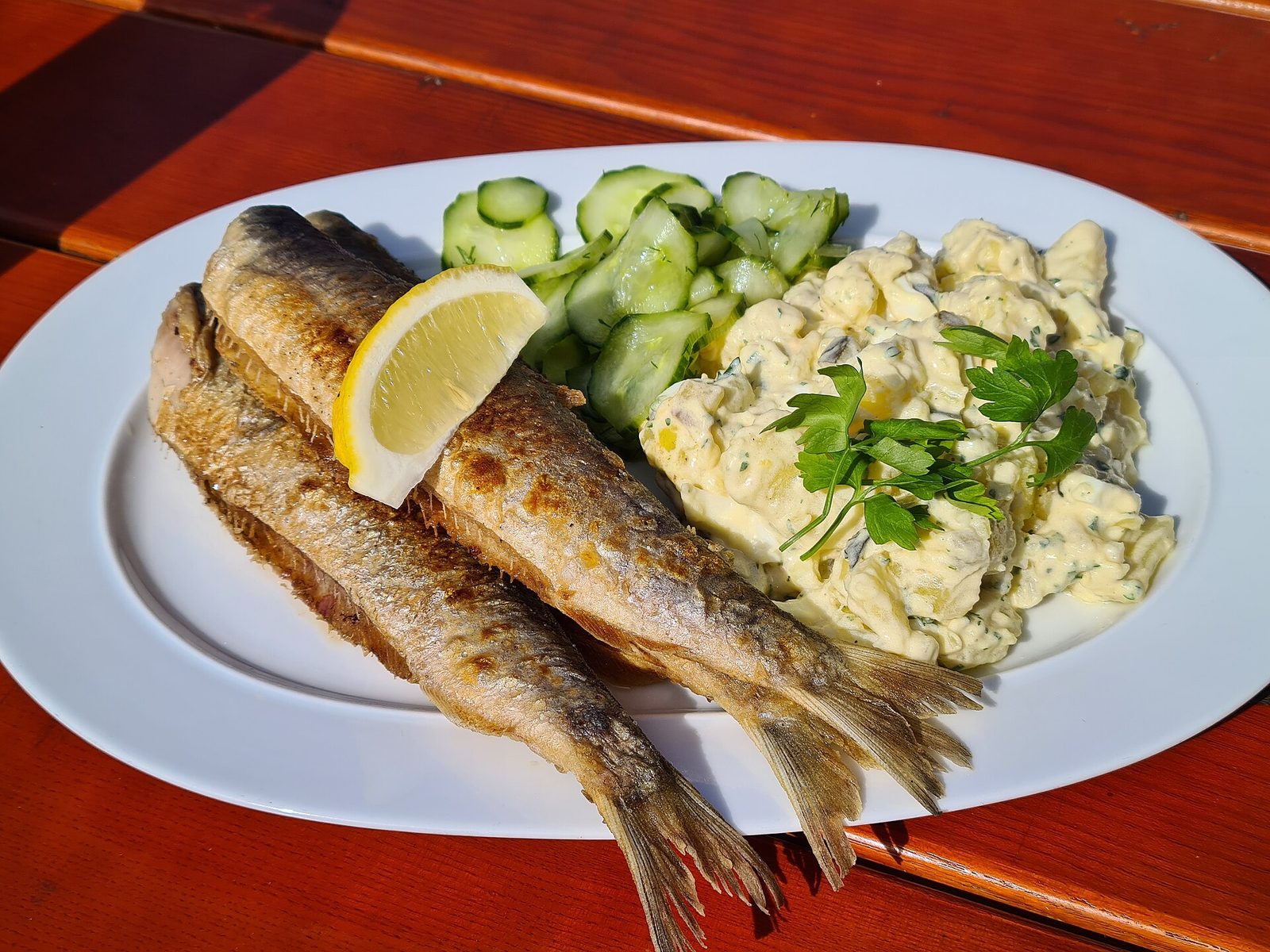
Any decent fried herring recipe comes down to four things: flour, fat, heat, and a fish fresh enough to deserve them. No marinade, no special kit, no clever technique. And yet herring turns out pale and falls apart in pans all over northern Europe, almost always for the same three reasons. This one fixes them. Rye flour instead of wheat, clarified butter before whole butter, and a pan you leave alone. What lands on the plate also carries an unusually long history, because no other fish shaped the North the way herring did.
The Fish That Built Northern Towns
Herring has one property that made it priceless to any society without refrigeration: it arrives in shoals, packed together in numbers a single net haul could lift out of the water. Sit on the right coast at the right time of year and within weeks you had enough protein to carry a settlement through half a winter. Better still, herring is oily. It delivered calories as well as protein, which matters enormously in a climate of long, dark winters.
That is why the important places of the Viking North sat where the shoals ran. Hedeby, on the Schlei inlet in what is now northern Germany, was the largest trading town of the Norse world, built on a narrow arm of the Baltic the fish passed through. Excavations there have produced fish bone in vast quantities, and the picture it paints is not of a delicacy but of ordinary daily food. The wider story of how that town worked and why it vanished is in our piece on Hedeby.
The most interesting evidence comes from further west. In English towns the fish bone record flips sharply around the year 1000: freshwater species collapse, marine species surge. Archaeologists call this the fish event horizon, described by James Barrett and colleagues in Antiquity in 2004. Herring and cod become the backbone of an urban food supply that no longer depends on the local river. It is one of the rare dietary shifts you can pin to a date in the ground.
A Short Herring Timeline
- 8th to 10th century: Hedeby and Birka grow into major trading places. Fish bone from both shows marine fish as an everyday staple, not a luxury.
- Around 1000: The fish event horizon. In English ports and towns, fish consumption shifts from river to sea within a remarkably short window.
- 12th to 16th century: The Scania Market at Skanör and Falsterbo becomes the biggest fish market in Europe, shipping salted herring by the barrel across the continent. Hanseatic territory, though, not the Viking Age.
- Today: Herring has gone from northern currency to bargain-bin fish, despite being one of the most rewarding things you can put in a pan.
Which Herring Belongs in the Pan
Fishmongers sell several quite different things under the single word herring, and only some of them suit this method. The difference decides your heat, your timing and your result.
| Type | Size | Oil content | Pan frying |
|---|---|---|---|
| Atlantic herring, fresh | 10 to 14 in (25 to 35 cm) | high, varies by season | ideal, the default for this recipe |
| Baltic herring, Swedish strömming | 6 to 8 in (15 to 20 cm) | noticeably lower | excellent, needs 2 to 3 minutes less |
| Matjes | filleted | high | unsuitable, already cured and salted |
| Barrel salt herring | whole or filleted | high | only after 12 to 24 hours of soaking |
| Kipper or bloater, smoked | whole | high | unsuitable, already cooked |
Baltic herring is not a different species, incidentally, just the same fish living in harder circumstances. The northern Baltic is less salty and less productive, so it stays smaller and leaner. Sweden gives it its own name, strömming, and its own tradition, which we come back to at the end.
Myth and Fact
Plenty of claims circulate about herring and Norse cooking, and a recipe that leans on history owes the reader an honest line about where the reconstruction begins.
| Claim | Where it stands |
|---|---|
| Vikings pan-fried their herring | Misleading. Boiling and cooking over embers were far more common. Flat iron baking plates are known from Norwegian finds, but the deep pan with plenty of fat is a later arrival. |
| The great herring trade was a Viking invention | No. Bulk trade in barrelled salt herring belongs to the Hanseatic League from the 12th century on. The Viking Age caught herring in quantity but never traded it on that scale. |
| Salt was easy to come by in the North | Wrong. Salt had to be boiled laboriously out of seawater and stayed expensive, which is precisely why so much northern food was dried or smoked rather than brined. |
| Herring always needs soaking before frying | Only barrel salt herring. Fresh herring gets a rinse, a thorough pat dry, and nothing else. |
| You need wheat flour for a proper crust | Not in the North. Rye was the common bread grain there for centuries, and on herring it gives the better crust by some margin. |
Three Things That Decide a Good Fried Herring
The flour. Rye is not nostalgia here, it genuinely behaves differently. It develops far less gluten, pulls more surface moisture off the fish and browns earlier. You get a thin, almost sandy crust rather than a soggy coating. Rye’s place as the everyday northern grain shows up in the bread too, and we have a rye bread recipe built on the same logic.
The fat and the heat. Butter on its own burns long before the fish is done, so this recipe starts with clarified butter and brings whole butter in only for the last ninety seconds. By then it browns to a nutty finish instead of turning black. The pan has to be properly hot before anything goes in. Lay fish into a lukewarm pan and the flour simply drinks the fat and welds itself to the base.
Leaving it alone. The most common mistake is nervous flipping. Herring flesh is soft and oily, and it falls apart the moment you push it around. Lay it in, leave it for three to four minutes, turn once, done. Our own view after several rounds: half-filling the pan and frying in two batches beats cramming everything in, by a wide margin. Too much cold fish drops the pan temperature, the herring steams in its own juices, and the crust never arrives.
Ingredients
Serves 4:
- 8 whole herrings, cleaned, butterflied and boned, about 5 to 7 oz (150 to 200 g) each, or 8 skin-on fillets
- 1 cup (120 g) wholemeal rye flour
- 2 tsp salt
- 1 tsp freshly ground black pepper
- 1 tsp mustard seed, coarsely crushed
- 1/2 tsp juniper berries, finely crushed
- 3 tbsp clarified butter or ghee
- 2 tbsp (30 g) butter
- 1 bunch dill
- 1 lemon
- 1 red onion, thinly sliced into rings
Instructions
- Prepare the fish. Rinse the herrings briefly in cold water and pat them very dry. Wet fish steams instead of browning. Do not rush this step.
- Mix the coating. Combine the rye flour with salt, pepper, crushed mustard seed and juniper on a wide plate.
- Dredge. Turn each herring through the seasoned flour on both sides, then knock off the excess firmly. Anything loosely clinging will only scorch later.
- Heat the pan. Warm the clarified butter in a heavy pan over medium-high heat until it foams lightly and a pinch of flour browns on contact with a hiss.
- Fry the first side. Lay the fish in skin side down, no more than four at a time, and fry for 3 to 4 minutes without moving them.
- Turn and butter. Flip once, add the whole butter and fry for another 2 to 3 minutes, spooning the foaming butter over the fish as it goes.
- Serve. Finish with lemon juice, scatter generously with dill and red onion rings, and serve straight away with boiled potatoes or potato salad.
Worth knowing: Herring ran so closely with the calendar that entire communities lived by its migrations. A shoal that failed to show up was not a bad week, it was a bad year. Historians link the decline of the Scania Market in the late Middle Ages partly to the herring changing where it swam.
Tips & Variations
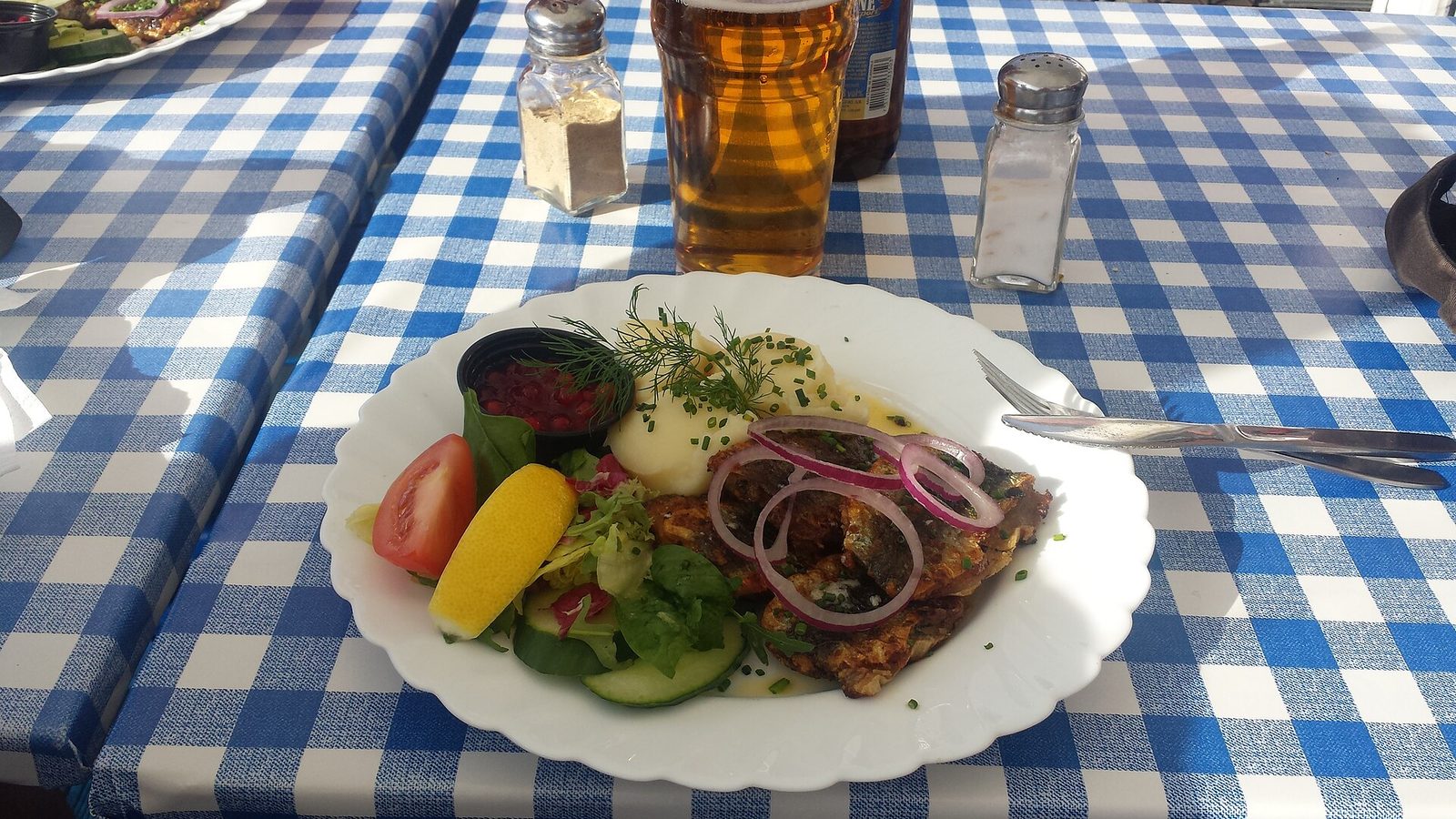
- The Swedish way. Two strömming are laid flesh to flesh with dill between them and fried as one parcel, served with mashed potato, lingonberries and raw red onion. That is what the photo above shows, and it is the best use for small herring.
- Pickle them afterwards. Put the warm fried herrings into a liquor of 200 ml vinegar, 100 ml water, 80 g sugar, bay, allspice and onion rings. Two days in the fridge gives you stekt sill i ättika, which keeps for a week.
- Other fish. Mackerel and fresh sardines take the same treatment. Both are oilier still, so give them an extra minute and a little more acid at the end.
- Milder version. Leave out the mustard seed and work a teaspoon of dried dill into the flour instead.
- Reheating. Fried herring goes tough when warmed through. Eat leftovers cold on rye bread with mustard.
- The pan. A well-seasoned cast iron pan beats non-stick here, because it holds its heat when cold fish hits the surface.
If this way of cooking appeals to you, the recipe is one of 141 in our cookbook Viking Feast, which gathers the fish, breads, stews and feast dishes of the North in one place. See the cookbook
Fried herring is a fairly exact portrait of what northern cooking is about. A cheap fish, a coarse flour, hot fat and a squeeze of acid, and out of that comes a dish that needs no apology. The Viking Age would not have made it quite like this, it is only fair to say so. But it would have recognised the fish and the grain.
Image credits: Benreis (CC BY-SA 4.0) and Rickard Törnblad (CC BY-SA 4.0), via Wikimedia Commons