Daily Life & Culture
Hedeby: The Lost Trading City of the Vikings
Hedeby near Schleswig was Northern Europe's largest Viking Age trading city - a semicircular rampart, Arabic coins, a ship find, and its violent end.

Contents
- The Location: A Geographic Stroke of Luck
- A City of Merchants and Craftsmen
- Minting Its Own Money for Long-Distance Trade
- Royal Attention: Hedeby and the Danish Crown
- What the Graves Reveal About the Residents
- The Ship in the Harbor Basin
- The Violent End of a Trading Metropolis
- What Remains of Hedeby Today
- Hedeby Compared to Other Trading Towns
- Our Take
Where lush meadows and a semicircular earthen rampart now sit beside the Schlei inlet near Schleswig, one of Northern Europe’s largest cities once pulsed with life over a thousand years ago. Hedeby, known in German as Haithabu, was a Viking Age crossroads between the North Sea and the Baltic, between Scandinavia, the Frankish Empire, and the Islamic world - a city that has almost entirely vanished underground today, yet still reveals more about everyday Viking life than almost any other site.
The Location: A Geographic Stroke of Luck
Hedeby grew up in a nearly perfect strategic spot: at the inner end of the Schlei, a long Baltic inlet, just a few kilometers from the narrowest point of the Jutland peninsula. Goods that were carried overland to reach the North Sea from there saved merchants the dangerous, time-consuming voyage around Jutland through the open, storm-prone Skagerrak. That combination of a Baltic harbor and a short land route to the North Sea made Hedeby one of the most important transshipment points for long-distance trade throughout the entire Viking Age.
The settlement was protected by a massive, semicircular earthen rampart, the Halbkreiswall, which sealed the city off on the landward side while the Schlei itself formed the open flank. This rampart was part of an even larger defensive system, the Danevirke, a chain of walls and ditches that secured the entire Jutland isthmus against attacks from the south.
A City of Merchants and Craftsmen
Estimates suggest that between 1,000 and 1,500 people lived in Hedeby at its peak in the 9th and 10th centuries - a substantial population for the time, making Hedeby one of the largest settlements in all of Northern Europe. Archaeological excavations, which began as early as the 19th century and intensified especially between the 1960s and 1980s under archaeologist Kurt Schietzel, continue to yield an unusually detailed picture of urban daily life to this day.
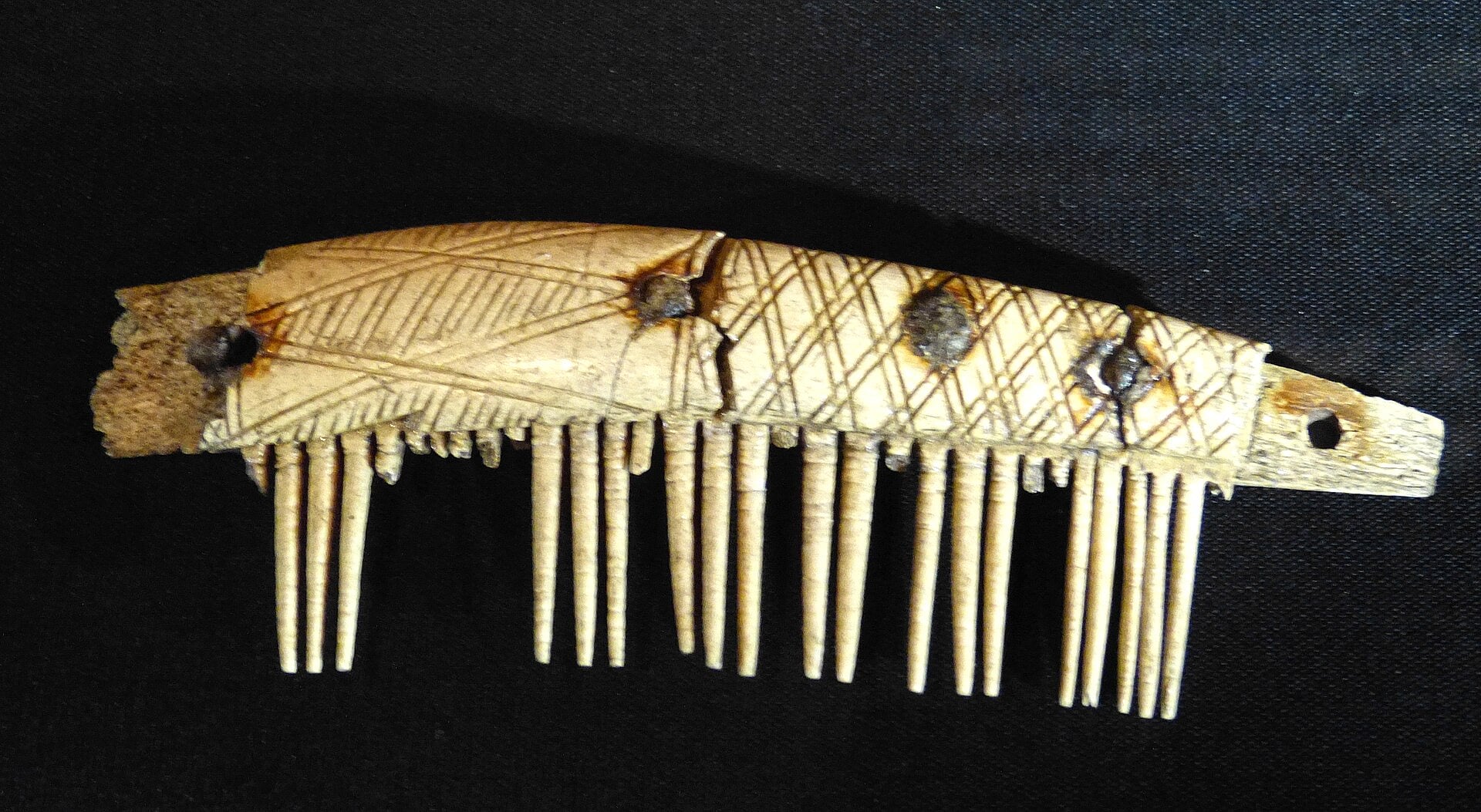
Finds include the remains of craft workshops for comb-making, glass bead production, bronze casting, and textile work, along with thousands of imported objects: Arabic dirham coins that reached Hedeby via trade routes through Russia, Rhenish pottery, Byzantine glass, and Frisian cloth. These finds vividly demonstrate just how far the trade network Hedeby was plugged into actually reached - from Baghdad through Kyiv to the West Frankish lands.
Minting Its Own Money for Long-Distance Trade
Particularly notable is that Hedeby was already minting its own coins around the year 825, the so-called Hedeby coins - the earliest known Scandinavian coinage of any kind. Their designs, some featuring stylized ships, were modeled on Frankish coins from the trading town of Dorestad, showing just how tightly Hedeby was woven into the Carolingian trade network economically, even though it never belonged to the Frankish Empire politically.
Listen to Scar while you read on, a hymn that captures the harshness of Viking life in sound:
Royal Attention: Hedeby and the Danish Crown
Hedeby’s economic importance didn’t escape the notice of the Danish crown. King Harald Bluetooth - yes, the same ruler whose name gave us the modern Bluetooth wireless standard - expanded the Danevirke fortifications, and with them Hedeby’s defenses, during the 10th century. His son Sweyn Forkbeard had two elaborately carved runestones erected near Hedeby in honor of his father, stones that survive to this day and rank among Denmark’s most significant runic inscriptions. The inscriptions praise Harald as a ruler who brought “all of Denmark” under his control - wording that shows just how tightly control over Hedeby was bound up with royal authority over the entire kingdom.
That a Danish king thought it necessary to carve his claims to power in stone specifically here underlines just how much economic and political weight Hedeby actually carried - comparable, in terms of economic pull, to a modern capital city, even though the royal seat itself lay elsewhere.
What the Graves Reveal About the Residents
The cemeteries surrounding Hedeby paint an unusually layered picture of the city’s population. Alongside simple earthen burials, archaeologists found elaborate chamber graves belonging to wealthy merchants, furnished with imported luxury goods meant to demonstrate the deceased’s social status well beyond death. At the same time, both pagan grave goods and a handful of clearly Christian burials confirm that different belief systems coexisted in Hedeby for decades - a direct result of intensive contact with the already more thoroughly Christianized Frankish Empire to the south.
The sheer diversity of grave goods, ranging from Scandinavian jewelry to objects showing Frisian, Slavic, or even Far Eastern influence, confirms what the settlement finds already suggest: Hedeby wasn’t an ethnically or religiously homogeneous city, but a cosmopolitan hub where people of vastly different origins lived together and traded for the long term.
The Ship in the Harbor Basin
In 1979, divers exploring Hedeby’s former harbor basin made one of the most significant finds in the site’s excavation history: a well-preserved Viking ship, known as Hedeby 1, likely deliberately scuttled to block the harbor entrance against an attack. At roughly 20 meters long, this warship ranks among the largest known longships of its era, and today, conserved and partially reconstructed, it’s on display at the Hedeby Viking Museum right at the historical site.
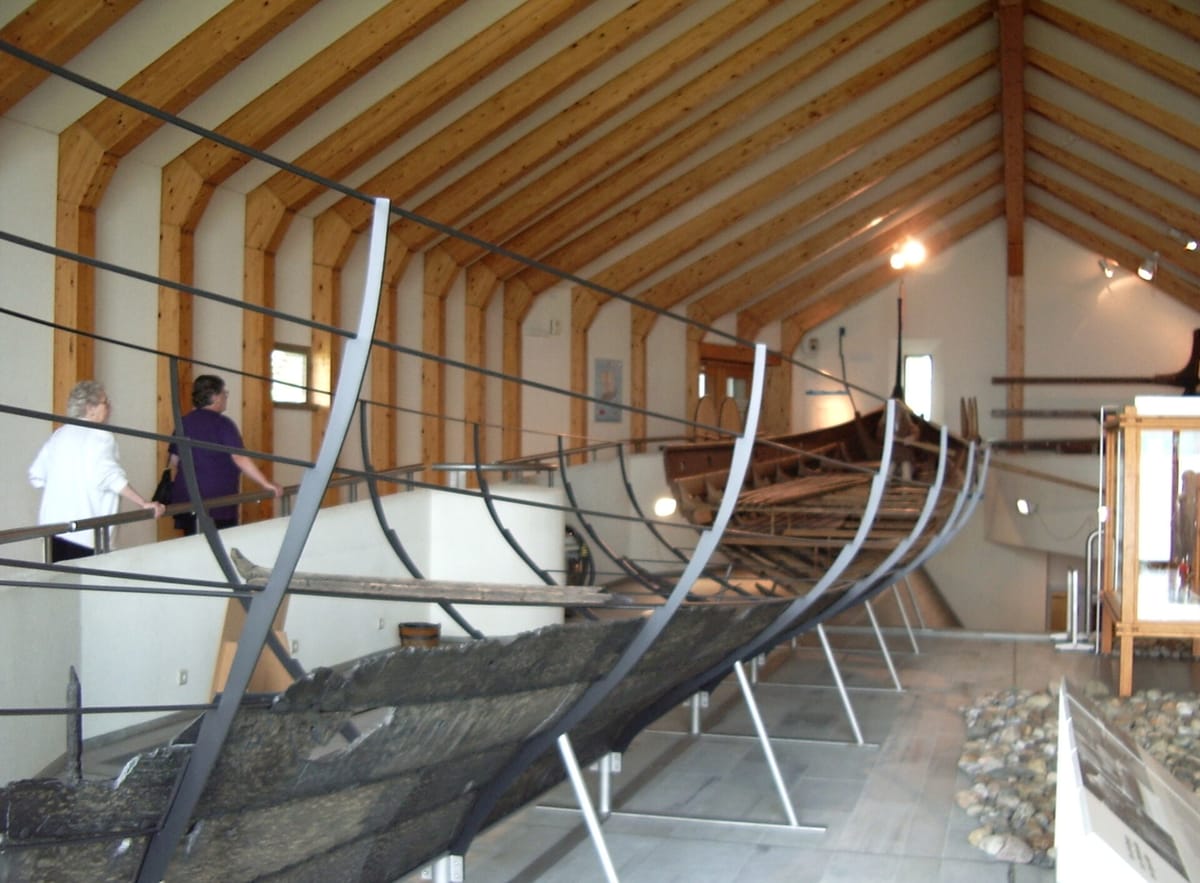 Image credit: Stefanie Elder (CC BY-SA 3.0), via Wikimedia Commons
The find matters because it shows Hedeby wasn’t just a trading city, it was also militarily significant - a place worth defending, and one that was apparently actually attacked.
The Violent End of a Trading Metropolis
Hedeby’s golden age didn’t fade gradually - it ended through a series of violent events. In 1050, Norwegian King Harald Hardrada had the city burned during a military campaign against Denmark, a severe blow from which Hedeby recovered only slowly, economically speaking. The final deathblow came in 1066, when Slavic forces, likely Obodrites, attacked Hedeby again, plundering and burning it once more.
After its final destruction in 1066, urban life shifted to the opposite bank of the Schlei - giving rise to what is today’s Schleswig, essentially Hedeby’s direct successor.
Exactly why survivors chose not to rebuild Hedeby but relocated across the water instead isn’t fully understood. The destroyed fortifications and a growing preference for a more easily defensible site may both have played a role.
What Remains of Hedeby Today
Because the settlement was never built over again after its destruction, the ground beneath the semicircular rampart remained largely undisturbed for centuries - an archaeological stroke of luck that has made Hedeby one of the most thoroughly researched Viking settlements anywhere. In 2018, the “Archaeological Border Complex of Hedeby and the Danevirke” was added to the UNESCO World Heritage List alongside the neighboring Danevirke, recognition that underscores the site’s outstanding importance for understanding the entire Viking Age.
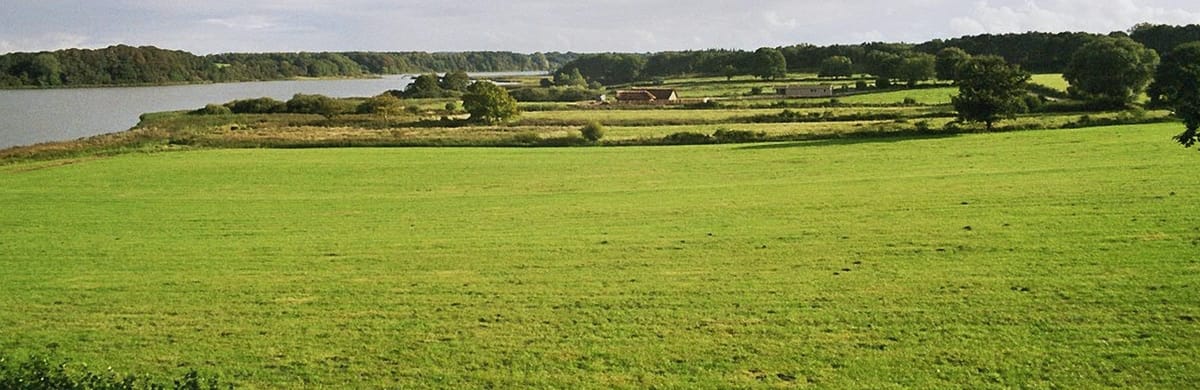 Image credit: Wikitour (CC BY-SA 3.0), via Wikimedia Commons
Today, part of the settlement can be experienced firsthand at the adjoining open-air museum: several houses have been faithfully reconstructed based on the layouts of excavated postholes, giving visitors a concrete sense of just how dense and bustling this trading city must once have been.
Hedeby Compared to Other Trading Towns
Hedeby wasn’t the only major Viking Age trading settlement, but it was one of the most significant. A comparison with other central trading hubs shows how the broader network of Scandinavian trading towns was structured:
| Trading Town | Location | Golden Age | Distinguishing Feature |
|---|---|---|---|
| Hedeby | Schlei inlet, modern Schleswig-Holstein | 8th-11th c. | Baltic-North Sea land bridge, own coinage |
| Birka | Björkö, Sweden | 8th-10th c. | Central Sweden’s most important trading center |
| Kaupang | Vestfold, Norway | 8th-10th c. | Norway’s oldest known trading site |
Unlike Birka or Kaupang, Hedeby benefited enormously from sitting right on the shortest overland connection between the Baltic and North Seas - a structural advantage none of the other major trading sites had in quite the same form, and one that contributed decisively to Hedeby’s broader regional importance.
Our Take
Hedeby shows a side of the Viking Age that often gets overshadowed in the popular imagination by raids and battles: the everyday life of a bustling, internationally connected trading city, where craftsmen, merchants, and sailors from half of Europe and the Middle East crossed paths. If you’re curious about the ships that made this kind of trade possible in the first place, check out our article on the longship - without those ships, Hedeby would never have had either its wealth or its sudden downfall.