Recipes
Viking Leek Soup Recipe: Onions, Butter and Barley from the Longhouse
A Viking leek soup recipe built on onions, barley and butter. What the Edda and the runes really say about the humble leek, and how to cook the soup today.
Contents
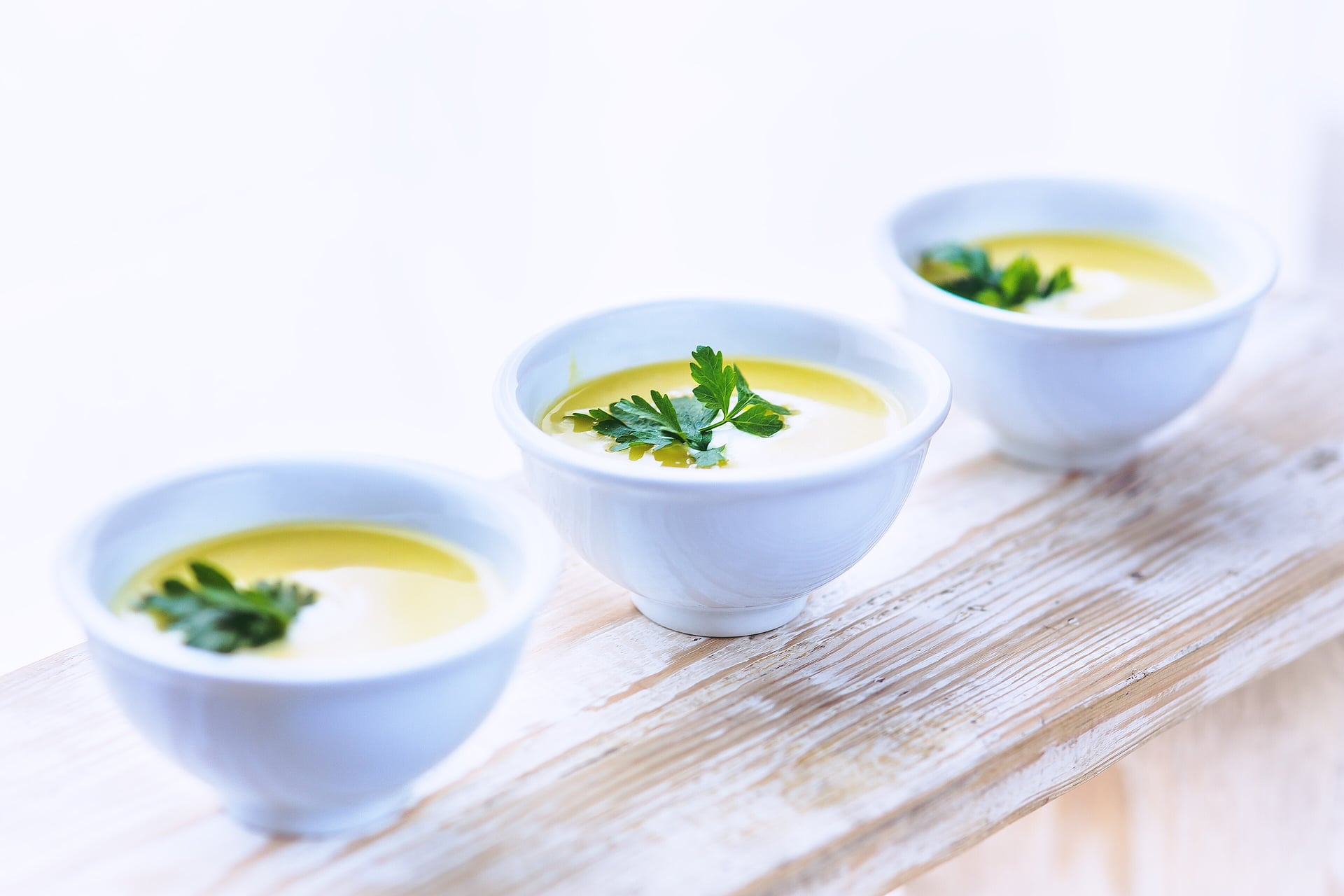
Onions and leeks turn up in every reconstruction of Norse cooking, and almost never as the point of the dish. They sit at the edge of things: in the stew, under the roast, beside the fish. Yet hardly any plant word in Old Norse carries as much weight as laukr. This Viking leek soup recipe flips that around and puts both alliums at the centre: one heavy pot, a generous amount of butter, a handful of barley, two fat leeks and three onions, sweated down slowly until the sharpness turns to sweetness.
The question worth asking first is how much of that we can actually document, and how much is kitchen romance. Let us sort that out before the pot goes on the heat.
Laukr: Why the Leek Mattered More Than You Would Guess
The Old Norse word laukr does not mean only the stalk you buy in a supermarket today. It covers the whole allium family, so onion, shallot and garlic belong to it as well. That vagueness is not a weakness of the language. It tells you something about the kitchen: what mattered was not the variety but the effect. Fierce when raw, sweet and soft after long cooking, and good keepers through a northern winter.
How central this group of plants was shows up in a single word. The Old Norse term for a garden is laukagarðr, literally a leek garden. Old English, the language on the other side of the Danelaw, does exactly the same thing. A kitchen garden is a leactun, a leek enclosure, and garlic is garleac, spear leek, after the shape of its leaves. Two languages name their entire horticulture after one genus of plant. That does not happen to a garnish.
There is a plainer agricultural reason too. Onions and leeks are frost hardy, tolerate ordinary soil, demand very little attention and store well. Leeks will stand in the ground through winter and be lifted whenever the pot needs them. For a farm living on barley, dairy and salted meat, that is exactly the right quality: a plant that delivers flavour when nothing else is still green.
What the Runes, the Edda and the Digs Actually Give Us
The evidence here is better than you might expect, but it is not where most people look first. It sits in language and poetry rather than in the soil.
| Source | Date | What it shows |
|---|---|---|
| Fløksand scraper, Hordaland, Norway, runes lina laukaR | around AD 350 to 400 | ”Flax and leek” as a fixed formula, long before the Viking Age |
| Sigrdrífumál, stanza 8 (Poetic Edda) | Poem, manuscript of the 13th century | A leek is cast into the drink to turn harm aside |
| Guðrúnarkviða I (Poetic Edda) | Poem, manuscript of the 13th century | Sigurd stands above the Gjukungs as the spear leek grows out of the grass |
| Old Norse laukagarðr, Old English leactun | Early and high medieval | The word for garden is literally a leek garden |
| Waterlogged deposits at Hedeby and Coppergate in York | 9th to 11th century | Thousands of plant remains from waste and cesspits, yet almost no alliums |
That last row is the one that matters most, and popular accounts almost always skip it. Alliums have no hard seed coat and no tough husk that survives a thousand years in wet ground. They simply vanish. When Hedeby yields barley, oats, flax, peas, plums and hazelnuts in quantity but barely a trace of leek, that is not proof of absence. It is a preservation problem. Archaeobotany measures what lasts, not what people ate.
Myth: the leek was a seasoning in the North, a green flourish at the edge of the bowl. Fact: the opposite is far more likely. A plant whose name supplies the word for the whole garden, which the Edda drops into a cup as a protective charm, and which stands beside flax in a runic inscription, was staple food and power word at once. The only thing missing is the recipe.
And it is thoroughly missing. Not one recipe collection survives from the Viking Age. The oldest known Nordic cookery manuscript, the Danish Libellus de arte coquinaria, was written around 1300, roughly three centuries after the period closed. Everything sold today as an authentic Viking recipe is a reconstruction assembled from ingredients, equipment and excavated finds. That is honest work, as long as somebody says so.
What Belongs in a Viking Leek Soup Recipe, and What Does Not
Our honest editorial verdict after cooking it: this soup is far more interesting than its name suggests, and the whole thing hangs on one technique. Sweat the onion and leek briefly and you get a thin, slightly sharp broth. Give them half an hour in butter until they almost melt and you get a deep, nearly meaty sweetness without a gram of meat in the pot. That is what turns a lean dish into a good one, and a cauldron over an open hearth had all the time in the world for it.
Several things have to go. The potato crossed the Atlantic centuries later and has no business here, even though nearly every modern leek soup leans on it for body. Carton cream becomes soured cream or skyr, because that is what a Norse household actually kept. The body comes from barley, the dominant grain of Viking Age Scandinavia. Pepper was reachable along the trade routes but expensive and rare; caraway, thyme and mustard seed sit much closer to everyday cooking, as we set out in our guide to Viking herbs and seasonings.
The one technique that decides everything: sweat the onion and leek over low heat, do not brown them. The moment you get roasted notes, the soup tastes of fried onion instead of what it should be, which is mild, sweet and buttery. Give it ten minutes longer with the lid half on.
Ingredients
Serves 4:
- 2 fat leeks (about 500 g, white and pale green parts)
- 3 medium onions
- 4 tbsp butter
- 70 g pearl barley
- 1.2 l well-flavoured stock (meat or vegetable)
- 150 g soured cream, crème fraîche or skyr
- 1 tsp salt
- 1/2 tsp whole caraway seeds
- 2 sprigs thyme
- The dark green leek tops, finely sliced, to finish
Instructions
- Clean the leeks. Split them lengthways and rinse thoroughly under running water, because grit hides between the layers. Slice the white and pale green parts into thin rings and set the dark tops aside. Halve the onions and cut them into fine strips.
- Sweat. Melt 3 tbsp butter in a heavy pot, add the onion and leek, season with the salt and cook over low heat for 25 to 30 minutes. Keep the lid half on and stir now and then. The vegetables should collapse and turn translucent, never brown.
- Add the barley. Stir in the pearl barley and caraway, let them toast for a minute, then pour in the stock.
- Simmer. Drop in the thyme and let everything simmer gently for 25 to 30 minutes, until the barley is tender and the soup has thickened a little.
- Finish. Remove the thyme, take the pot off the heat and stir in the soured cream or skyr. Do not let it boil again or the dairy will split. Swirl in the last knob of butter.
- Serve. Scatter the sliced green leek tops over the top and serve hot, ideally with a thick slice of Viking rye bread.
Tips & Variations
- The lean version: skip the dairy, simmer a piece of bacon in the pot and add a little more barley for body. This is about as close to a tenth-century weekday as a modern kitchen gets.
- The feast version: blend half the soup, leave the rest chunky, then finish with toasted hazelnuts and a spoonful of skyr.
- Blended or chunky: both work. Chunky reads rustic and farmhouse, blended turns velvety and looks like a course from a modern restaurant.
- Wild relatives: wild garlic in spring or chives in summer can replace part of the green leek tops and bring the fresh bite back.
- Keeping it: cooked without dairy the soup holds three days in the fridge and tastes rounder on day two. Stir the soured cream in only as you reheat.
- Thicker soup: swap the pearl barley for 2 tbsp barley flour and toast it with the vegetables.
This recipe is only a taste of what is coming: our cookbook “Viking Feast” holds 141 Nordic recipes, from cauldron dishes and feast-day roasts to bread, mead and wild-greens cooking. See the cookbook
What Stays in the Pot
The great Norse stories are about kings, ships and battles. Daily life ran on plants nobody bothered to celebrate, because they were always there. The leek is the exception. It made it into the Edda, into a runic inscription and into the word for garden. That is why this soup does not taste like a reconstruction. It tastes like a kitchen getting the most out of a handful of dependable things: onion, butter, barley, time. Nothing else is required.
Image credit: PattayaPatrol (CC BY-SA 4.0), via Wikimedia Commons