Recipes
The Yule Feast: How Vikings Celebrated Midwinter
Jól, the Viking Yule feast: the sacrificial boar, oath-taking toasts, and a nut-and-fruit bread for the winter solstice - history plus a recipe to bake at home.
Contents
In the darkest stretch of the Norse winter, when daylight barely stretched past a few hours, the Norsemen celebrated their most important festival: Jól, the Yule feast marking the winter solstice. It was far more than a lavish meal - Jól marked the symbolic turning point of the year, the moment darkness had passed its peak and the days would begin growing longer again. It was celebrated with offerings, ceremonial toasts, and a feast that could stretch on for days.
Twelve Nights Between the Worlds
The exact length and precise timing of Jól varied by region and century, but the idea of a multi-day festive period, often spanning twelve nights, runs through numerous later sources and Scandinavian folk tradition. During this time, ordinary work paused wherever possible, and the community gathered for shared meals in the farm’s main hall, drawing on supplies laid in over the summer and autumn.
Jól was also a religious festival, a so-called blót, a sacrificial ceremony honoring the gods - especially Freyr, the god of fertility and good harvests, to whom people felt particularly connected at the winter solstice, since his favor was believed to determine how well the coming planting season would go.
The Oath on the Sacrificial Boar’s Bristles
One of the most striking Jól traditions, recorded in later sources such as the Hákonar saga góða, was the sonargöltr, the sacrificial boar. A particularly powerful breeding boar was slaughtered for the Yule feast and presented to the hall as the centerpiece of the meal. Those present placed a hand on the dead animal’s bristles and swore solemn oaths for the coming year - promises of great deeds, plans for revenge, or important undertakings, publicly affirmed before the assembled community.
An oath sworn on the sacrificial boar’s bristles at Jól was considered more binding than almost any other promise made during the year - breaking it meant public disgrace.
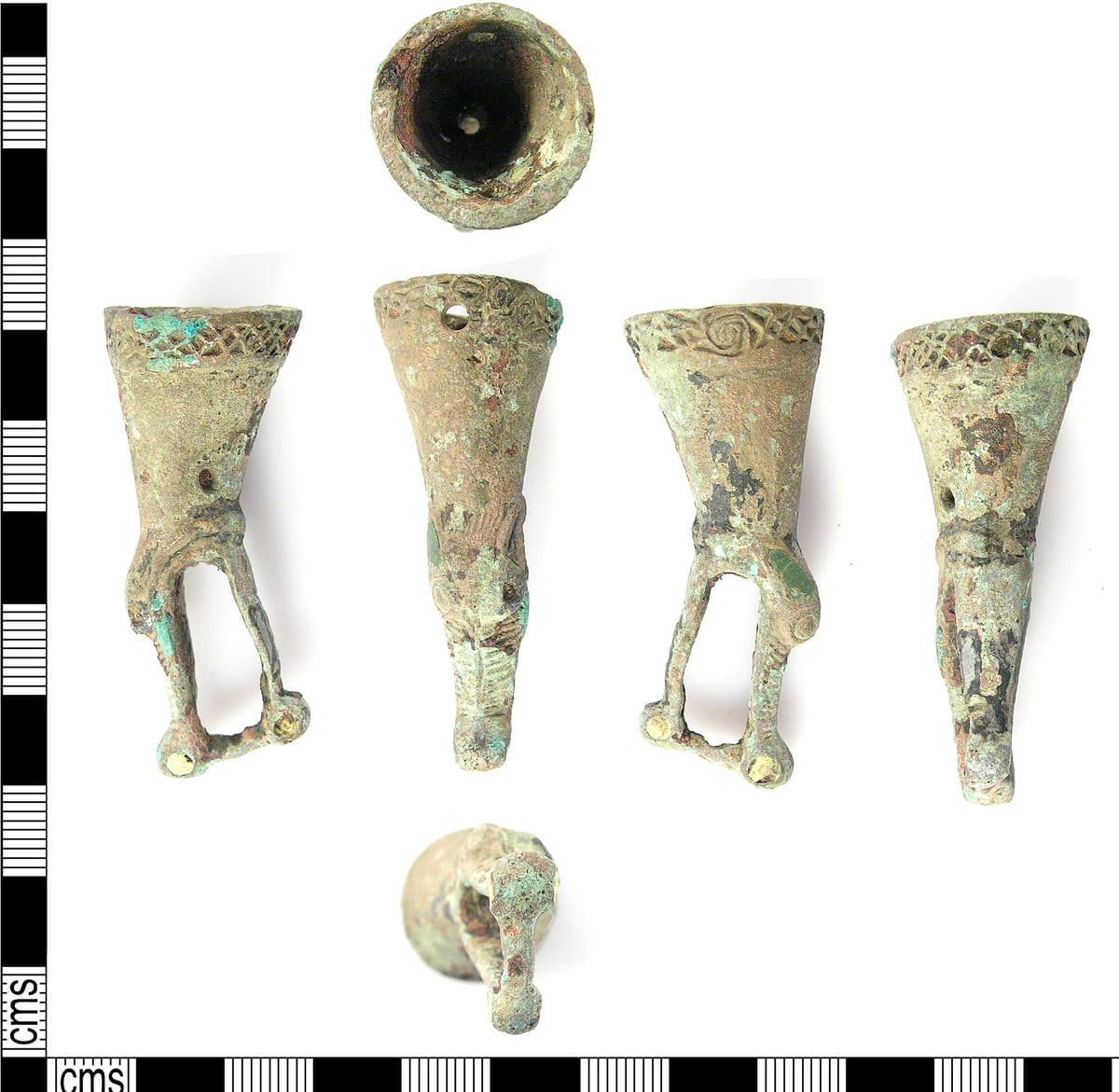 Image credit: Museum of London, Kate Sumnall (CC BY-SA 2.0), via Wikimedia Commons
The same source also describes the ceremonial toasts raised in sequence during the feast: first to Odin, for victory and the king’s power, then to Njörðr and Freyr, for fertility and peace in the coming year. Only after these toasts did people turn to more private memorial drinks for deceased relatives - a clear order of precedence that shows just how structured such a feast actually was.
What Was Really on the Table
Archaeological finds and written sources together paint a picture of a feast that stood in sharp contrast to the sparse everyday Viking diet. Alongside the pork from the sacrificial boar, other meat dishes likely made it to the table too, along with pickled and smoked vegetables from the winter stores, freshly baked bread, and, where available, mead - the sweet, honey-fermented festive drink we’ve already covered in its own article.
Baking was also a big part of the season, using whatever the winter stores allowed: grain, honey, dried fruit, and nuts, gathered over the summer and set aside specifically for occasions like this. A festive bread of that kind can still be baked today with a handful of supermarket ingredients - which is exactly what the recipe section of this article is about.
How Jól Became Christmas
The Hákonar saga góða also records a remarkable political episode. King Haakon the Good, raised as a Christian in England in the 10th century before ruling over Norway, is said to have deliberately shifted the date of Jól to align with the Christian Christmas date, aiming to gradually merge the old pagan celebration with the new faith. At first he met considerable resistance from his still-pagan subjects, who wanted to keep the traditional rites, but over the following generations the two festivals increasingly blended together.
That centuries-long transition explains why so many elements of today’s Christmas season actually have pre-Christian roots: the festival of lights in the middle of the darkest winter, the shared feast with the whole extended family, even the name itself - in Norwegian, Danish, and Swedish, Christmas is still simply called jul to this day, not some variant of “Christ’s Mass” the way English and German names for the holiday are built.
Why Winter, of All Seasons, Got the Biggest Party
That the darkest, coldest season of the year became the biggest festival actually makes a lot of practical sense. After the autumn harvest, storerooms were fuller than at any other point in the year, while farm labor paused for a few weeks at the same time. Animals that couldn’t be fed through the winter anyway were slaughtered in late autumn, which made plenty of fresh meat available for a big feast right when the community most needed comfort and togetherness against the long darkness.
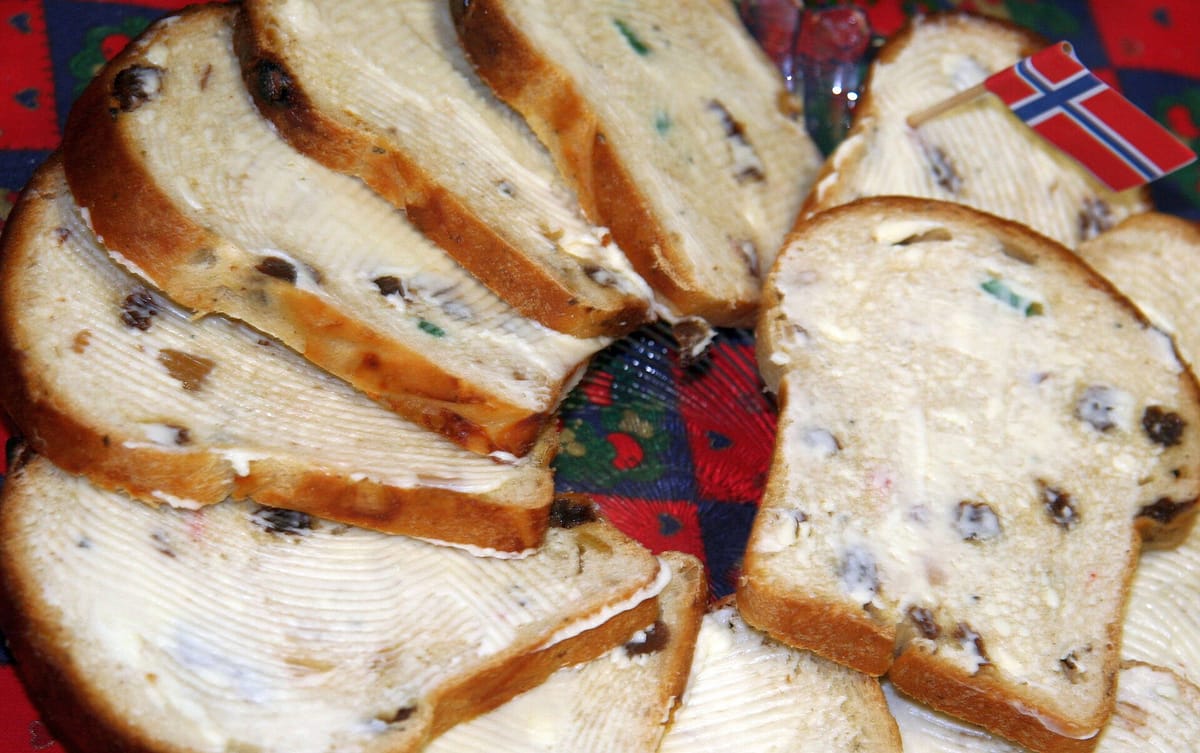
Viking Yule Bread With Nuts and Dried Fruit
This bread is richer than the everyday flatbread Vikings ate day to day: sweetened with honey, enriched with nuts and dried fruit from the winter stores - exactly the kind of special baking a feast like Jól called for.
Ingredients
For 1 loaf (about 8 slices):
- 400 g (about 3 ¼ cups) wheat or spelt flour
- 1 packet dry yeast (7 g / 2 ¼ tsp)
- 250 ml (1 cup) lukewarm milk or water
- 3 tbsp honey
- 1 tsp salt
- 60 g (½ cup) hazelnuts, roughly chopped
- 80 g (½ cup) dried apples or raisins, chopped small
- 2 tbsp butter, softened
Instructions
- Activate the yeast. Dissolve the dry yeast and one tablespoon of honey in the lukewarm milk, and let sit for 10 minutes until it turns foamy.
- Knead the dough. Mix flour and salt in a large bowl, add the yeast mixture, remaining honey, and softened butter, and knead into a smooth, elastic dough for about 8 to 10 minutes by hand.
- Work in the fruit. Knead in the chopped hazelnuts and dried apples or raisins until evenly distributed throughout the dough.
- First rise. Cover and let rise in a warm spot for about 1 hour, until visibly increased in volume.
- Shape. Punch down the dough, shape into a round or oblong loaf, and place on a baking sheet lined with parchment paper.
- Second rise. Cover and let rise again for 30 minutes.
- Bake. Bake at 200°C (390°F) for about 30 to 35 minutes, until the crust is golden brown and the loaf sounds hollow when tapped on the bottom.
- Cool. Let cool completely on a wire rack before slicing.
Tips & Variations
- Other nuts: Walnuts or almonds work just as well as hazelnuts and are also archaeologically documented in the Norse region.
- Spices: A pinch of ground juniper or a little grated lemon zest (best understood as a later addition, historically speaking) gives the bread a festive edge.
- Sweet spread: Pairs beautifully with butter and an extra spoonful of honey, much as it might have been served at Jól.
- Storage: Wrapped in a linen cloth, the bread keeps for 3 to 4 days; after that, it’s still excellent lightly toasted.
- Savory variation: For a less sweet loaf, cut the honey to 1 tbsp and skip the dried fruit, adding extra nuts and a pinch of caraway to the dough instead.
A Festival That Still Echoes Today
A lot of what feels “typically Christmassy” today - light in the darkness, a shared feast with family, ceremonial toasts to the new year - has deep roots in the Norse Jól festival. The sonargöltr oath may be long gone, but a freshly baked loaf of honey-and-nut bread can still be shared with much the same joy today as it was over a thousand years ago in a Norse longhouse hall.
If you want to dive deeper into Norse cuisine: this recipe is just a taste from our full collection. In the cookbook “Viking Feast” you’ll find 141 recipes from Norse cuisine - from festive breads to hearty stews to the mead to go with them. Get the cookbook