Warriors & Battles
The Weapons of the Vikings: Axe, Sword and Shield
Viking weapons fact-checked: axe, sword and shield. What finds like the Mammen axe and the Ulfberht swords really reveal about combat in the Viking Age.
Contents
- Did every Viking carry a sword?
- Was the axe really just a poor man’s backup weapon?
- Were Ulfberht swords magically superior?
- Was the Viking shield really a slab of solid wood with a metal rim?
- Did Vikings really swing massive two-handed axes, and what weapons get overlooked in the process?
- Weapon, cost, and social status compared - and how pop culture warps the real hierarchy
- What the evidence tells us about Viking weapons
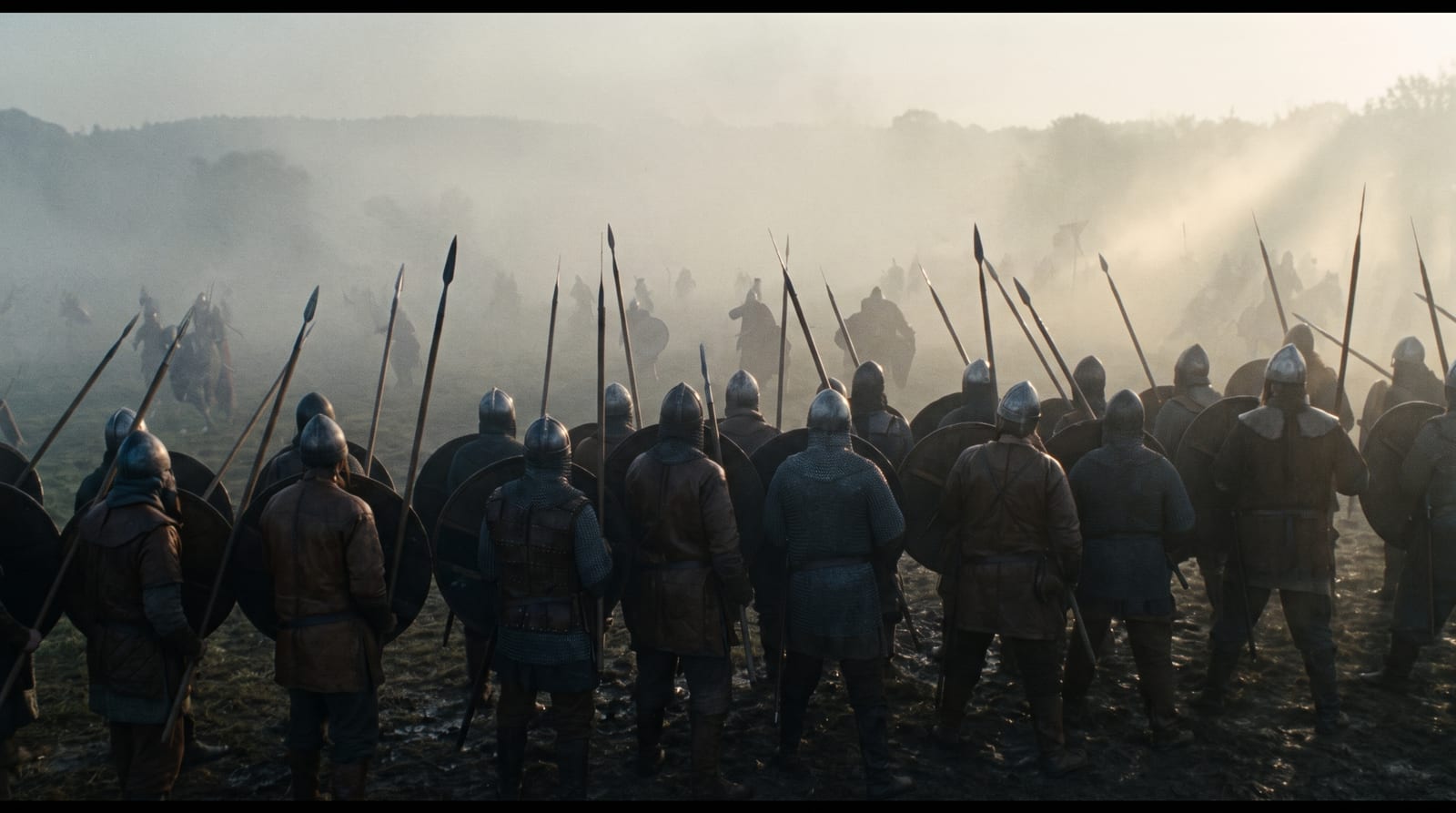
Every film gives you the same shot: a Viking leaps off the longship, sword raised, cutting a bloody path through the defenders. Viking weapons - the axe, the sword, the shield - have become a visual shorthand that has drifted a long way from what archaeology actually shows. Grave finds, blade inscriptions, and the sheer distribution of surviving objects tell a very different story, one about cost, status, and blunt material reality. If you want to know what a warrior from Uppland or Jutland actually carried into a fight, you have to set the movie poster aside and look at what actually came out of the ground.
This piece works through the most persistent myths about Viking weaponry one by one, weighing them against what archaeologists, runologists, and materials scientists can actually demonstrate.
Did every Viking carry a sword?
No - and this is probably the single most stubborn misconception out there. A Viking sword was a luxury item that took weeks to produce, and its value could match several head of cattle or even a modest farmstead. The blade had to be pattern-welded from multiple rods of steel with differing hardness, then hardened, ground, and polished. Hilts, guards, and pommels were frequently decorated with silver, bronze, or even gold wire - a pure status display that had little to do with combat function.
That’s precisely why swords turn up far less often in Viking Age graves than axes or spearheads. Grave assemblages from Norway, where the custom of burying the dead with weapons was especially strong, show a clear pattern: only a small percentage of armed male burials include a sword, while spearheads and axes appear in the overwhelming majority. Owning a sword meant belonging to the upper crust of society - landowning farmers, a jarl’s retinue, or traders wealthy enough to import raw material. The average farmer’s son heading into a fight reached for whatever tool was already hanging in his barn.
Was the axe really just a poor man’s backup weapon?
No, if anything the opposite is closer to the truth: the axe was the primary weapon of the Viking Age, not a fallback. Nearly every household owned an axe for felling timber, shaping construction wood, or food preparation, and turning a tool into a weapon cost almost nothing extra. That availability is exactly what made the axe the common man’s weapon - not because better options didn’t exist, but because it was efficient, versatile, and easy to replace.
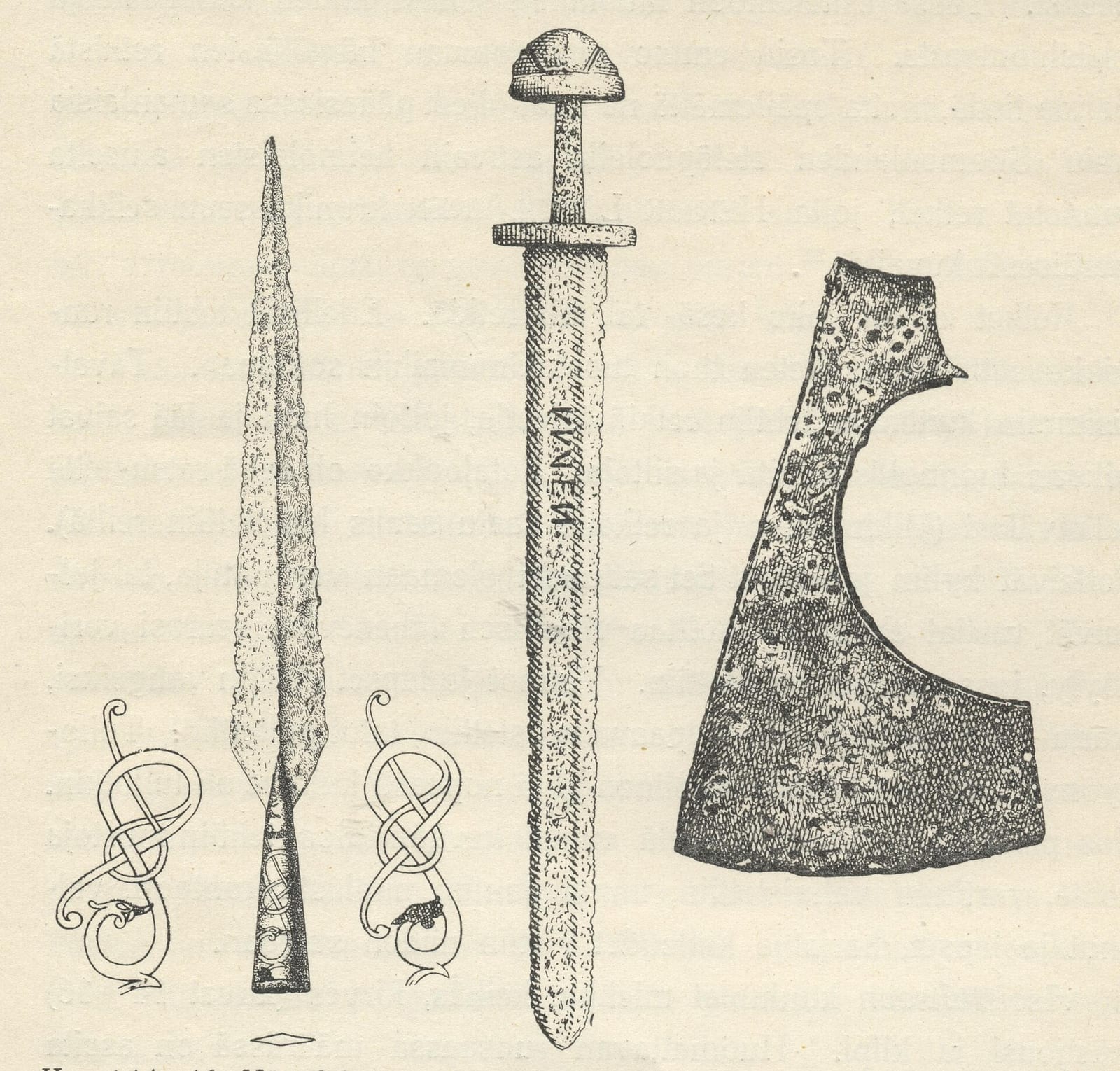
The most striking archaeological showcase of just how sophisticated this weapon class could get is the so-called Mammen axe, unearthed in 1868 from a richly furnished grave near Mammen in Denmark, dated to roughly 970/971 CE. The axe carries elaborate silver inlay in a decorative style that gave its name to an entire art-historical period, the Mammen style. It proves that axes, too, could be prestige objects of the highest order - not merely cheap makeshift arms. At the same time, the vast number of plain, undecorated axe heads recovered from graves across Scandinavia confirms that most of these weapons were purely functional: forged for everyday farm work, pressed into service in battle when needed.
Readers interested in the most famous wielders of this weapon class might look into the Viking berserkers, whose fearsome reputation is inseparable from the image of the heavy battle axe - even if the reality behind that legend is more complicated than the sagas suggest.
Were Ulfberht swords magically superior?
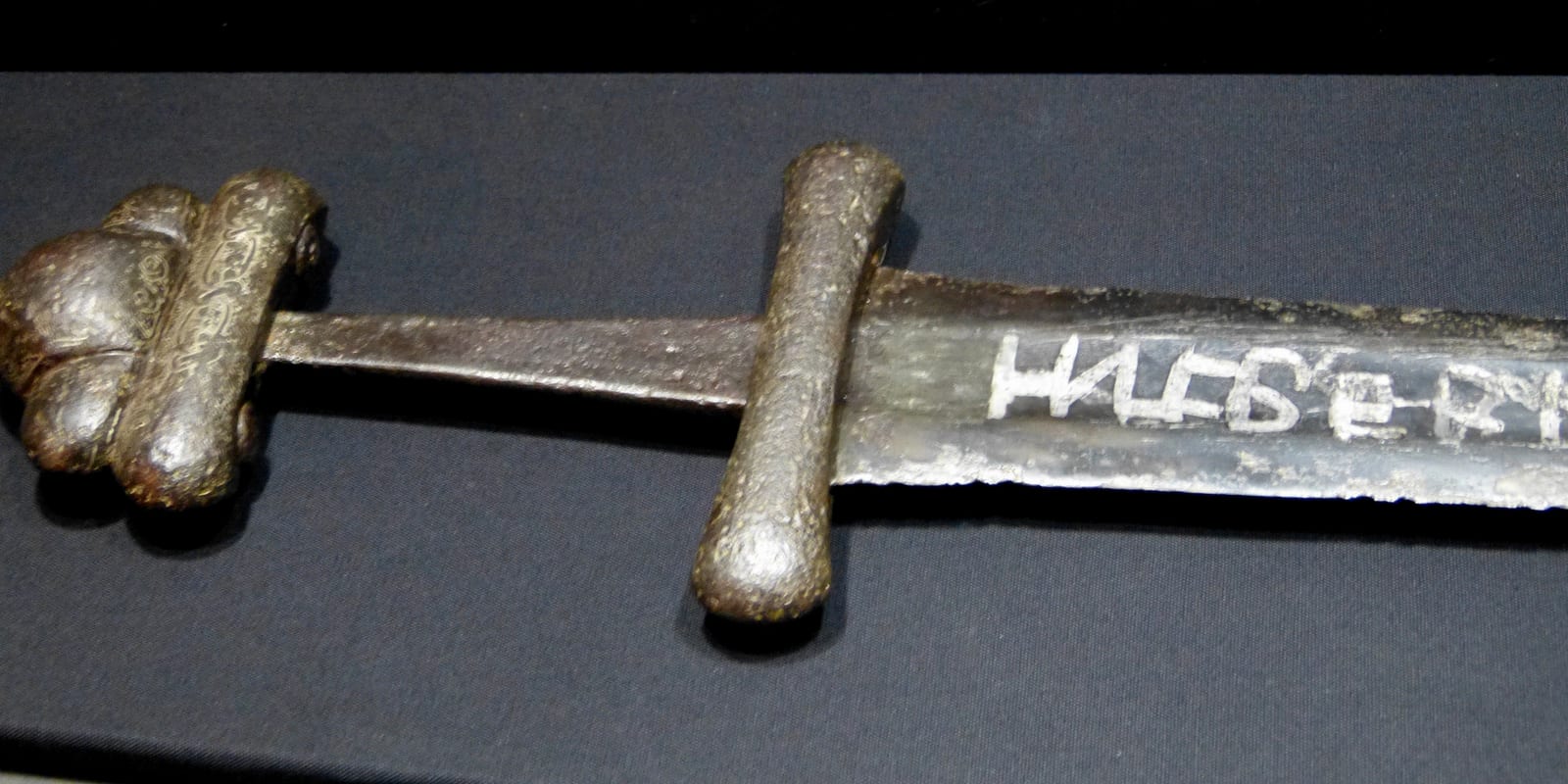
No, but they were technologically decades, maybe centuries, ahead of their time, which is arguably more impressive than magic. More than 170 sword blades bearing the inscription +VLFBERH+T (in slightly varying spellings) have been found across Northern and Eastern Europe, dating from the 9th through the 11th century. Metallurgical analysis, notably by materials scientist Alan Williams, showed that a subset of these blades were forged from an unusually pure, high-carbon steel - crucible steel of a quality that simply couldn’t be produced anywhere in Europe at the time. The raw material most likely originated in Islamic Central Asia, probably reaching the north via trade routes along the Volga, which in turn underscores just how tightly Scandinavia was woven into trade networks stretching into the Islamic world.
Things get interesting with the fakes. Alongside the genuine, high-quality blades, a large number of Ulfberht inscriptions turn up on inferior blades welded together from several lower-grade iron pieces - an early case of brand piracy, in a sense. The name “Ulfberht” was apparently valuable enough to be counterfeited, even when the copy fell well short of the original in quality. That tells us two things: there really was a recognizable reputation for top-tier craftsmanship attached to the name, but no supernatural magic behind it - just hard metallurgy that modern science can still trace today.
Listen to Járn ok þrumr while you read on:
Was the Viking shield really a slab of solid wood with a metal rim?
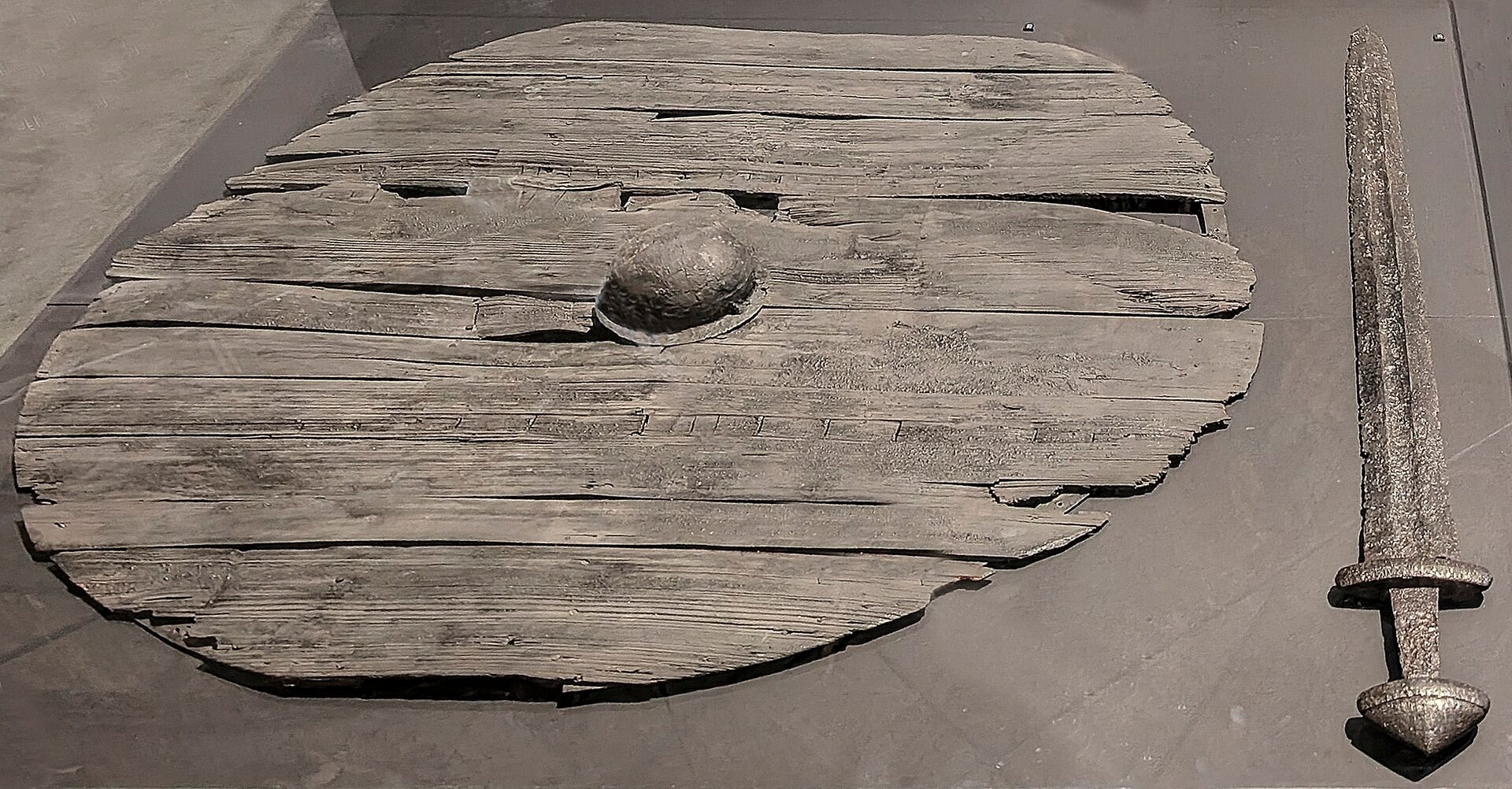
No, and this is one of the details films get wrong almost universally. The typical round shield of the Viking Age, well represented by finds from the Gokstad ship burial in Norway, was built from several thin wooden boards - usually lime/linden, occasionally spruce or fir - joined edge to edge, with a central hole cut for the iron shield boss (the buckler that protected the hand gripping a horizontal bar behind it). That construction produced a shield that was considerably lighter and more maneuverable than the massive, heavy slabs so often depicted in popular media.
The rims were commonly bound with leather or rawhide, sometimes reinforced with thin metal strips to prevent splitting along the edges, and the shield face itself was likely painted in most cases, often in bold colors and geometric patterns, as traces of pigment on surviving fragments suggest. The Gokstad ship burial alone yielded remains of more than 60 shields, and they confirm this construction principle convincingly: light, functional, and built not for maximum material thickness but for a balance between protection and mobility in close combat.
Did Vikings really swing massive two-handed axes, and what weapons get overlooked in the process?
No, the oversized, screen-filling two-handed axes of film and video games are, for the most part, artistic exaggeration. Larger battle axes with extended shafts, often called Dane axes or broad axes, genuinely existed and were wielded two-handed - pictorial evidence like the 11th-century Bayeux Tapestry shows exactly this weapon in the hands of housecarls, the elite warriors of Anglo-Saxon and Danish nobility. Even these larger axes, however, were forged comparatively light and slender, built for speed and wide arcs rather than raw mass. The overwhelming majority of surviving axe heads are far smaller, designed for one-handed use alongside a shield - a practical compromise between offense and defense that made a great deal more sense in the actual chaos of melee combat than a heavy weapon that occupied both hands and gave up shield protection entirely.
And in the process, the weapon that actually shows up most often in the record gets overlooked: the spear. Spearheads are by a wide margin the most frequently recovered weapon category in Scandinavian graves, for good reason - a spear was cheap to produce, devastatingly effective in shield-wall formation, and versatile enough to be thrust or, in lighter forms, thrown. Some spears even carry individual names in the sagas, hinting at a status value comparable to named swords. The seax, a single-edged knife ranging from short everyday blades to long, sword-like variants, was also extremely common and served double duty as a tool and a backup weapon. Bows survive far less often in the archaeological record, since wood and sinew degrade quickly, but large numbers of arrowheads and a handful of well-preserved bow fragments - including examples recovered from the harbor mud at Hedeby - confirm that archers were a genuine part of the military picture, even though they receive far less attention in saga literature than axe- or sword-wielding fighters. Pop culture and games favor the dramatic two-handed axe purely for visual impact; the archaeological and pictorial record paints a much more pragmatic picture.
Weapon, cost, and social status compared - and how pop culture warps the real hierarchy
| Weapon | Production effort | Typical owner | Frequency in graves |
|---|---|---|---|
| Sword (incl. Ulfberht blades) | Very high, weeks of smithing | Jarls, wealthy retainers, traders | Rare |
| Spear | Low to moderate | Nearly every able-bodied man | Very common |
| Axe (tool-type) | Low | Farmers, craftspeople, ordinary fighters | Common |
| Ornate axe (e.g. Mammen-type) | High, silver inlay work | Elite warriors, high-status grave goods | Very rare |
| Round shield | Moderate | Practically every fighter | Common (usually only the boss survives) |
| Seax | Low to moderate | Broad general population | Common |
The reason for the distortion in the modern image isn’t hard to spot: a gleaming, richly decorated sword photographs and animates far better than a plain tool-axe, so the sword becomes the default kit for every Viking character on screen, even though historically it was the status marker of a narrow elite. This distortion isn’t harmless - it quietly reshapes our entire mental model of Viking Age social structure. A society in which a man’s weaponry mapped almost directly onto his rank within the household and retinue system gets flattened, in pop culture, into a homogeneous mass of sword-swinging warriors who all appear equally equipped.
That flattening suits video games well, since balance considerations push most titles toward giving every character access to every weapon type regardless of status. But it obscures a historical reality that’s actually far more interesting: a finely graded hierarchy of tool-weapons, status-weapons, and imported prestige objects, in which any single find could tell you a small biography of its owner long before a blade was ever drawn.
What the evidence tells us about Viking weapons
The archaeological record - from the silver inlay of the Mammen axe, through the metallurgical precision of the Ulfberht blades, to the light shield construction recovered at Gokstad - paints a picture that’s more complex and, frankly, more interesting than any film cliché. Viking weapons were never a uniform loadout. They formed a carefully calibrated system of tools, status symbols, and imported high technology, shaped by trade routes running as far as Baghdad, by Norwegian forges, and by a society where you could read a surprising amount about a man simply by looking at what hung from his belt.
Next time a Viking charges across the screen swinging a gleaming two-handed sword, it’s worth asking whether that man could actually have afforded one - or whether, in historical reality, he’d more likely have been standing there with a plain axe that had split firewood the day before. Readers curious about the ships that carried these warriors to foreign shores in the first place can find more in the article on the longship.
Image: Unknown author (Public domain), via Wikimedia Commons