History
Viking vs Norse: What's the Difference?
Viking vs Norse, the difference explained: what víkingr meant in Old Norse, what the neighbours called them, and why most Scandinavians never went raiding.
Contents
Put the question “Viking vs Norse, what is the difference?” to a museum curator in Copenhagen or Reykjavík and you will usually get the same answer, delivered with the patience of someone who has given it a thousand times: one is something you did, the other is who you were. A víkingr was a man on a raiding voyage. The Norse were an entire population of farmers, weavers, smiths, traders, lawspeakers, children and slaves, most of whom never boarded a warship in their lives. The two words are not synonyms, and the gap between them is where most of the real history lives.
This article takes both terms apart from the language up. It looks at how the word víkingr was actually used by the people who spoke Old Norse, at what Scandinavia’s neighbours wrote down instead, and at how a word for a seasonal occupation was converted, in the nineteenth century, into the name of a nation that never existed.
What “víkingr” Actually Meant in Old Norse
Old Norse has two closely related words. víkingr is masculine and names a person: someone currently engaged in a raiding or plundering voyage. víking is feminine and names the voyage itself. Hence the standard phrase fara í víking, “to go on a viking”, which works grammatically much like going on a hunt or going to sea. Nobody was a víkingr by birth. You became one in a particular summer, in a particular ship, and you stopped being one when you came home and the ship was pulled up the beach.
Where the word came from is still unsettled. One line of argument connects it to vík, a bay or inlet, making the víkingr a man who waits in coves or works his way along a coast bay by bay. Another points to Old English wīc and Latin vicus, a camp or trading settlement. A third reaches for the verb víkja, to turn aside or depart, giving a sense of someone who turns away from home. Honest linguistic scholarship leaves the question open rather than picking a favourite.
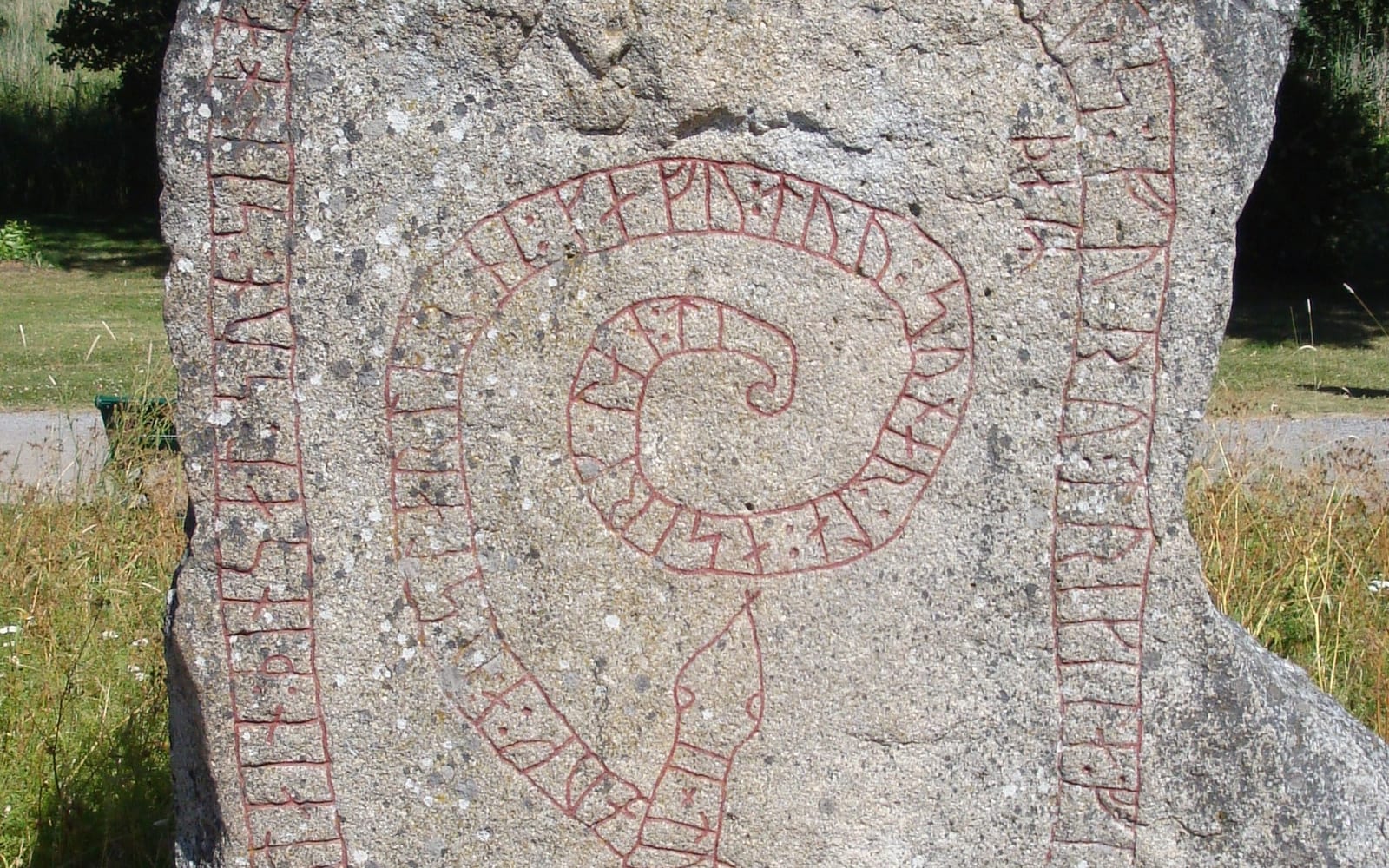
Usage is more revealing than etymology, and here the runestones are the best witnesses we have. The Bro stone in Uppland, catalogued as U 617, commemorates a man called Assurr, son of Jarl Hákon, and describes him as víkinga vǫrðr: a watch against vikings. Read that twice. Scandinavians carved the word in stone to describe the people their own coastguard existed to stop. Víkingr was not a badge of ethnic pride; it was a job description that could easily be hostile. In Old English, meanwhile, the form wīcing already appears in glossaries compiled before the raid on Lindisfarne in 793, glossing Latin vocabulary for sea robbery.
What the Neighbours Called Them
Open the sources written outside Scandinavia and the word viking almost vanishes. Every region named the newcomers after whatever struck it hardest: the direction they came from, the religion they did not share, the kingdom they sailed from, or simply the fact of being foreign.
| Where it was written | Term used | Literally |
|---|---|---|
| Royal Frankish Annals | Nordmanni, Dani | Northmen, Danes |
| Anglo-Saxon Chronicle | hæþene men, Deniscan | heathen men, Danes |
| Irish annals | gaill, Finngaill, Dubgaill | foreigners, fair and dark foreigners |
| Byzantine texts | Rhos, Varangoi | Rus, Varangians |
| Arabic geographers | al-Rūs, al-Majūs | Rus, heathens or fire-worshippers |
| Latin church writing | pagani, gentiles | pagans, unbaptised peoples |
One episode shows how tangled this gets. Under the year 839 the Annals of St Bertin record envoys at the court of Louis the Pious who called themselves Rhos and who, on questioning, turned out to belong to the people of the Swedes. The same men are Rhos in Greek, al-Rūs in Arabic, Varangians in Constantinople a century later, and Vikings in every modern paperback. Four labels, one group, and not one of them is the word those men would have used for what they were doing.
Northmen is the term that maps most closely onto the modern English word Norse. It covers the population of the Scandinavian north as a whole, raider or not. The word also has a famous afterlife: Nordmanni became Normans, and according to the tradition recorded by Dudo of Saint-Quentin their leader Rollo received land on the Seine in the treaty of Saint-Clair-sur-Epte in 911. Two generations later his descendants spoke French and built Romanesque churches. Northmen, in other words, could stop being Vikings without ever ceasing to be Northmen.
Put Víkingr on while you read the rest:
Viking vs Norse: The Difference at a Glance
The rule of thumb is short enough to carry around: Viking describes what somebody did, Norse describes who somebody was. The table below spells out what follows from that.
| Feature | Viking (víkingr) | Norse (Northmen) |
|---|---|---|
| Kind of term | activity, role, phase of life | population, language and culture |
| Duration | seasonal, often a handful of years | lifelong, across generations |
| Who is included | mostly young armed men | everyone: farmers, traders, women, children, thralls |
| Time frame | raiding voyages, peaking 8th to 11th century | Iron Age into the High Middle Ages, continuous |
| Used by themselves | yes, but as a role, sometimes about enemies | yes, through language: norrœnt mál, the northern tongue |
| Current scholarly use | reserved for raiding and warfare | standard term for the people and their culture |
The time-frame row deserves a footnote of its own. The familiar span of 793 to 1066 is a convention agreed by historians, not a finding from the ground. It takes the raid on Lindisfarne as the opening bell and the battle of Stamford Bridge as the closing one, chiefly because both events happen to be written down. Archaeology stretches the bracket at both ends. The Norse trading base at Staraya Ladoga on the Volkhov was in use by around 750, and the two boat burials excavated at Salme on the Estonian island of Saaremaa, radiocarbon dated to roughly the middle of the eighth century, held dozens of men with battle injuries and Scandinavian equipment. Seaborne warfare and long-distance trade were running decades before an English monk wrote the report that made it into the textbooks.
How Many Actually Went “í víking”?
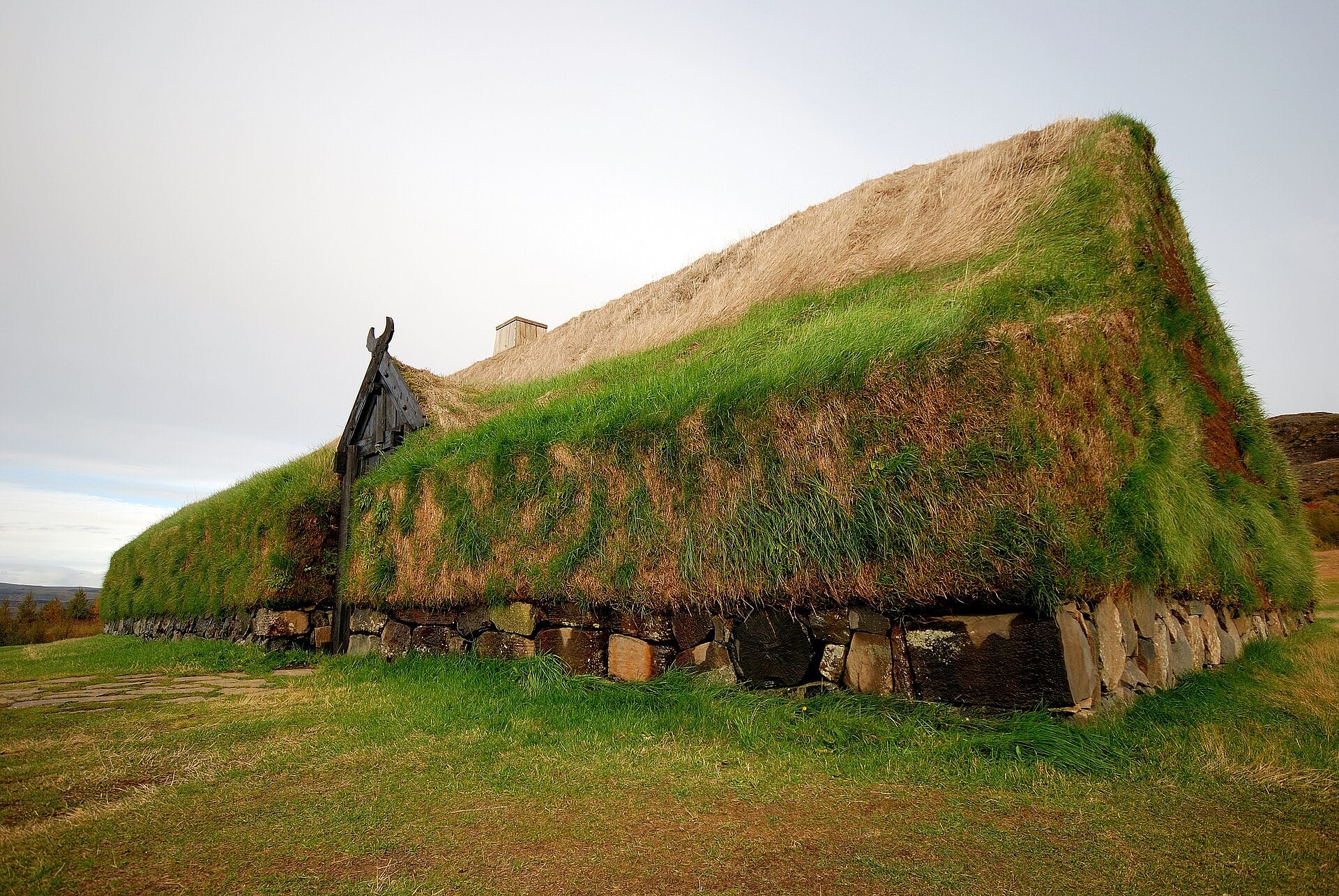
There is no reliable percentage, and any source quoting one has estimated it. What we do have is settlement archaeology, and it points one way only: the Viking Age was overwhelmingly a farming society. The village at Vorbasse in Jutland, excavated over decades, shows substantial farmsteads with byres, workshops and storage buildings, shifting position across the landscape as generations passed. At Borg in the Lofoten Islands archaeologists uncovered a chieftain’s longhouse roughly 83 metres long, now reconstructed as the Lofotr Viking Museum. Icelandic sites preserve whole farm complexes complete with storerooms and weaving sheds.
None of that is about plunder. It is about manure, hay, dairying, iron smelting and textile work, the subject we went into at length in our piece on everyday life in the Viking Age. The arithmetic matters here. A crew of thirty to forty men is thirty to forty pairs of hands removed from a district for an entire summer. A farm short of hands cuts less fodder, and a winter short of fodder costs livestock. Raiding was therefore not a lark but an investment decision that had to pay, which explains both why it stayed seasonal and why the same man could be a warrior one year and a farmer the next.
A Northman could become a Viking and then stop. Nobody was a Viking in the strict sense for life, because the moment he beached the ship he was a farmer, a trader or a retainer again.
Myth vs Fact: Five Confusions That Will Not Die
Collapsing Viking into Norse produces a cascade of smaller errors. These five turn up in our inbox more than any others.
- Myth: Viking was a people with its own language. Fact: the language was Old Norse, norrœnt mál in the sources, spoken by dairy farmers and raiders alike. There was never a Viking language.
- Myth: every adult man in Scandinavia went raiding. Fact: settlement archaeology shows a society that needed almost all of its labour for farming, craft and trade.
- Myth: víkingr was a proud title. Fact: on the Bro stone the word appears in the role of the enemy, the thing a coastal watch was posted against.
- Myth: the Viking Age began from nothing in 793. Fact: trading places and naval warfare are archaeologically attested by around 750, at Staraya Ladoga and in the Salme graves.
- Myth: Northmen and Normans are unrelated peoples. Fact: Norman is the same word filtered through French, naming the descendants of Norse settlers in Normandy.
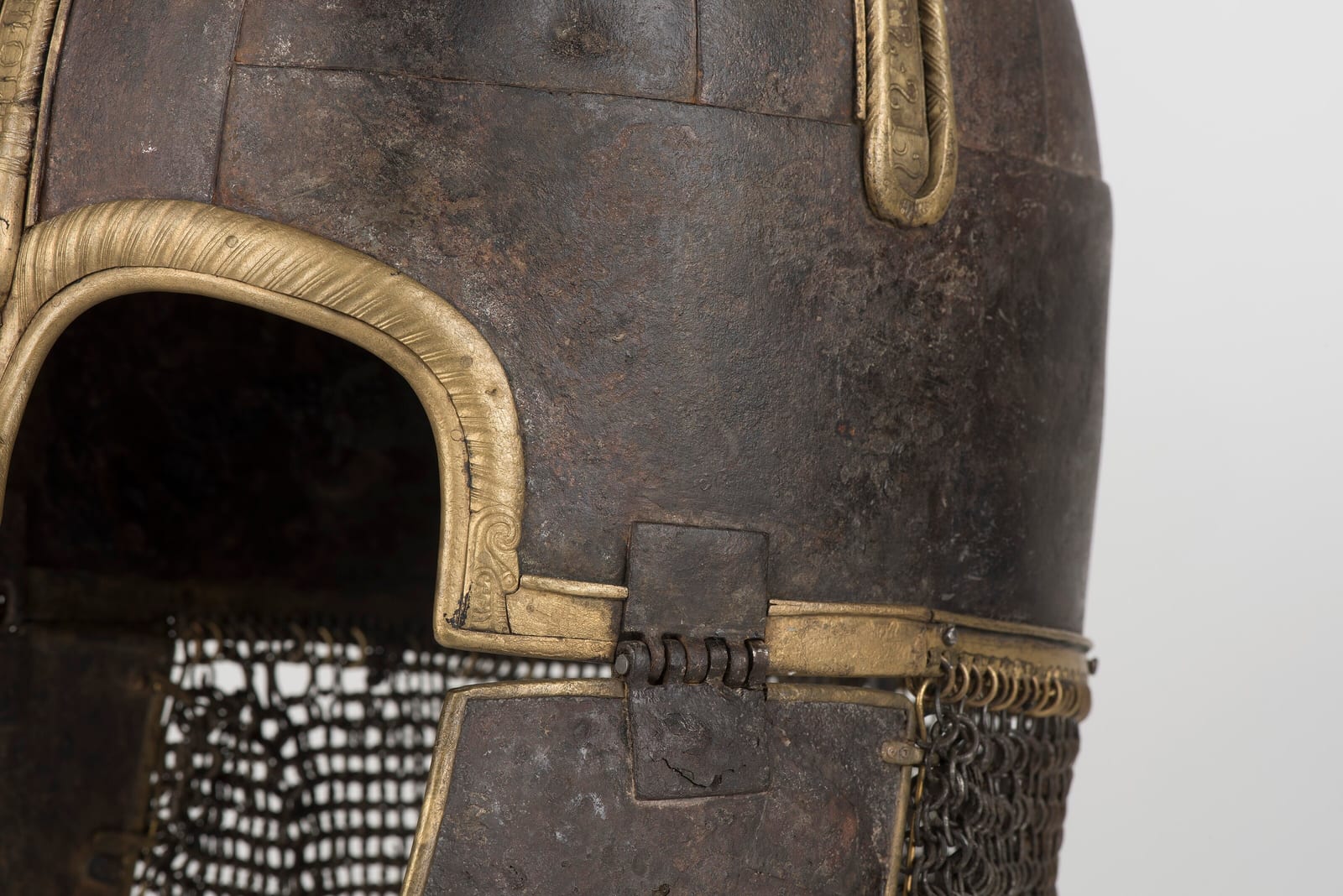
A sixth confusion runs on exactly the same error, mistaking a nineteenth-century picture for a ninth-century fact. We took that one apart in detail in our article on the horned helmet.
How a Job Description Became a Nation
The decisive rewrite of the word happened not in Scandinavia but in the reading rooms of Romantic Europe. In English, wicing effectively dropped out of use after the medieval period and returned only in the early nineteenth century, carried back in by antiquarians and poets rediscovering the sagas. In 1811 the Swedish poet and historian Erik Gustaf Geijer published Vikingen, a poem that turned the free seafaring Northman into a national emblem. From there the slide was quick: a role became a character, the character became a national type, and the national type became the umbrella label for everyone living in Scandinavia between roughly 800 and 1100.
That shift shaped what people expected to see in a museum case. Because the word was bound to combat and voyaging, everything else slid out of frame: weaving, assembly law at the thing, coin minting, house building, and the entire female half of the society. It took the excavations of the twentieth century, along with the systematic study of hoards and settlement layers, to force the picture back into balance. Many institutions now mark the distinction in their own wording, the National Museum of Denmark among them, speaking of Norse or Scandinavian society when they mean the population and keeping Viking for the activity the word originally described.
What to Say Today, and When “Viking” Is Still the Right Word
Our view on this comes in two halves. Professionally, the distinction is not pedantry, it is a genuine gain in accuracy. Say Norse and you bring the farmers, weavers, smiths and legal experts into view, and that is where the substance of the period actually sits. Call all of them Vikings and you are describing a whole society through its most conspicuous minority, rather as if sixteenth-century England were filed under privateering because Francis Drake existed.
At the same time, we see no point in policing anybody’s vocabulary. Viking is an established umbrella word in English, it opens the door to the subject, and no reader has ever been made wiser by being told off for using it. The better move is a sequence rather than a ban: start with the word people already know, then show them what it compresses. In practice that means Viking for raids, fleets and warfare, Norse or Scandinavian for society, language, settlement, trade and religion, and Viking Age for the period, because that name is not going to be replaced now.
Seen that way, Viking vs Norse is less a quarrel about vocabulary than a choice of vantage point. The first stands on the shore, sees a sail on the horizon and asks who is coming. The second turns around, looks at the farm the ship sailed from, and asks who stayed behind to get the hay in. The Viking Age only makes sense once you ask the second question too.
Image source: Thomas Ormston (Ormstont) (CC BY-SA 3.0), via Wikimedia Commons