Daily Life & Culture
The Thing: The People's Assembly of the Vikings
Fact-checking the Viking Thing: was the assembly really an early democracy, could women speak, and is Iceland's Althing truly the world's oldest parliament?
Contents
- Was the Thing Really an Early Democracy?
- Could Every Free Man Really Speak?
- Is It True That Women Had a Voice at the Thing?
- Was the Lawspeaker Really the Most Powerful Man at the Assembly?
- Is Iceland’s Althing Really the World’s Oldest Parliament?
- Myth vs. Fact at a Glance
- What Survives from the Thing Today
“The Vikings had democracy eleven hundred years before anyone else” - that line pops up almost automatically in documentaries and travel brochures the moment Iceland and its famous Althing come up. The truth about the Thing, the assembly at the heart of Norse society, is more complicated, more interesting, and in some ways considerably less idyllic than the popular image of an early grassroots democracy. Time for a fact check, grounded in the Grágás (Iceland’s oldest surviving law code), the Icelandic sagas, and archaeological evidence from assembly sites like Þingvellir.
Was the Thing Really an Early Democracy?
Partly true. The Thing was undoubtedly a remarkably participatory institution for its time: a regular assembly of free men where laws were proclaimed, disputes were argued, and important community decisions were made without a single ruler deciding alone. Regional Things existed across Scandinavia, including the Gulathing and Frostathing in Norway, as well as in the Norse settlements across the North Atlantic. In that sense, the Thing really was a remarkably early form of collective political decision-making.
But the term “democracy” in its modern sense, with equal voting rights for everyone regardless of wealth or status, doesn’t quite fit. Decisions were often reached through visible assent - the clashing of weapons as a sign of approval - rather than formal votes, and actual influence was anything but evenly distributed.
It’s also worth noting there wasn’t just one Thing, but an entire hierarchy of local and regional assemblies. Smaller local Things met more often and handled everyday disputes, while larger regional Things like Norway’s Gulathing convened only once or twice a year and dealt with cases that crossed the boundaries of individual communities. This tiered structure meant a dispute could, in principle, escalate from a local assembly up through progressively larger ones, not unlike a modern multi-tier court system, just without its centralized enforcement power.
Could Every Free Man Really Speak?
No, that’s a myth. Only free, property-owning men had full speaking rights and the standing to bring a legal case. Thralls (slaves), who made up a substantial share of Norse society, were excluded entirely. Even among free men, influence was far from equal: wealthy farmers, and above all the goðar (chieftains who combined the roles of local leader, priest, and legal advocate), effectively dominated the assemblies. A modest farmer could, in theory, take the floor, but without the backing of a powerful chieftain’s faction, his odds of prevailing in a dispute were slim. The Thing was, in practice, more a gathering of the powerful with limited participation from the less powerful than an assembly of fully equal citizens.
In Iceland, the goði system was further bound by a formal principle of followership: free farmers had to attach themselves as followers to a particular goði, though in theory they could switch that allegiance if they were unhappy with his representation, an early, if heavily constrained, form of competition for political support. How much practical value that right to switch actually carried is debated among historians, since most farmers stayed loyal to the same goði for life, for reasons of kinship, geographic proximity, and economic dependence.
Is It True That Women Had a Voice at the Thing?
Mostly myth, with caveats. Women generally couldn’t speak before the Thing or represent legal cases themselves; for that they needed a male representative, usually a father, husband, or brother. The Icelandic sagas, Njál’s saga among them, nonetheless show women acting with considerable influence behind the scenes, stoking disputes, demanding vengeance, and pushing their male relatives to act. Formal speaking rights were the exception, but informal influence, at least according to the saga literature, was anything but rare. Notably, the so-called “whetter” figure (hvöt), a woman who goads male relatives into blood vengeance through cutting remarks, becomes the actual engine of the plot in several sagas, despite never speaking before the Thing herself. It’s worth comparing this picture with our article on the Norse gods, where goddesses similarly oscillate between formal restraint and real power.
Was the Lawspeaker Really the Most Powerful Man at the Assembly?
Partly true, with an important caveat. The lawspeaker (lögsögumaður) genuinely held a central role: since there was no written law code in the earliest period, he was required to recite the entire body of law from memory at the Law Rock (Lögberg), spread out over three years, so the whole community would know it. That role gave him enormous prestige and legal authority as the reference point in disputes.
But the lawspeaker wasn’t a ruler in any real sense: he held no executive power, couldn’t force anyone to comply with a ruling, and was formally bound by existing law rather than authorized to change it on his own. The office was also time-limited and elected by the assembly itself, typically for a three-year term, which kept the office’s considerable authority from becoming permanently lodged in the hands of a single family or faction. Enforcement of judgments remained a private matter for the families and allies involved, which is exactly why the Icelandic sagas are so full of feuds even after a Thing had formally ruled on a case.
The Grágás, Iceland’s oldest surviving law code, lists a surprisingly detailed range of penalties, from fines to time-limited exile to full outlawry (útlegð), under which a convicted person lost all legal protection and could be killed by anyone without consequence. That possibility alone shows just how much the entire system rested on social pressure and the threat of existential consequences rather than a central executive: anyone who defied an outlawry ruling, or simply ignored it, risked the entire community turning against him.
Is Iceland’s Althing Really the World’s Oldest Parliament?
Mostly true, with serious competition. Iceland’s Althing, founded around 930 AD at Þingvellir, is commonly described as one of the oldest continuously existing parliaments in the world, and both archaeological and written evidence genuinely support that early date. However, the Tynwald on the Isle of Man, also founded by Norse settlers, claims unbroken sessions since 979 AD, which by some counts could make it the oldest continuously sitting parliament of all. Both institutions are, ultimately, direct descendants of the same Norse Thing tradition, which shows just how deeply this form of assembly was rooted in Viking culture.
Archaeologically, the Althing’s original site at Þingvellir (“Thing plains”) can still be traced impressively today: the distinctive rock fissure marking the geological rift between the Eurasian and North American tectonic plates provided a natural acoustic stage, from whose base the lawspeaker could address the assembled crowd from the Lögberg, while the surrounding rock formations served as informal “seating” for Iceland’s various kin-groups. That location was no accident; it shows just how deliberately the early Icelandic settlers chose a site meeting both practical and symbolic needs: centrally located, acoustically suited, and dramatic enough as a landscape to give the annual assembly real weight.
Myth vs. Fact at a Glance
| Claim | Verdict |
|---|---|
| ”The Thing was an early democracy” | Partly - participatory, but not equal |
| ”Every free man carried equal weight” | Myth - chieftains and the wealthy dominated |
| ”Women had formal speaking rights” | Mostly myth - informal influence yes, formal rarely |
| ”The lawspeaker ruled” | Partly - enormous authority, but no executive power |
| ”The Althing is the oldest parliament” | Mostly true - with competition from Tynwald |
What Survives from the Thing Today
The linguistic trail left by the Thing stretches surprisingly far beyond Scandinavia. Viking settlers left place names like Thingwall on the Wirral peninsula near Liverpool in Viking-age England, a direct echo of an assembly site that once stood there. Iceland’s parliament is still called the Althing today, Norway’s parliament is the Storting, Denmark’s is the Folketing - all direct linguistic descendants of the same word. Even the English word “thing,” in the sense of a matter or affair, traces back to the same root, since an assembly was originally simply the gathering where “the thing” was debated and settled.
The Thing itself was hardly a dry legal affair, either. The sagas describe the great summer assemblies as major social events, with families camping for days in makeshift tent settlements around the assembly site, trading goods, arranging marriages, and swapping news that would otherwise have travelled only slowly across the vast distances of Scandinavia and Iceland. A Thing was, at once, court, parliament, marketplace, and social gathering, a combination of roles that’s hard to picture in modern terms, but that for Norse society was exactly the fusion of law and community life that kept the institution functioning for centuries.
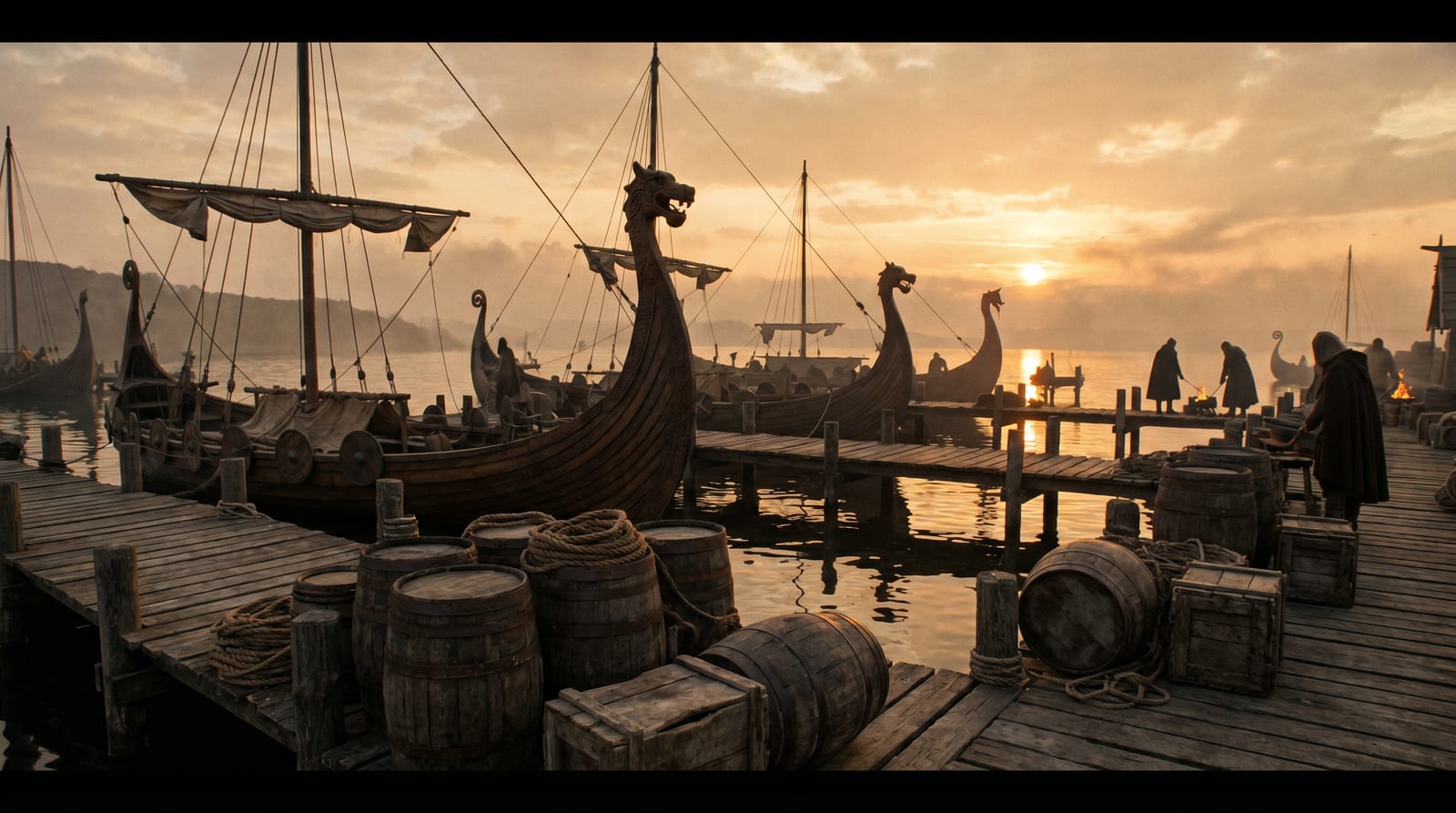
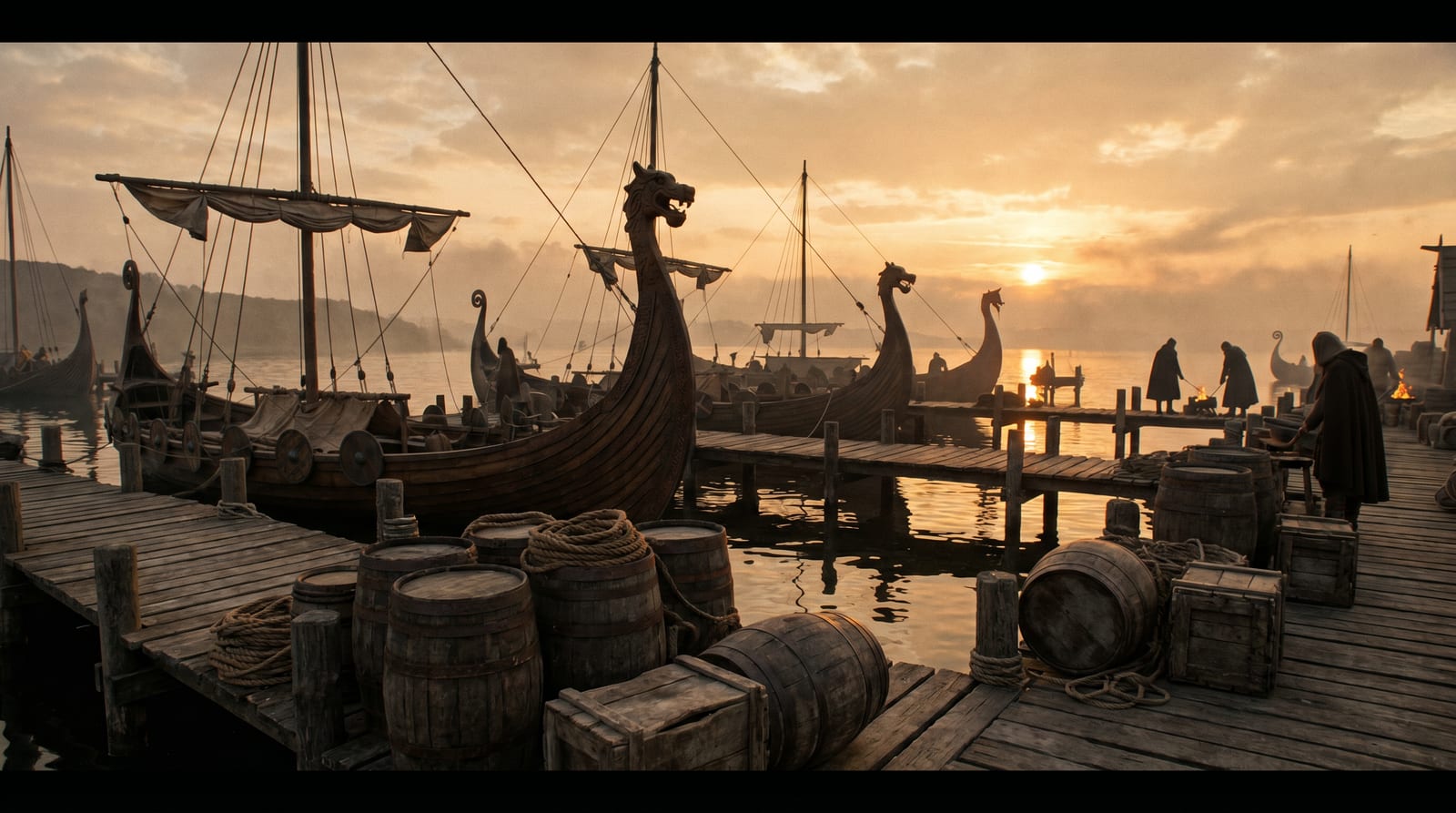
What ultimately makes the Thing so remarkable isn’t that it was a perfect, egalitarian institution, but that it existed at all: a systematic, recurring mechanism through which a society without central royal power dispensed justice, contained conflict, and organized cohesion, long before most other regions of Europe had anything comparable. Chieftains and farmers often travelled for days by longship to reach their assembly site, a reminder of just how tightly seafaring and legal order were woven together in the Norse world. It’s exactly this mix of real innovation and limited participation that makes the Thing one of the most revealing chapters in the actual daily life of the Vikings.