Recipes
Viking Barley Porridge with Honey: The Norsemen's Everyday Bowl
Barley porridge with honey, Viking style: a simple 4-ingredient recipe, plus the archaeology of quern stones, worn teeth, and barley farming in the North.
Contents
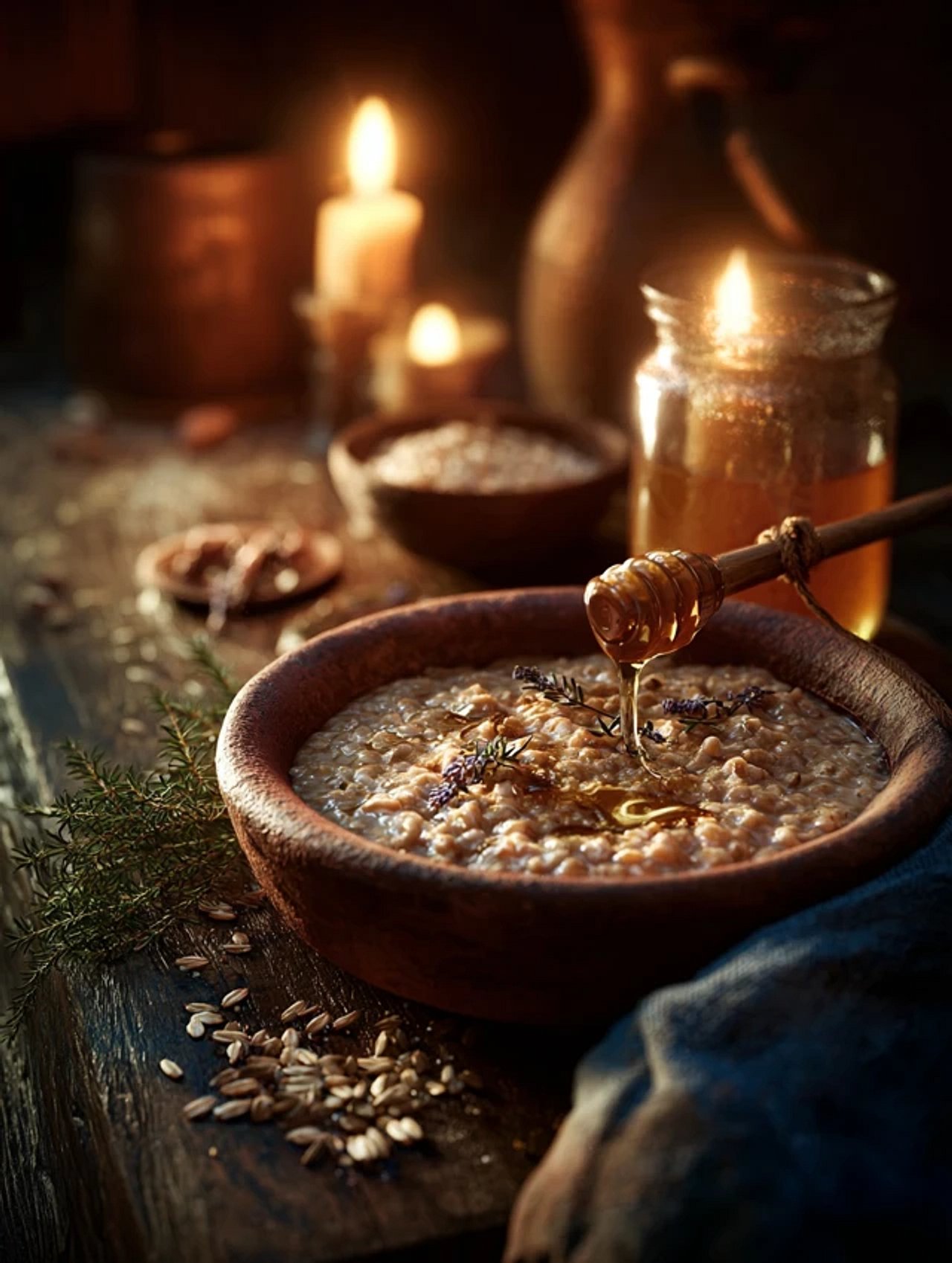
Think of a Viking Age breakfast, and you should picture a cauldron over the fire and the smell of warm grain. Barley porridge was exactly that: a simple, filling porridge made from pearl barley, simmered in water or milk and sweetened with a spoonful of honey. This was not feast food. It was everyday food, cooked on every farm, in every season, by the servant girl and the farmer himself alike. Unlike the thin, pan-baked flatbread that also came from barley, this porridge needed no fire under a pan, only a pot and patience, and that is exactly what made it the most-cooked dish in the North.
Barley Porridge: The Daily Bread in Liquid Form
Barley was the most important grain in Scandinavia, and for good reason. Wheat needs warm, long summers, something the far North rarely offered. Rye only became common later. Barley, on the other hand, is undemanding: it ripens fast, tolerates cool nights, and keeps growing where other grains have long since given up. Archaeological finds from Birka and Hedeby, the two great trading towns of the Viking Age, confirm this picture clearly. Charred grains and ear fragments show that barley was by far the most widely cultivated grain there, well ahead of oats, rye, or wheat.
That barley was not only baked into bread, it was even more often boiled into porridge. A porridge made from coarsely crushed or whole barley grains needed no baking fire, no elaborate dough technique, and no pan, just a cauldron over the open hearth at the center of the longhouse. That is precisely why barley porridge was the dish found across every social class: in the poorest cottage just as in a chieftain’s hall, with only the extras differing, milk instead of water, honey instead of nothing at all, a knob of butter on a good day.
From Grain to Porridge: Quern Stones and Worn Teeth
Before barley went into the pot, it often had to be at least coarsely crushed so it would soften faster and release more flavor. For this, people used rotary hand mills known as querns: two round, flat stones stacked on top of each other, the upper one fitted with a handle hole so it could be turned by hand while grain was ground between the two surfaces. Quern stones like these were part of the standard equipment on practically every Viking farm and have been found in large numbers at excavation sites.
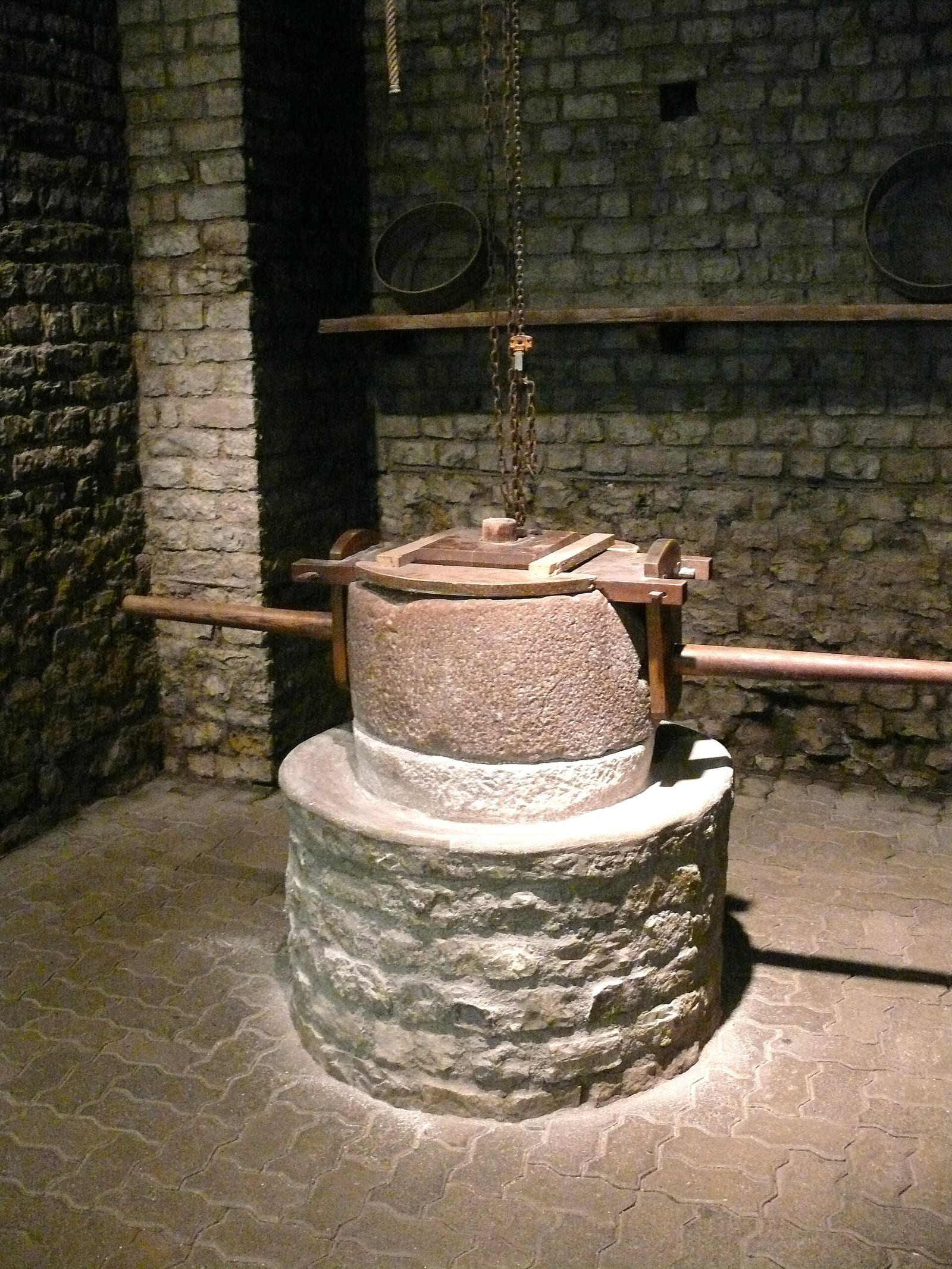
Image source: Ad Meskens (CC BY-SA 3.0), via Wikimedia Commons
This hand labor had a side effect that archaeology has documented clearly. Tiny fragments of stone chipped off during grinding and ended up in the finished flour or grain, and by extension in the porridge itself. Skeletal remains from the Viking Age show heavily worn teeth in almost every adult individual, a direct consequence of decades spent eating stone-ground grain. Someone who reached fifty years of age often already had noticeably flattened molars, a finding recorded in numerous excavation reports from Scandinavia. It is a small, unglamorous detail, but it says a great deal about how much hard work went into what looks like a humble daily bowl.
People in the North typically ate two meals a day, the dagmal in the late morning and the nattmal in the evening, and porridge dishes belonged to both. If you want to read more about the role grain played in Norse daily life, our article on Viking flatbread covers more background on how barley was grown and processed.
Ingredients
For 2 to 3 servings:
- 200 g (1 cup) pearl barley
- 500 ml (2 cups) water or milk
- 1 tbsp honey
- 1 pinch of salt
That is all this recipe needs, and that is exactly what makes it such an honest piece of everyday history. Pearl barley is sold at health food stores, well-stocked supermarkets, or online. It consists of hulled, whole or lightly cracked barley grains and is quite different from the fine barley flour used for flatbread.
Instructions
- Rinse the barley. Rinse the pearl barley briefly in a sieve under cold water to remove excess starch.
- Bring to a boil. Bring the barley and the water or milk to a boil in a pot.
- Simmer. Reduce the heat and let the porridge simmer gently for about 30 minutes, stirring occasionally, until the grains are soft and the porridge has thickened. Depending on the barley and the consistency you want, this can take a little more or less time.
- Season. Stir in the pinch of salt.
- Sweeten. Take the pot off the heat and stir in the honey.
- Serve. Spoon into bowls and serve warm.
Tips & Variations
- Toast the barley first: Toast the dry pearl barley in a hot pot without fat for 2 to 3 minutes before adding liquid. It adds a nutty, roasted flavor that plain-boiled barley does not have.
- Use milk instead of water: Cooking with milk makes the porridge noticeably creamier and milder, closer to what wealthier farms could afford on a good day.
- Soak overnight: To cut the cooking time, soak the barley in cold water for a few hours or overnight. This saves about 10 to 15 minutes of cooking and makes the porridge especially tender.
- Add berries: A spoonful of wild berries on top links this porridge to our oat porridge with berries, two dishes with the same roots, just a different grain.
- Add nuts or seeds: A handful of chopped hazelnuts or pumpkin seeds add bite and turn breakfast into a heartier midday meal.
- Storing: Leftovers keep in the fridge for 2 to 3 days and reheat well with a splash of water or milk stirred in.
| Grain | Cultivation in the North | Typical use in the Viking Age |
|---|---|---|
| Barley | everywhere, undemanding | porridge, gruel, flatbread, ale |
| Oats | widespread | porridge, mixed into bread |
| Rye | spreading from the 10th century | dark bread, mainly Denmark |
| Wheat | only in favored regions | feast bread of the wealthy |
Fun fact: Barley porridge was so common that it left traces in Northern languages that survive to this day, with many Scandinavian words for gruel and porridge tracing back to this centuries-old staple. What reads as a rustic breakfast to us now was simply what kept people going between fieldwork and a day rowing a longship.
A Porridge That Has Lasted for Centuries
Few dishes show as clearly how little a filling meal really needs: a pot, water or milk, barley, and a little honey. That simplicity is exactly what makes barley porridge one of the most honest recipes in Norse cooking to this day, quick to make, nourishing, and carrying a history that reaches back to the quern stones of Viking farms. If you enjoyed this recipe, it is worth trying our pan-baked flatbread too, made from the same grain but in a completely different way.
If you want to dive deeper into Norse cooking: this recipe is just a taste of our collection. The cookbook “Viking Feast” holds 141 recipes of the Norse kitchen, from honey bread to feast-day dishes and the mead to go with them. Get the cookbook