Recipes
Viking Apple Cider Recipe: The Drink After Harvest
A Viking apple cider recipe from the North: press, ferment and age your own cider, plus the real apple finds from Oseberg and Hedeby behind the legend.
Contents
There is a week every autumn when the tree gives more than any kitchen can handle. Apples pile up in the grass, the wasps find them first, and sooner or later somebody asks the obvious question: what do we do with all of this? People in the North answered it the same way for centuries. This Viking apple cider recipe asks for almost nothing - juice, yeast, a clean vessel and a few weeks of patience - and it turns a glut of windfalls into something golden that gets better the longer you leave it alone.
You get two things here: a working recipe a complete beginner can follow, and an honest look at what Norse farmers really did with their apples. The archaeology beats the legend.
Apples in the North: What the Finds Show
Apples were not an exotic import in Scandinavia. The wild crab apple, Malus sylvestris, grows naturally from southern Denmark into the woods of southern Sweden. It is small, hard and properly sour, and it keeps turning up wherever archaeologists dig:
- The Oseberg ship burial, Norway (buried 834): alongside the two women and the famous carved grave goods lay a wooden bucket of wild apples, preserved by the blue clay of the mound. Provisions for a journey that was never meant to end. We tell the full story of the find in our piece on the Oseberg ship.
- Hedeby, on the Danish-German border: the waterlogged layers of the trading town preserved plant remains including apples, sloes, hazelnuts and berries. Fruit belonged to ordinary life there, not only to the feast.
- Egtved, Denmark (Bronze Age, around 1370 BC): the National Museum of Denmark identified residues of a fermented drink made from wheat, honey, cranberries and bog myrtle in the bark bucket found with the burial. Northern Europeans were fermenting fruit and grain two thousand years before the Viking Age began.
- Capitulare de villis, Frankish empire (around 800): Charlemagne’s estate regulations list workers producing sicera, fermented fruit drinks, among the required staff of a royal manor. Cider was an established craft just south of the Danish border.
Put those together: the fruit was there, fermentation was understood, and the neighbours were already pressing apples for a living.
Myth or Fact: Did the Vikings Drink Cider?
This is where popular history tends to overreach, so we laid the evidence out side by side.
| Claim | What the evidence supports | What it does not support |
|---|---|---|
| ”Vikings drank cider” | Apples in graves and settlements; fermentation was well understood | No find shows deliberately pressed and fermented apple wine in Scandinavia |
| ”Idunn’s apples prove an apple cult” | Snorri Sturluson describes Idunn’s fruit of youth in the Prose Edda | Old Norse epli meant fruit in general, not necessarily the apple |
| ”Cider was the everyday drink” | Cheap barley ale was the everyday drink of the North | Cider as a staple beverage is guesswork, not evidence |
| ”It tasted like modern cider” | Apples and fermentation both existed | Crab apples were small and sharp; sweet dessert varieties arrived later with monastery orchards |
Our take: anyone claiming cider flowed through every longhouse is selling atmosphere as history. Ruling it out is just as wrong. Crushed fruit in a wooden bucket at twenty degrees ferments on its own within days - that needs no recipe and no tradition, only a warm September and a container somebody forgot about. Cider in the North was probably never invented so much as discovered, repeatedly, by accident. What follows is not a reconstruction, then, but a modern cider in the northern spirit: few ingredients, plenty of time, no gadgets.
Worth knowing: crab apples carry far more tannin than modern eating apples, and tannin is exactly what gives cider its backbone. That is why serious cider makers still throw a few small, bitter apples into an otherwise sweet pressing.
Ingredients
Makes roughly 1.3 gallons (5 litres):
- 15 lb mixed ripe apples (about two thirds sweet, one third sharp or bitter), or 1.3 gallons (5 litres) of cloudy, unsulphured apple juice
- 1 sachet of wine yeast, around 5 g (Burgundy, port or champagne yeast all work)
- 1 tsp yeast nutrient from a homebrew supplier
- Optional: 5 oz (150 g) honey for a stronger, rounder cider
- Optional: a handful of sloes or crab apples for tannin and colour
Equipment: a fermenter of at least 1.6 gallons (6 litres), a bung with an airlock, a metre of siphon tubing, clean swing-top or wine bottles. Pressing your own fruit also needs a scratter and a press, which orchard clubs often rent out cheaply.
Instructions
- Clean everything. Scrub the fermenter, spoon, funnel, tubing and airlock, then rinse with boiling water. This single step decides whether you end up with cider or vinegar.
- Sort the fruit. Wash the apples, cut away stalks and any rotten patches, and leave the cores in. Bruises are fine. Mould is not, so discard anything furry.
- Crush and press. Mill the apples to a coarse pulp and press. Fifteen pounds of fruit gives roughly 1.2 to 1.4 gallons of juice depending on variety. Using shop-bought juice? Skip steps 2 and 3.
- Fill the fermenter. Pour the juice in, leaving the top fifth empty, because cider foams hard in the first days. Stir in the honey now if you are using it.
- Pitch the yeast. Rehydrate the wine yeast as the packet instructs, add it with the nutrient, and stir vigorously to get oxygen into the juice. The yeast needs that oxygen only for the start.
- Fit the airlock. Seal the fermenter and half fill the airlock with water. It lets carbon dioxide out and keeps wild bacteria away.
- Ferment. Keep the vessel somewhere dark and steady at 64 to 68°F (18 to 20°C). Bubbling starts within a day or two. Primary fermentation runs 2 to 3 weeks and is finished when the airlock falls quiet and the cider begins to clear from the top down.
- Rack it off. Siphon the young cider into a clean vessel without disturbing the yeast sediment. Fill this second vessel right to the top.
- Let it clear. Leave it somewhere cool for another 4 to 6 weeks and rack a second time if a new layer of sediment forms. The clearer it goes now, the cleaner it tastes later.
- Bottle and age. Fill clean bottles and store them cool. The cider is drinkable straight away, but it is genuinely good after 2 to 3 months.
One note: depending on the starting sugar, the finished cider lands around 5 to 7 percent alcohol. Treat it accordingly.
Tips & Variations
- Blending beats technique. Cider from sweet eating apples alone turns out flat. Sharp cooking apples such as Bramley, or any small bitter variety, give it structure. Old orchard cultivars are worth hunting down.
- Dry or medium? Let the yeast eat all the sugar and you get a lean, dry cider. For something rounder, chill the vessel below 41°F (5°C) to stall fermentation and rack it promptly.
- Sloe cider. Ferment a handful of sloes picked after the first frost along with the juice: more tannin, a rosy tint and considerably more character.
- Bog myrtle instead of hops. Myrica gale is documented as a flavouring in fermented Northern drinks and suits cider well. One sprig per 1.3 gallons.
- Nothing is bubbling. Usually the room is too cold or the yeast too old. Move the vessel somewhere warmer and add a fresh sachet. The batch is not lost.
- A white film on top? A thin dull skin is normally harmless film yeast: skim it and rack immediately. Fuzzy, coloured mould means pour it away and work cleaner next time.
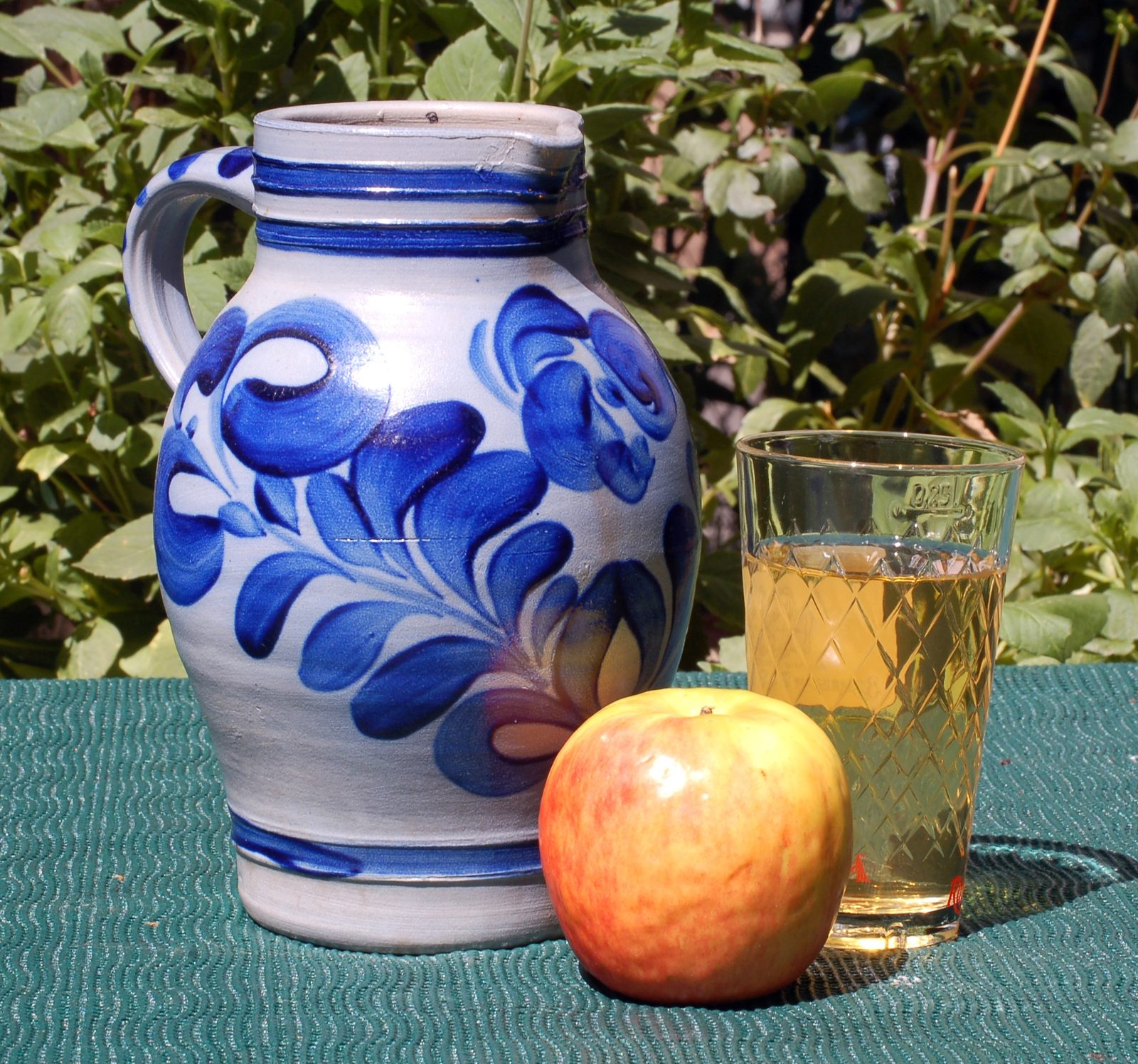
- Serving. Cool but not ice cold, in pottery or heavy glass. Cider against smoked fish, dark bread and hard cheese is one of the great cheap pleasures of autumn.
By the way: this is only the starting point. Our cookbook “Viking Feast - The Great Viking Cookbook” collects 141 recipes from the world of the Norsemen, from roasts and stews to more drinks built on honey, fruit and grain. Visit the cookbook
A Viking Apple Cider Recipe Without the Alcohol
Not everyone wants to wait six weeks or serve alcohol. For sweet, unfermented cider, leave the yeast out. Press the juice, strain it through fine cloth, heat it to 172°F (78°C) and hold it there for 20 minutes. Do not let it boil, or it tastes of stewed fruit. Bottle it hot, seal immediately and stand the bottles upside down to cool. In a cellar it keeps a year and still tastes of the tree it came from.
If you like the fermented route but prefer honey to fruit as your sugar, our guide to making mead uses exactly the same principle with a different starting point. The two drinks sit very happily on the same table.
The Drink After Harvest
Cider is an honest drink. It forgives beginners, needs no expensive kit, and turns a garden problem into something you can give away by the bottle at midwinter. Better still, it restores a rhythm most of us have lost: you start it when the fruit comes down and drink it when the evenings go dark. That was always the northern bargain. What the summer gives, carries you through the winter. Skål.
Image source: Eva K. (CC BY-SA 2.5), via Wikimedia Commons