Recipes
Spiced Mead Recipe: Viking Honey Wine with Berries and Herbs
A spiced mead recipe from the Viking north: honey wine with berries, juniper and bog myrtle, plus the real archaeology behind Nordic spiced honey drinks.
Contents
Mead is the drink everyone associates with the Vikings. Anyone who has brewed a batch, though, runs into the same problem: on its own, honey wine tastes round, sweet and oddly flat. That is the gap this spiced mead recipe fills. It brings together what the North handed out anyway in late summer - dark honey, sharp berries, herbs from the bog edge. The result is not syrup with alcohol in it but a drink with edges: resinous, faintly bitter on the finish, with a berry acidity that finally balances the honey.
Unlike most “authentic Viking recipes” online, this one rests on published research: in the North, honey almost never went into the vat alone.
What a Spiced Mead Recipe Adds to Plain Honey Wine
Plain mead needs three things: honey, water, yeast - we covered that version in our guide on how to make mead. A spiced mead adds a fourth category, and it changes everything.
Brewers split the field into two families. A melomel is mead made with fruit, a metheglin is mead made with herbs and spices. This recipe does both at once, because that combination is what the archaeology shows. Berries bring acid, tannin and colour, herbs bitterness and aromatic oils. Together they give the honey an opponent.
The difference is bigger than you would guess. Sweetness with no acid behind it feels heavy, and half a cup is usually enough. Add lingonberries or sloes and the pH drops, the mead tastes leaner, and the yeast works more reliably. Juniper and bog myrtle then lay a dry, resinous layer over the sweetness so each mouthful ends clean.
Nordic Grog: What the Finds Actually Show
Spiced mead is no modern invention. In 2013, archaeochemist Patrick McGovern and colleagues published a biomolecular study of Scandinavian drinking vessels in the Danish Journal of Archaeology. Their conclusion: for over a thousand years, people in the North drank a mixed beverage the team nicknamed “Nordic grog” - honey as the base, plus berries, grain, herbs and, where trade allowed, imported grape wine.
The key samples read like a shopping list for this recipe:
| Site | Date | What the analysis showed |
|---|---|---|
| Egtved (Jutland, DK) | c. 1370 BC | Birch-bark bucket inside an oak coffin, residues of a honey and grain drink with bog myrtle and lingonberry |
| Nandrup (DK) | Early Bronze Age | Drinking vessel with residues of a mixed honey-based beverage |
| Kostræde (DK) | Late Bronze Age | Strainer residues from a fermented mix of honey, grain and wild fruit |
| Juellinge (Lolland, DK) | c. AD 100 | Woman’s grave with a bronze strainer and bucket, honey drink with bog myrtle and cranberry |
| Havor (Gotland, SE) | Roman Iron Age | Honey-based beverage blended with imported grape wine |
The same names keep surfacing across these samples: honey, lingonberry, bog cranberry, bog myrtle, juniper, yarrow, birch resin. The Juellinge grave held the matching tool as well: a bronze strainer.
Myth: Every Viking hall kept a jug of spiced mead brewed to a fixed recipe. Fact: The Viking Age left no recipes at all. What it left are the components: mead as a feast drink in the Eddas and sagas, berries and herbs in settlement layers from Hedeby to York, chemical traces of spiced honey drinks across Scandinavia. Those residue samples come from the Bronze and Iron Ages, so they predate the Vikings. They show the tradition the Viking Age stood in, not its instruction manual.
For the Viking Age itself, the written sources take over. Snorri Sturluson tells in the Prose Edda how Odin stole the mead of poetry from the giant Suttung. Grímnismál describes the goat Heidrun, whose udder supplies the mead drunk by the fallen in Valhalla. Hávamál warns, drily, that drink robs a man of his wits.
The Herbs of the North: Bog Myrtle, Juniper, Meadowsweet
Hops only took over northern brewing in the High Middle Ages. Before that, ale and honey drinks were flavoured with herb blends known as gruit. The signature plant of that tradition is bog myrtle, Myrica gale, called pors across Scandinavia. It grows on acid bogs and delivers a bitterness unlike hops: sharper, drier, almost medicinal.
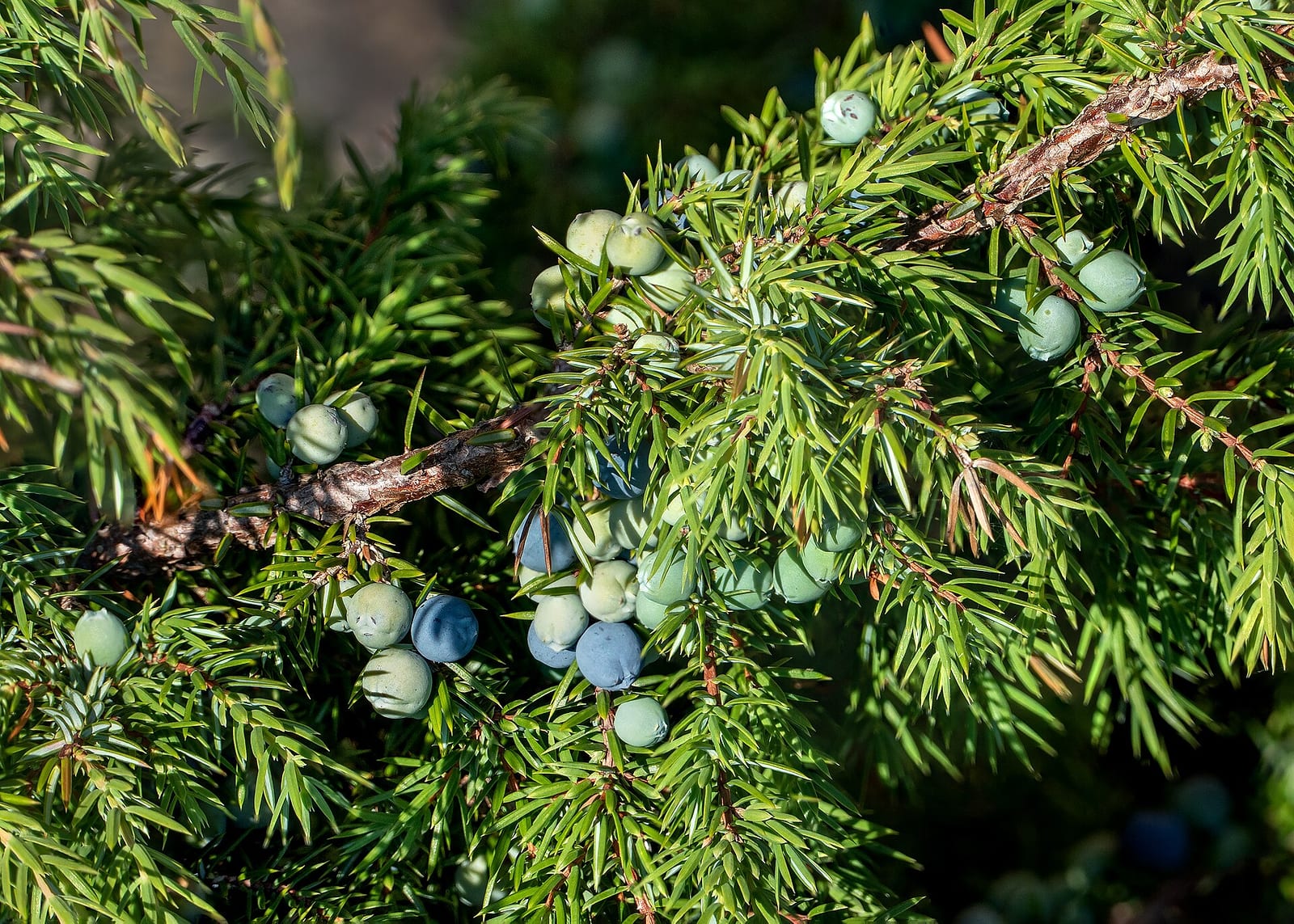
Juniper is the other great name. In Finland, the farmhouse ale sahti is still filtered through a bed of juniper twigs, and Norwegian farm breweries built every mash on juniper infusion for centuries. Juniper berries in mead are about as Nordic as brewing gets.
Then meadowsweet, whose blossom smells of honey and almond, and yarrow. Both belong to the classic gruit repertoire. For what else went into northern pots, see our piece on Viking herbs and spices.
One caution: bog myrtle is rich in essential oils, has always been dosed sparingly and is not considered advisable during pregnancy. If in doubt, swap it for meadowsweet, which is milder.
Did you know? The bronze strainer from the Juellinge grave shows how such a drink was served: the brew was strained as it was poured, leaving herbs and fruit behind in the sieve. A drinking horn has no filter.
Ingredients
Makes about 5 litres (1.3 gallons):
- 4 lb dark honey (1.8 kg), heather, forest or fir
- 4 litres still water (1 gallon)
- 14 oz dark berries (400 g): lingonberries, sloes, elderberries or blueberries, fresh or frozen
- 12 juniper berries, lightly crushed
- 2 tsp dried bog myrtle, or dried meadowsweet blossom
- 1 tsp dried yarrow (optional)
- Juice of 1 unwaxed lemon
- 1 sachet wine yeast (port or mead yeast)
- 1 tsp yeast nutrient
Equipment: a 6-litre fermenter, bung and airlock, siphon tubing, a fine sieve or muslin, clean bottles.
Instructions
- Clean everything. Scrub the fermenter, funnel, spoon and airlock, then rinse with boiling water. On a batch that sits for weeks, this decides between mead and vinegar.
- Make the herb infusion. Boil 1 litre of water, take it off the heat, and steep the juniper berries, bog myrtle and yarrow for 10 minutes. Do not boil them, or the aromatic oils turn harsh. Strain and cool.
- Dissolve the honey. Warm 1.5 litres of water to no more than 40°C (104°F) and stir the honey in until fully dissolved. Anything hotter destroys the aromas you paid for.
- Add the berries. Crush the berries roughly, tip them into the fermenter and pour the warm honey solution over them.
- Make up the batch. Add the herb infusion and the remaining cold water until the fermenter is full, then let it drop below 25°C (77°F).
- Pitch the yeast. Stir in the wine yeast, nutrient and lemon juice, then stir vigorously to work in oxygen. Seal with the bung and a water-filled airlock.
- Ferment. Keep it at 18 to 22°C (64 to 72°F). After 7 days strain out the spent berries, then ferment another 4 to 6 weeks until the bubbling stops.
- Rack and age. Siphon the young mead off the yeast bed, let it clear 2 to 4 weeks, then bottle. Three to six months of cool storage rounds it out.
Tips & Variations
- Go light on the herbs. Bog myrtle and juniper grow stronger during ageing, not weaker. Better to underdose and add more at racking than write off a batch.
- Sweet or dry? If the yeast eats all the sugar, the mead finishes dry and the herbs step forward sharply. For a sweeter version, stir 150 to 250 g of honey back in after the first racking.
- The shortcut. No six weeks to spare? Warm ready-made mead with berries, two juniper berries and a strip of lemon peel to 60°C (140°F), steep 10 minutes, strain. Never boil it, or the alcohol and the aroma leave together.
- Berries by season. Pick sloes only after the first frost, when they lose their harshness. Frozen berries work beautifully straight from the freezer.
- Barrel character without a barrel. A small piece of untreated oak from a brewing supplier adds vanilla and smoke during ageing, which suits heather honey well.
- Safety first. The finished mead lands at 10 to 14 percent alcohol. Not for children, not during pregnancy, and bog myrtle is off the list for the same reason.
If this kitchen appeals to you, our cookbook “Viking Feast - The Great Viking Cookbook” holds 141 recipes from the North, from flatbread and feast roasts to more mead variations. See the cookbook
Spiced Mead in Practice: Our Verdict
We have run this recipe more than once, and the honest lesson is this: the usual mistake is not too little spice but too much. One teaspoon too much bog myrtle and, four months on, the mead tastes like herbal liqueur. The berries are forgiving, losing their punch during fermentation and leaving mostly acid and colour behind.
The second lesson concerns expectations. If television has sold you a thick, honey-sweet hero’s drink, you are in for a surprise. Properly made spiced mead is dry, gently bitter and closer to wine than most people anticipate, which is why it belongs beside a roast.
One last point about the label: this is a historically informed recipe, not a reconstructed original. But every ingredient in it is documented in the North, and a drink cannot get closer to the Viking Age without someone inventing sources. Skål.
Image credits: Wydec (CC BY 2.0) and W.carter (CC BY-SA 4.0), via Wikimedia Commons