Daily Life & Culture
The Lewis Chessmen: Ivory From the World of the Vikings
The Lewis chessmen tie the Vikings' world to a Scottish dune: 93 walrus ivory carvings, shield-biting berserker rooks and a riddle no one has fully solved.

Contents
Somewhere on the windswept west coast of the Isle of Lewis, sometime in the Middle Ages, somebody buried a small fortune in the sand and never came back for it. When it resurfaced in 1831, the world got one of the most beloved archaeological finds ever made: the Lewis chessmen, dozens of walrus ivory gaming pieces with bulging eyes, brooding kings and rooks so furious they bite their own shields. They were carved a century after the last great raids, yet they are unthinkable without the Vikings - Lewis still answered to the Norwegian crown when the pieces were made, and the sea lanes that carried them west were mapped by Norse keels generations earlier. How the hoard reached the island, who carved it and why it was abandoned are questions that have kept scholars arguing for nearly two hundred years.
A hoard in the dunes: the discovery of 1831
The one thing everyone agrees on is the place: the bay of Uig, on the Atlantic coast of Lewis in Scotland’s Outer Hebrides, where the pieces emerged from a sand dune. Almost everything else about the discovery comes wrapped in folklore. In one version a grazing cow kicked the hoard loose. In another, a local crofter dug into a small stone chamber and fled when dozens of pale little faces stared back at him, convinced he had disturbed a gathering of sleeping elves. These stories were written down decades after the fact, and none of them can be verified.
The paper trail begins in April 1831, when the find was shown to the Society of Antiquaries of Scotland in Edinburgh. Within months, most of the hoard had been bought for the British Museum, largely thanks to Frederic Madden, the museum’s manuscript keeper and a devoted historian of chess. Madden published the first scholarly study of the pieces in 1832, and it contains a wonderful detail: several figures still carried traces of red colouring when found. Medieval players, it seems, faced off not as black against white but as red against white.
A smaller batch passed through the hands of the collector Charles Kirkpatrick Sharpe and later Lord Londesborough before returning to Edinburgh in 1888. That split endures to this day: 82 objects in the British Museum in London, 11 pieces in the National Museum of Scotland.
What the sand gave back: 93 objects, four incomplete sets
The Uig hoard contains 93 objects in total: 78 chess pieces, 14 plain disc-shaped counters for a tables game of the backgammon family, and one ivory belt buckle. Nearly everything is walrus ivory, with a few pieces cut from whale tooth. Line the chessmen up by type and a striking pattern appears:
| Piece | Found | Needed for 4 sets | Missing |
|---|---|---|---|
| Kings | 8 | 8 | 0 |
| Queens | 8 | 8 | 0 |
| Bishops | 16 | 16 | 0 |
| Knights | 15 | 16 | 1 |
| Rooks (warders) | 12 | 16 | 4 |
| Pawns | 19 | 64 | 45 |
Four nearly complete sets, short mainly of pawns - the plainest, cheapest, easiest pieces to replace. That looks less like a nobleman’s game room and more like stock in transit. The most widely accepted reading is that a merchant carried the sets from Norway toward the markets of Dublin and the Irish Sea, hid or salvaged his cargo on Lewis, and never returned. It cannot be proven, but the inventory itself argues the case better than any saga could.
The tallest kings stand around ten centimetres, and no two figures are alike. Every face, every fold of drapery, every throne is an individual solution. Whoever made these pieces was not churning out trinkets; this was the top end of the North Atlantic luxury trade.
The rooks that bite their shields
The undisputed celebrities of the hoard are a handful of rooks. Most of these warders stand stiffly with sword and shield, but a few roll their eyes and sink their teeth into the rim of their own shield. Any medieval Norse audience would have recognised the reference instantly. Snorri Sturluson’s Ynglinga saga describes the warriors of Odin who fought without armour, howled like wolves and bit their shields - the berserkers of legend.
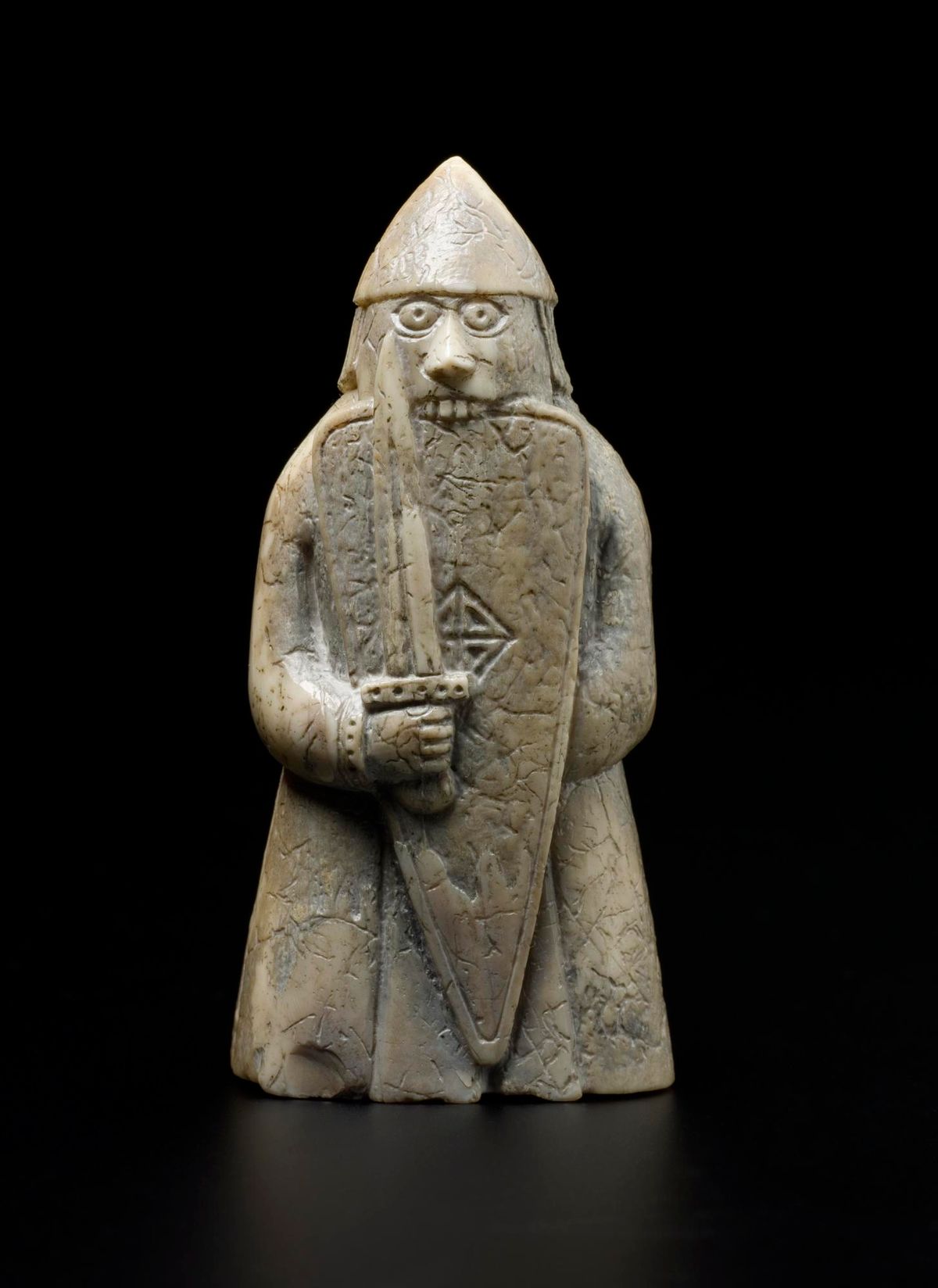 Image credit: National Museums Scotland (CC BY-SA 4.0), via Wikimedia Commons
Think about what that means. Around 1200, decades before Snorri wrote his sagas down in Iceland, a carver somewhere in the Norse world could reach for the image of the raging shield-biter and trust that customers would get the joke. The Lewis warders are among the earliest surviving depictions of the berserker motif anywhere - proof that the old stories were still common currency long after the raiding age ended. Where Indian and Persian chess had a war chariot on the corner squares, the North installed its own nightmare infantry.
Fittingly, there is a song for exactly these pieces. Listen to Berserkir Bróðir while you read on - a track about the very warriors who have been biting their shields here for 800 years:
The Lewis Chessmen and the Vikings
Strictly speaking, the Lewis chessmen are not Viking Age artifacts. The standard dating puts them between roughly 1150 and 1200, about a century after Stamford Bridge, the battle usually chosen as the era’s full stop. Yet everything about them runs on Viking infrastructure. Norse settlers had colonised the Hebrides in the 9th century, and in the 12th century the islands still belonged to the Kingdom of the Isles under Norwegian overlordship; they only passed to Scotland with the Treaty of Perth in 1266. Place names across Lewis carry Norse roots to this day, and the shipping route from Trondheim down through the Hebrides to Dublin was a direct inheritance of Viking seafaring.
Gaming culture tells the same story. For centuries, Scandinavians had played hnefatafl, a strategy game in which a king and his bodyguard fight their way out from the centre of the board. Tafl pieces turn up again and again in Viking Age graves, as much a part of daily life in the Norse world as combs and cooking pots. So when chess arrived from the East along the trade routes, it did not land in a vacuum. It reached a society that already treated board games as markers of status, patience and strategic wit. The Lewis chessmen capture that handover moment perfectly: a brand-new game, cast with the personnel of the old northern world.
Made in Trondheim? The workshop question
Where were they carved? For nearly two centuries that question has powered one of archaeology’s friendliest ongoing feuds. The majority view points to Trondheim, medieval Nidaros: seat of an archbishop, hub of the walrus ivory trade, and home to church carvings whose style closely matches the chessmen. The raw material fits too. Walrus tusk flowed into Norway through the Greenland and Iceland trade and was the North’s premier luxury material until elephant ivory pushed it off the market.
Iceland, however, refuses to leave the stage. The Icelandic theory leans on Páls saga biskups, the life of Bishop Páll of Skálholt, which mentions a carver named Margrét hin haga - Margret the Adroit.
Margrét carved walrus ivory more skilfully than anyone else in Iceland - paraphrased from the account in Páls saga biskups.
There is no physical evidence linking Margret to the Lewis hoard, and most researchers remain unconvinced. But the debate is worth having, because it highlights the real point: whether the workshop stood in Trondheim, in Skálholt or somewhere else in the Norwegian orbit, these pieces were born in a North Atlantic network that Viking ships had stitched together in the first place.
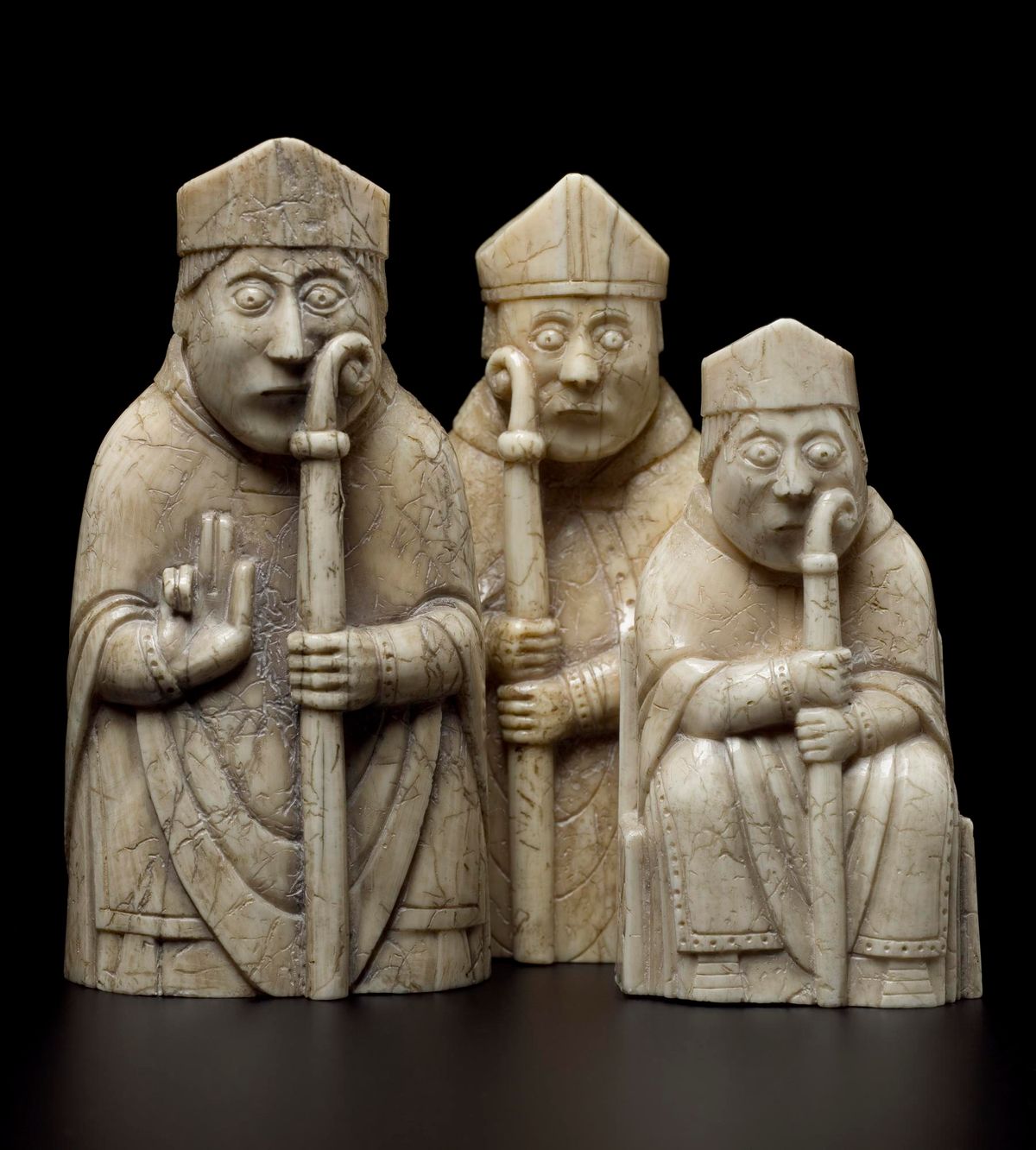 Image credit: National Museums Scotland (CC BY-SA 4.0), via Wikimedia Commons
One detail deserves a closer look: the bishops. The Lewis chessmen are among the earliest known chess sets to render this piece unmistakably as a churchman, mitre, crozier and all. The board mirrors the society that made it - king, queen, church, mounted warrior, foot soldier - and quietly documents how completely the Christian church had woven itself into the northern order of power.
From Uig to Hogwarts: museums, auctions, pop culture
Today the Lewis chessmen rank among Britain’s most famous museum objects. The British Museum chose them for the BBC series “A History of the World in 100 Objects”, and replicas of the pieces served as models for the giant wizard chess set in the first Harry Potter film. Since 2016, six figures have been on long-term loan at Museum nan Eilean in Stornoway - the first time since 1831 that any of the chessmen have lived permanently on Lewis itself.
The hoard’s pull showed no sign of fading in 2019. An Edinburgh antiques dealer had bought a small ivory figure for five pounds in 1964; it spent half a century in a drawer. When his family finally had it examined, it turned out to be a lost warder of the Lewis group, one of five major pieces still missing. At Sotheby’s in London it sold for 735,000 pounds.
The key dates at a glance:
- c. 1150-1200: the pieces are carved, most likely in Trondheim
- 1266: the Treaty of Perth transfers the Hebrides from Norway to Scotland
- 1831: discovery at Uig, first showing in Edinburgh, purchase by the British Museum
- 1888: 11 pieces settle permanently in Edinburgh
- 2001: the chessmen inspire the wizard chess of the first Harry Potter film
- 2019: a rediscovered warder fetches 735,000 pounds at Sotheby’s
Our take
The Lewis chessmen are often filed under charming curiosities - little faces destined for museum shop mugs. We think that sells them badly short. This hoard is one of the densest snapshots we own of the 12th-century North: a society balanced between saga memory and European fashion, between the old gods’ imagery and the church’s new hierarchy, held together by sea routes the Vikings built. That a game preserved this world is no accident. In the North, board games were never mere pastime; they were credentials, proof of rank and a sharp mind. Look one of the furious little Lewis berserkers in the eye and you are looking straight into the imagination of the late Norse world. No chronicle preserves it better.
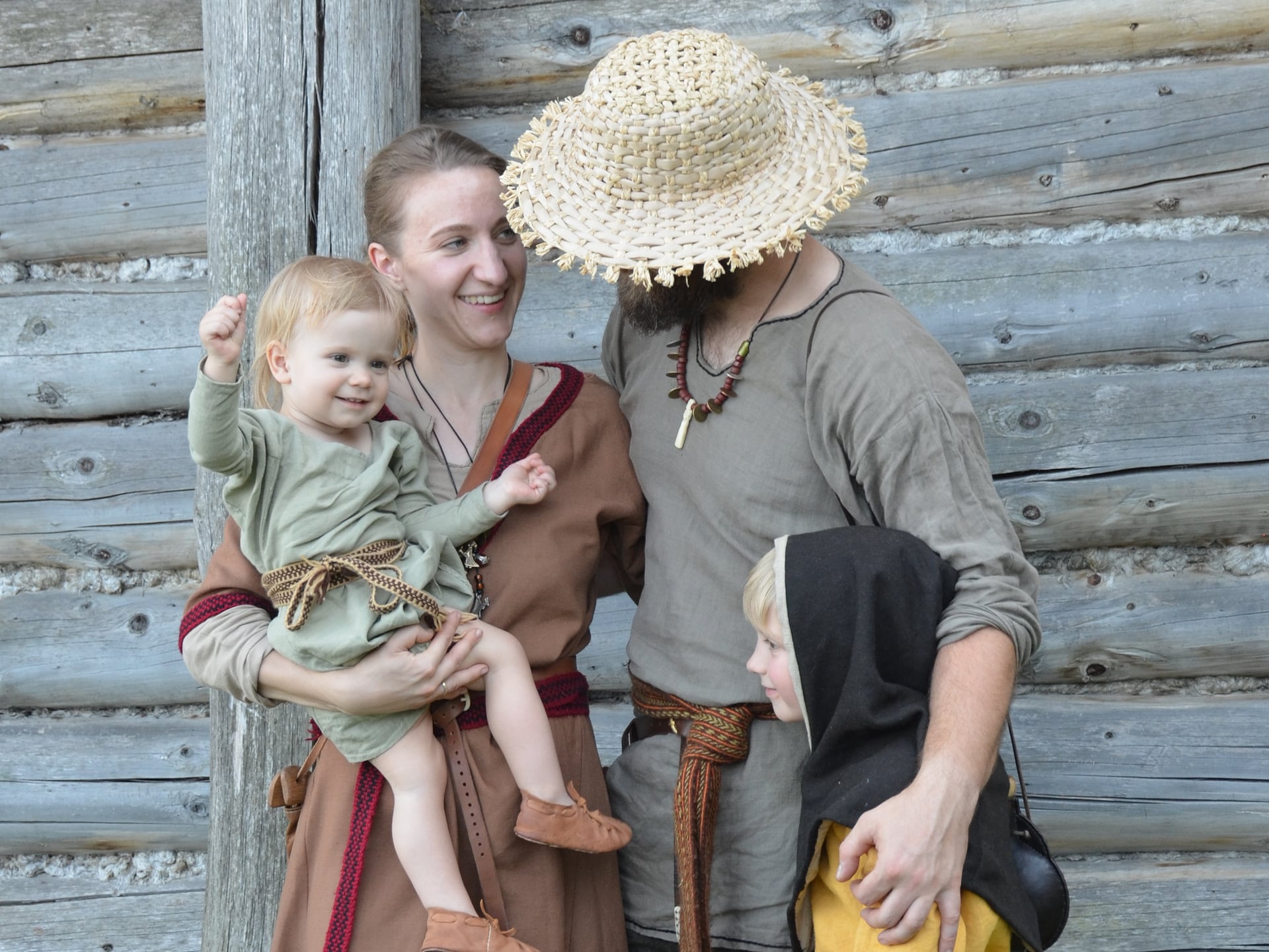
Hero image credit: Helen Simonsson (CC BY-SA 2.0), via Wikimedia Commons