Recipes
How to Make Gravlax: Cured Salmon the Nordic Way
How to make gravlax at home in 48 hours: the exact salt and sugar cure, how much dill, timings, slicing technique and the Nordic history behind the dish.
Contents
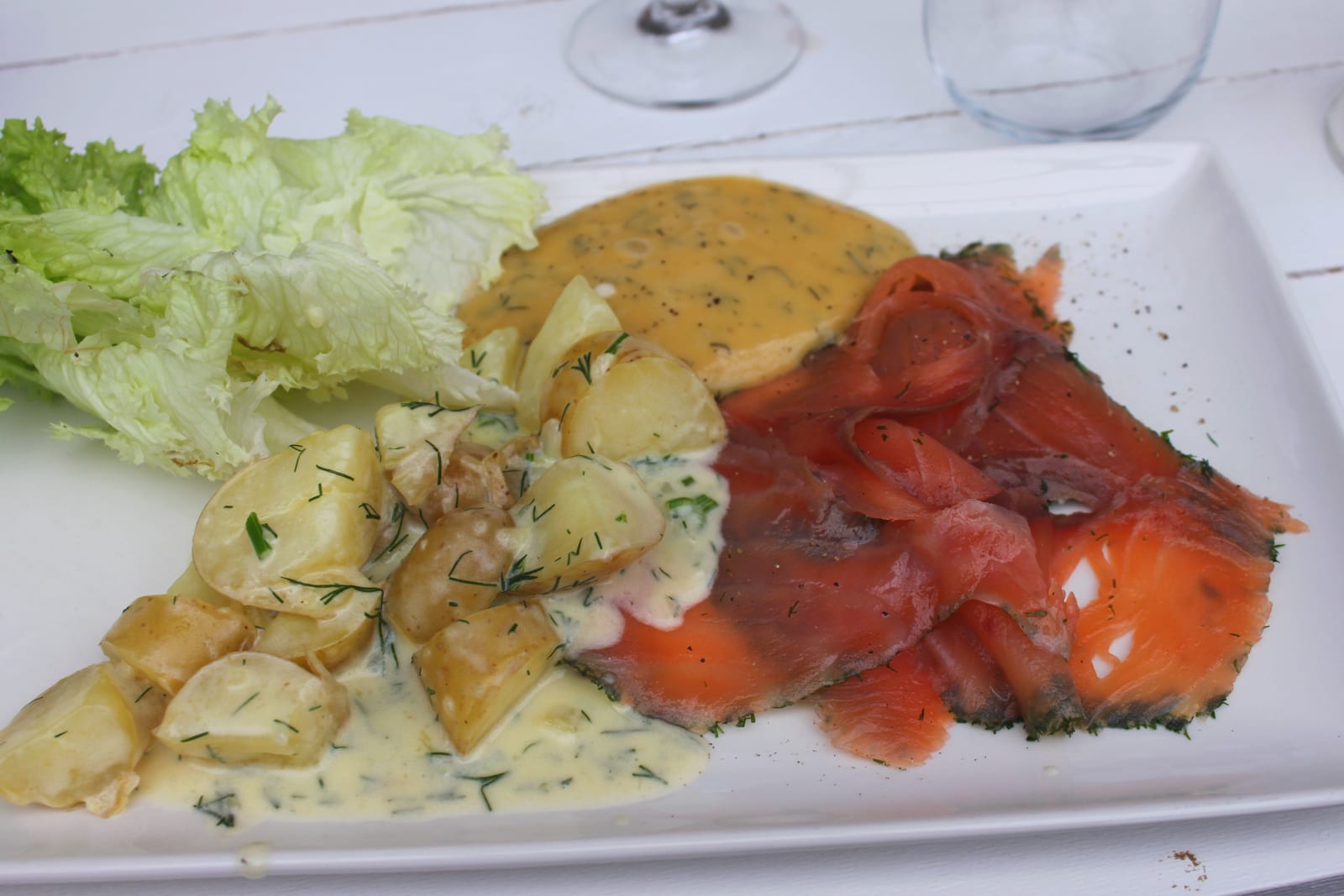
Learning how to make gravlax takes about twenty minutes of actual work. Salt, sugar, dill and two days in the fridge do everything else. What comes out has never seen heat or smoke, yet it is firm, seasoned and keeps for most of a week: deep orange, silky under the knife, with a green rim of dill along the edge. Before the cure, though, the name is worth a look. It tells a far older and stranger story than the recipe attached to it.
Buried, Not Marinated: Where the Name Comes From
The Swedish word gravlax has two halves. Lax is salmon, and grava means to dig or to bury, from the Old Norse grafa. Taken literally, gravlax is buried salmon. The same root runs through Danish gravad laks, Norwegian gravlaks, Finnish graavilohi and Icelandic grafinn lax.
The word is genuinely old. Swedish dictionary tradition points to an attestation from 1348, where Gravlax turns up as a man’s byname. Nobody is nicknamed after a dish that needs explaining.
But what people buried in the fourteenth century bears little resemblance to the platter served at Christmas today. Fishermen salted the catch lightly, packed it into pits in cool, acidic ground, weighted it down and left it for weeks. The result was fermented fish: pungent, soft, and good right through the winter. Anyone who wants to taste that tradition today orders rakfisk in Norway or opens a tin of surströmming in Sweden. Those are the direct descendants of the original method, not the dill-flecked salmon on the buffet.
What the North Actually Did With Fish
Behind every one of these techniques sits the same constraint: salt was scarce and expensive in Scandinavia. It had to be boiled out of seawater or burned out of salt-tolerant coastal plants, and both routes cost fuel and labour. Nobody here could salt a catch the way Mediterranean cooks did, so the work went to the landscape instead: wind, cold, smoke and earth.
| Method | Agent | Result | Keeps for |
|---|---|---|---|
| Air-drying (stockfish) | wind and frost, no salt | hard, intense, needs soaking | years |
| Smoking | smouldering wood | cooked or firm, smoky | days to months |
| Burying (fermenting) | earth, little salt, time | soft, sour, very pungent | one winter |
| Curing (modern gravlax) | salt, sugar, dill, cold | firm, mild, sliceable paper-thin | 5 to 7 days |
Dill itself is well documented in the North. The Oseberg ship burial, dated by dendrochronology to 834, held seeds of dill and cress alongside apples, hazelnuts and wheat. It is the one part of this recipe that rests on solid archaeological ground.
The sugar does not. Cane sugar stayed a luxury import in Scandinavia well into the modern period and only became cheap with the beet sugar industry of the nineteenth century. The mild, sweet-salty gravlax we know today is therefore a modern refinement of a very old idea, not a Viking dish. Our honest view after several batches: that takes nothing away from the recipe, it just means you should not sell it as an excavation report. To get closer to the historical method, follow the smoke rather than the sugar, as in our guide to hot-smoking trout.
Myth and Fact
| Claim | Where it stands |
|---|---|
| Gravlax is a Viking recipe | Only in outline. Burying fish is ancient, the sugar-and-dill cure is modern. |
| Gravlax is raw fish | Misleading. Salt and sugar draw out water and denature the protein. The fish is cured, just without heat. |
| Longer curing is always better | No. Past roughly four days the texture turns dry and the centre goes salty. |
| Smoked salmon and gravlax are the same thing | They are not. Smoked salmon takes its flavour from smoke, gravlax from salt, sugar and herb. |
| The fish must be weighted | Common, not compulsory. Weight makes the slices firmer, but the cure works either way. |
Did you know? The liquid pooling in the dish after a day is not a mistake, it is proof the cure is working. Salt pulls water out of the flesh, and that water dissolves more salt and sugar into a brine that washes the fillet from every side. Which is why you turn the fish rather than pour the liquid away.
How to Make Gravlax: What Actually Matters
If you want to know how to make gravlax reliably, four decisions shape the result. Everything else is a matter of taste.
The fish. A centre cut of salmon fillet, skin on, even in thickness, with as little thin belly flap as possible. Leave the skin on. It holds the piece together when you come to slice it.
The safety step. Because the fish is never heated, freeze it for at least 24 hours at minus 4°F (minus 20°C) first. That is the standard professional kitchens apply to fish served uncooked, and it reliably deals with parasites.
The ratio. As a rule of thumb, use 8 percent salt and 6 percent sugar by the weight of the fish. More salt firms the flesh faster but oversalts it just as fast. For a gentler result, drop to 6 percent salt and add a few hours.
The time. For a kilo, 48 hours is the sweet spot. Thin tail pieces are done in 24 hours, thick loin cuts can take 60.
The schedule is forgiving, and the hands-on time is under half an hour:
- Day 1, morning: freeze the fish (at least 24 hours), or buy it frozen.
- Day 2, morning: thaw it in the fridge.
- Day 2, evening: mix the cure, pack the fish, weight it down. About 20 minutes of work.
- Days 3 and 4: turn it morning and evening. Two minutes each time.
- Day 4, evening: scrape, pat dry, slice.
Ingredients
Serves 8:
- 2.2 lb salmon fillet, skin on, centre cut, pin-boned (1 kg)
- 1/3 cup coarse sea salt (80 g)
- 1/4 cup plus 1 tbsp sugar (60 g)
- 2 tsp black pepper, coarsely cracked
- 2 large bunches dill, roughly 2 oz (60 g), coarsely chopped
- 2 tbsp aquavit or vodka (optional)
- 1 tsp crushed juniper berries (optional)
Instructions
- Prepare. Freeze the salmon at minus 4°F (minus 20°C) for at least 24 hours, then thaw it in the fridge. Pull any pin bones, pat the fillet dry and cut it crosswise into two pieces.
- Mix the cure. Combine salt, sugar, pepper and the juniper if you are using it. Chop the dill coarsely and keep the stalks in.
- Rub. Coat both pieces all over, going heavier on the flesh side than on the skin. If you are using aquavit, sprinkle it over the flesh first.
- Layer. Scatter a third of the dill in a shallow dish, lay the first piece skin side down, spread the rest of the dill over it and set the second piece flesh side down on top, thick end against thin end.
- Weight it. Wrap the parcel tightly in film, return it to the dish, cover with a board and press with about 2 lb (1 kg) of weight.
- Cure. Refrigerate for 48 hours. Turn the parcel every 12 hours and spoon the brine that collects back over the fish.
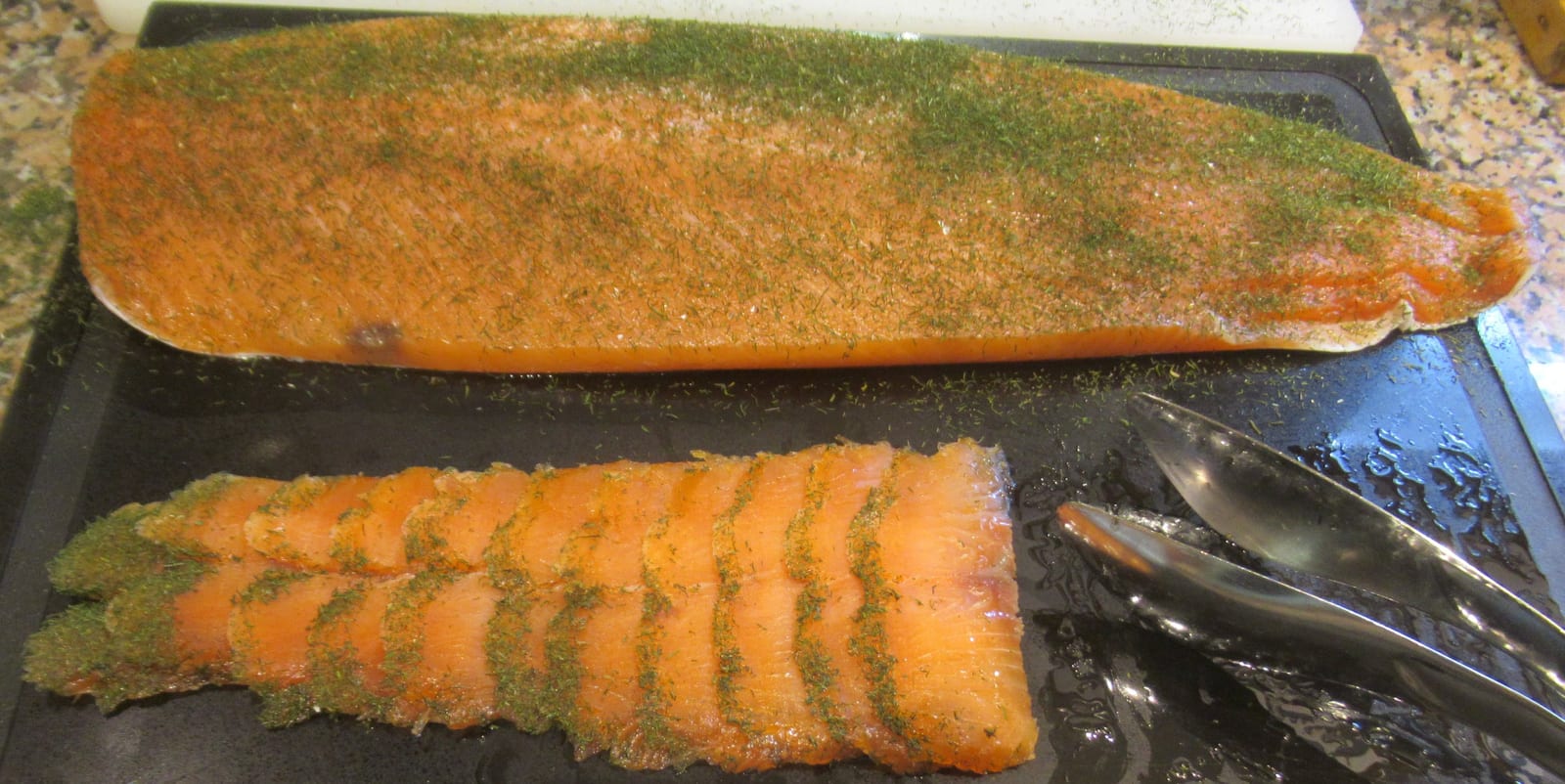
- Finish. Scrape off the cure and the dill. Do not rinse the fillet, just pat it dry. Press fresh chopped dill onto the flesh side for a green edge.
- Slice. With a long, thin knife at a shallow angle, cut paper-thin slices away from the skin, across the grain.
Tips & Variations
- Mustard and dill sauce: whisk 3 tbsp medium mustard, 1 tsp dijon, 2 tbsp sugar and 2 tbsp white wine vinegar, then trickle in 6 tbsp oil and finish with a lot of chopped dill. This is the Swedish hovmästarsås, and to our mind the dish is incomplete without it.
- Beetroot cure: stir 7 oz (200 g) of grated raw beetroot into the cure. The rim turns deep purple and the flavour earthier.
- No sugar: possible, but cut the curing time to 24 to 30 hours. Without it the salt bites noticeably harder.
- Other fish: arctic char, trout and mackerel behave the same way, though their thinner fillets need only 18 to 24 hours.
- Seasoning like a Northerner: juniper, fennel seed and mugwort all work. For what the Norse pantry held, see our overview of herbs and spices in the Viking kitchen.
- Storage: well wrapped, 5 to 7 days in the fridge. Once cut, store it cut side down so it does not dry out.
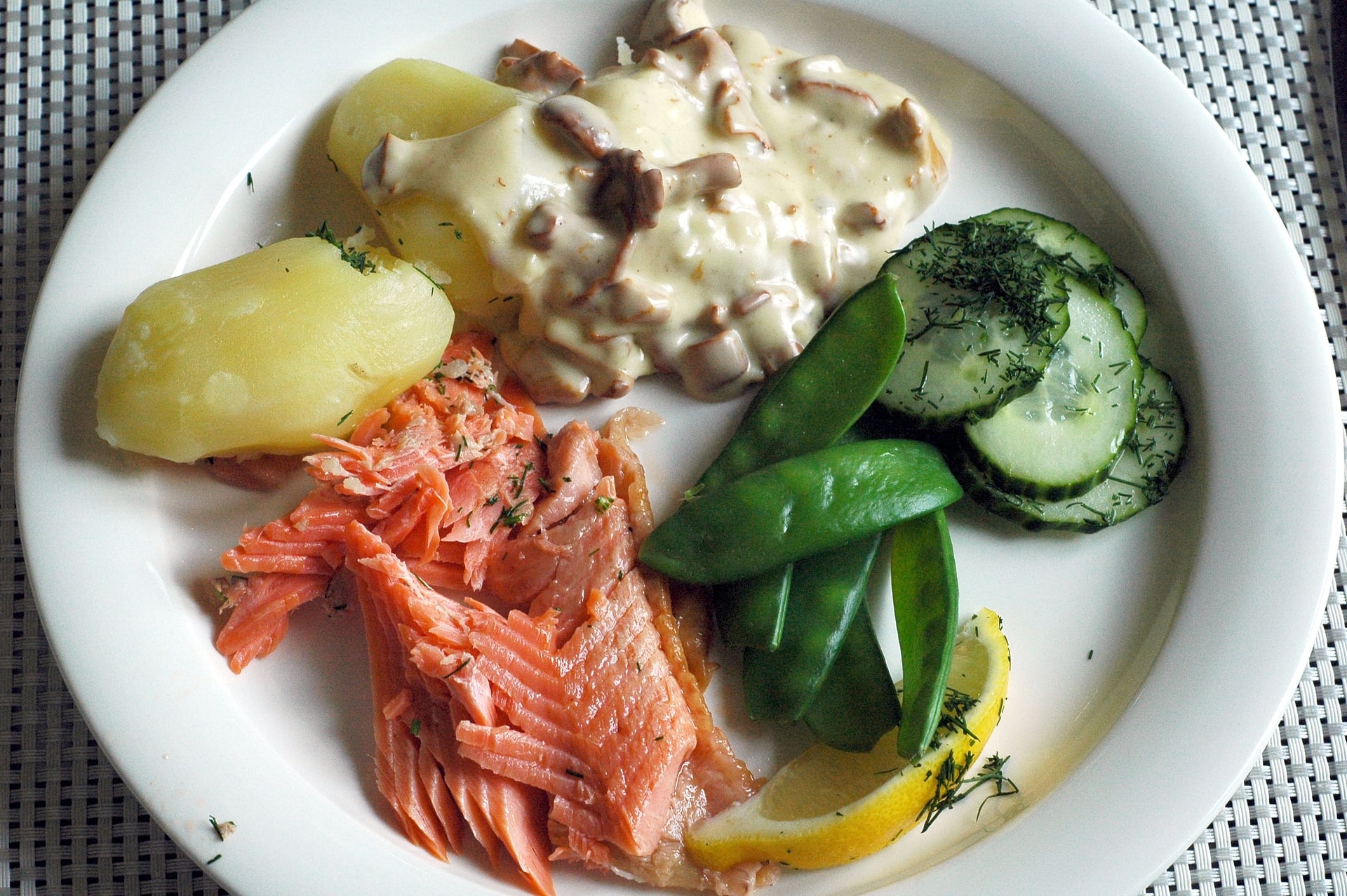
- Leftovers: fold strips through skyr with dill and lemon for a spread, or serve on rye bread with cucumber.
If this way of cooking appeals to you, the recipe comes from our cookbook Viking Feast, which gathers the fish, breads, stews and feast dishes of the North in one place. See the cookbook
Knowing how to make gravlax ultimately means knowing a recipe in which you do almost nothing and can still get everything right. Salt, sugar, one herb and time. The Vikings had no sugar and would probably have found the result tame. The name they gave the method, though, has outlived them by nearly a thousand years.
Image credits: Benreis (CC BY 3.0) and P1898 (CC BY 4.0), via Wikimedia Commons