History
Birka: Sweden's First Town and the Riddle of the Björkö Warrior
Birka was Scandinavia's first real trading town, linked all the way to Baghdad. Why one warrior grave there has divided researchers since 2017.

Contents
On a small island in Sweden’s Lake Mälaren, less than two hours by car from Stockholm, one of the most important towns in the North stood for over two centuries. Birka was not a farming village or a royal hall but something Scandinavia had barely seen before: a genuine trading town, with permanent houses, craft quarters, a harbor installation, and a resident population of merchants drawn from half of Europe and the Middle East. Among the more than a thousand graves excavated there lies one that still occupies Viking Age researchers today: grave Bj 581, celebrated for decades as the resting place of a powerful male warrior, until a DNA analysis in 2017 showed that the person buried there was biologically female.
An Island Becomes a Hub of the World
Birka sits on the island of Björkö, sheltered within Lake Mälaren yet directly connected to the Baltic Sea by water. The settlement was likely founded around the middle of the 8th century, probably under the control of the kings of Svealand, who had a clear interest in concentrating and controlling trade in the region. From here, trade routes ran in every direction: west toward Frankish trading posts, south across the Baltic, and above all east, along the Volga river all the way into the Abbasid Caliphate.
That eastern connection is what makes Birka so remarkable archaeologically. Thousands of Arab silver coins, known as dirhams, minted in workshops from Baghdad to Samarkand, have turned up in the town’s graves and occupation layers. They did not arrive directly but traveled through a chain of middlemen along the Russian river systems, exchanged for furs, amber, walrus ivory, and, as historical sources confirm, enslaved people as well. Birka was, in effect, one endpoint of a trade network that literally stretched from Scandinavia into the Islamic world, long before anyone in Europe would have used a word like “globalization.”
Moving those goods required ships shallow enough for rivers yet seaworthy enough for the Baltic. Exactly how the Norse solved that problem is covered in detail in our article on the longship. Birka itself was, first and foremost, a place of trade, not a launching point for raids the way distant Lindisfarne was on the English coast, even though both places show, in very different ways, just how far the Norse world’s reach actually extended.
 Image source: Swedish National Heritage Board (No restrictions), via Wikimedia Commons
Life and Defense Behind the Ramparts
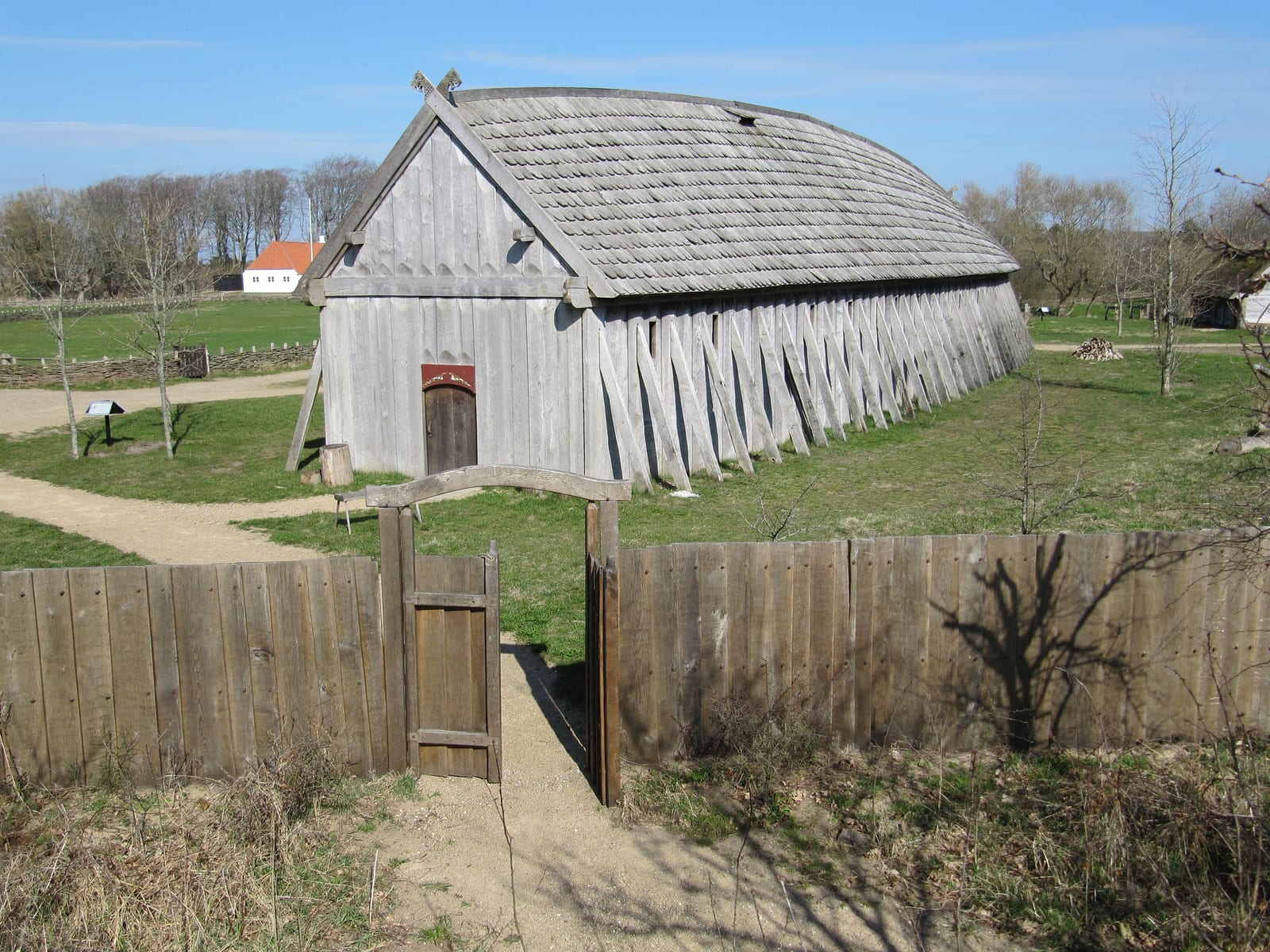
By the standards of its era, Birka was a real town. Estimates put the permanent population at 700 to 1,000 people, with craft quarters for comb makers, smiths, glass bead producers, and bronze casters. Archaeological finds document workshops that processed raw materials from across Europe, a clear sign that Birka did not just funnel goods through but produced and refined them locally.
The settlement was protected by a semicircular earth and timber rampart sealing off the landward side, along with the so-called “Borg,” a hillfort with a clear view over the surrounding waterways from which approaching ships could be spotted early. Wooden stakes driven into the water further secured the approach to the harbor, forcing incoming vessels onto a controllable course. This combination of commercial openness and military preparedness was typical of the early Scandinavian trading centers: wealth attracted attention, and attention had to be defended.
Ansgar’s Mission: Christianity Arrives at Birka
Birka is also so well documented because it became the setting for the first recorded Christian mission to Sweden. Around 829 to 831 AD, the monk Ansgar, later known as the “Apostle of the North,” traveled to Birka on the orders of the Frankish emperor Louis the Pious to preach there and establish an early church. The journey is recorded in the Vita Ansgarii, a biography written some decades later by his student and successor, Rimbert.
Rimbert’s text describes how Ansgar first found the local king receptive, how he gathered a small community of converts, and how the young mission faltered again after his departure before later missionaries picked up the thread. Historians today read the Vita Ansgarii with appropriate caution: it is a hagiographic work, written to affirm Ansgar’s sanctity, not a neutral chronicle. Even so, it is considered a valuable, fundamentally credible source for the early contact history between Christian continental Europe and pagan Sweden, since it offers details that line up with other findings from Birka itself.
Birka illustrates something fundamental about the Viking Age in this episode: it was not an isolated world of raiding, but a place where merchants, missionaries, and diplomats from across the known Europe of the time actually crossed paths.
Hjalmar Stolpe and the Rediscovery of Birka
That we know so much about Birka today is owed largely to one man: the Swedish archaeologist Hjalmar Stolpe. Starting in the 1870s, Stolpe excavated systematically on Björkö, originally searching for fossilized amber, but he uncovered the remains of the old town instead and devoted himself almost entirely to studying it from then on. By the 1890s he had uncovered more than 1,100 graves, along with parts of the settlement itself and its fortifications.
Stolpe’s work was remarkably careful documentation for its time, with detailed drawings and finds lists that archaeologists still work from today. At the same time, his methods naturally did not meet the standards of modern excavation. Some of his interpretations, particularly around the sex of individual burials, were only tested, revised, or confirmed more than a century later using scientific methods. No grave illustrates that more clearly than the one catalogued as Bj 581.
 Image source: Selfoss (CC BY-SA 4.0), via Wikimedia Commons
Grave Bj 581: The Warrior Nobody Expected
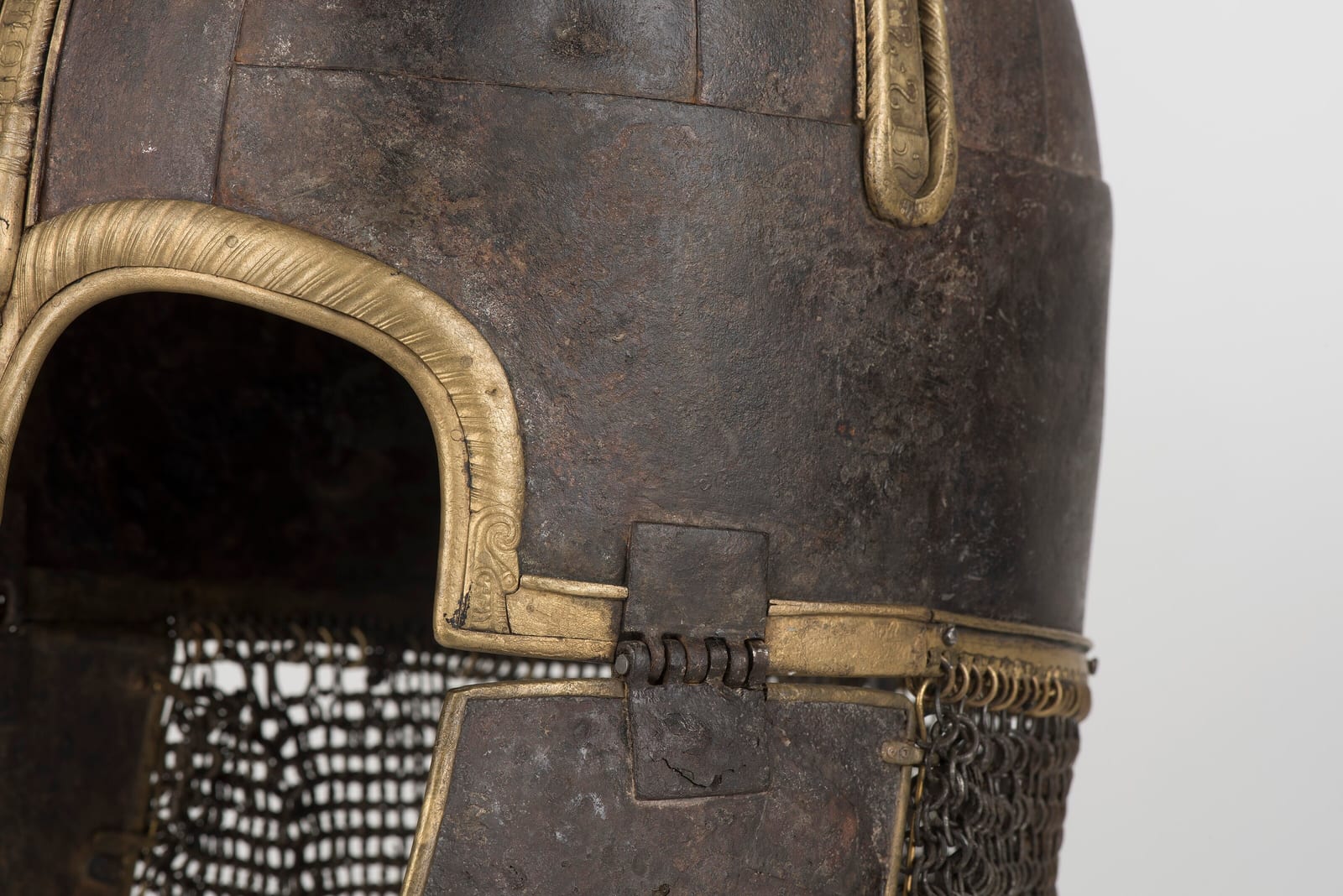
Stolpe uncovered grave Bj 581 in the 1870s on a rise near the garrison settlement, one of the most prominent spots in the entire grave field. The grave goods were exceptionally rich: a sword, a battle axe, a spear, armor-piercing arrows, a fighting knife, two shields, and, notably, a complete gaming board with playing pieces for a tactical board game, likely hnefatafl. Two horses, a stallion and a mare, complete with riding equipment, were also buried in the grave.
To Stolpe, and to generations of archaeologists after him, the conclusion seemed obvious: a set of grave goods this complete, combined with the burial’s placement near the military garrison area, clearly pointed to the grave of a high-ranking male warrior, possibly even a commanding officer. This interpretation went essentially unchallenged in textbooks and museum displays for more than a hundred years.
That changed in 2017. A team led by archaeologist Charlotte Hedenstierna-Jonson published an osteological and ancient-DNA analysis of the skeleton from Bj 581 in the American Journal of Physical Anthropology. The result: both the skeletal remains and the genetic markers pointed clearly to a biologically female individual, with no evidence of a second, male burial in the same grave. The study set off one of the liveliest debates in recent Viking Age scholarship.
What the Study Shows, and What Remains Contested
The scientific findings themselves are now widely accepted: the skeleton and the grave context of Bj 581 demonstrably belong together, and the individual was biologically female. What remains contested is what that means for this woman’s lived life. Those who favor a far-reaching interpretation argue that the combination of a full warrior’s kit, a strategy game, and a prominent grave position suggests the person was in fact active as a warrior or military leader, and, by extension, that women in Viking society could at least occasionally hold such roles.
More cautious voices urge restraint. Rich weapon assemblages, they point out, don’t necessarily prove that the deceased wielded those weapons in combat themselves. Grave goods can also reflect status, lineage, or the role of surviving relatives, without mapping directly onto the buried person’s actual day-to-day life. Bj 581 also remains, so far, a largely singular case among more than a thousand recorded Birka graves, which makes broad generalizations about “the” role of women in the Viking Age risky.
| Aspect | State of research |
|---|---|
| Grave goods | Full weapon set, gaming board, two horses (confirmed by Stolpe’s excavation) |
| Biological sex | Female, confirmed by osteological and aDNA analysis in 2017 (settled) |
| Skeleton-to-grave match | One individual, no mixing with a separate grave context (settled) |
| Actual lived role | Warrior, symbolic status, or inherited rank: actively debated (open) |
| Representativeness for the Viking Age broadly | A single find, no safe generalization possible (open) |
Editorially, it’s fair to say the DNA results themselves are solid and documented in a methodologically sound way. What they reveal about this one woman’s actual life, status, and duties in Birka remains a matter of interpretation, one that specialists on both sides continue to argue with good evidence. That mix of hard fact and open interpretation is exactly what makes Bj 581 one of the most compelling individual finds in all of Viking archaeology.
Decline and Legacy of a Trading Town
Toward the end of the 10th century, around the year 975, Birka lost its importance rapidly and was eventually abandoned. The exact causes remain unsettled, and several factors likely played a role together: land uplift and falling water levels in Lake Mälaren made shipping increasingly difficult, shifting political power among the kings of Svealand altered trade patterns, and nearby Sigtuna emerged as a new, rising trading center that gradually took over Birka’s role.
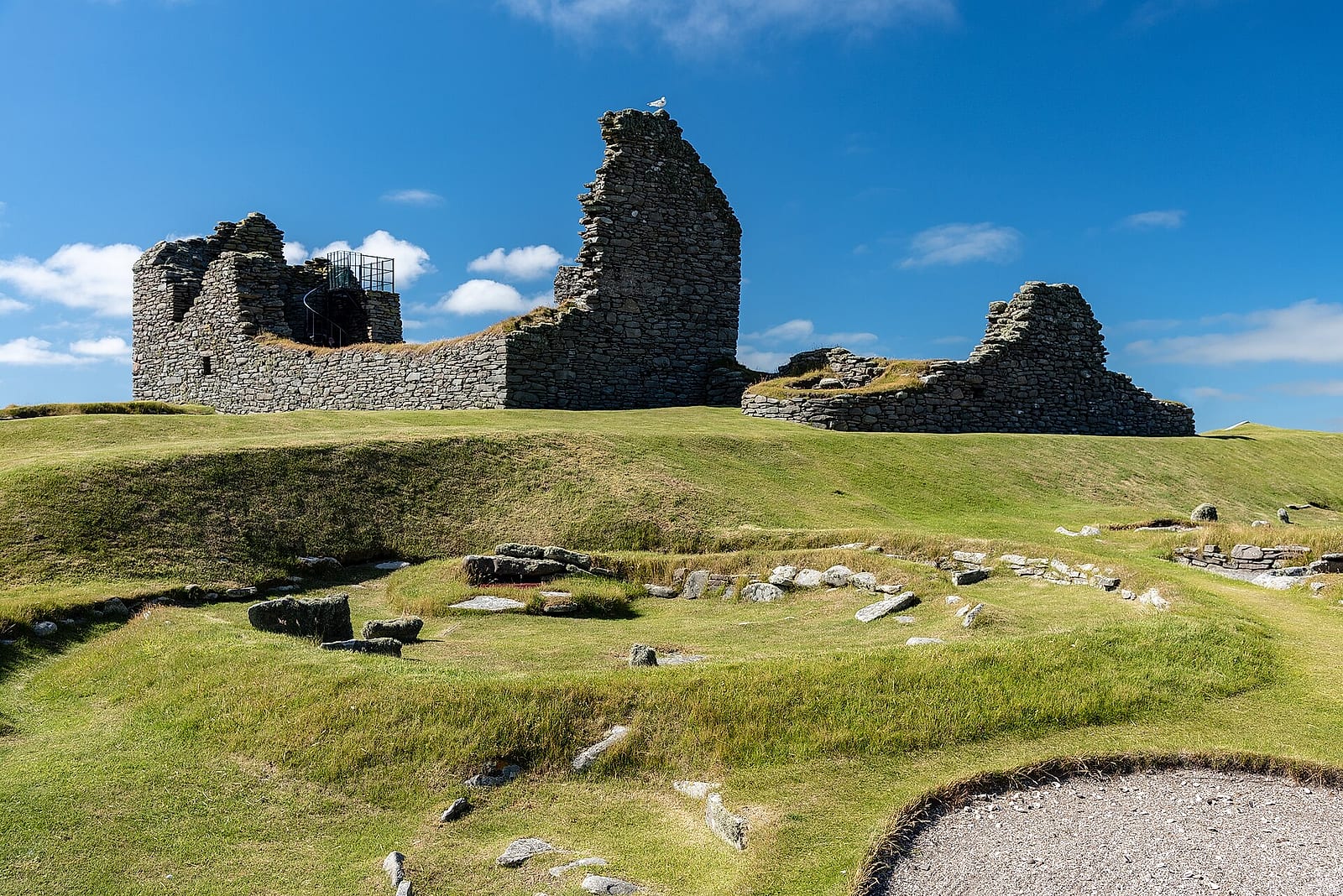
What remained was an exceptionally well-preserved archaeological archive under the turf of Björkö, designated a UNESCO World Heritage Site in 1993. Few other places offer such a dense, material window into the everyday life, long-distance trade, and religious upheaval of the Viking Age, and few finds raise the question of how much we can truly know about the lives of individual Viking Age people as persistently as grave Bj 581 does.
Image source: Swedish National Heritage Board (No restrictions), via Wikimedia Commons