Warriors & Battles
The Battle of Stamford Bridge: The End of the Viking Age
The Battle of Stamford Bridge 1066: how Harold Godwinson's forced march caught the Norwegians off guard, one axeman held a bridge, and Harald Hardrada fell.
Contents
- The Backstory: Tostig’s Betrayal and the Alliance with Hardrada
- Fulford: The Forgotten Victory Before Stamford Bridge
- The Forced March: How Harold Godwinson Caught the Norwegians Off Guard
- The Axeman on the Bridge: Legend and the Sources
- The Fatal Arrow: Hardrada’s Fall and the End of the Invasion
- Why Stamford Bridge Marks the End of the Viking Age
On September 25, 1066, on an unremarkable wooden bridge over the River Derwent, a few miles east of York, an era came to an end that had begun 273 years earlier with a raid on a monastery. The Battle of Stamford Bridge is still treated by historians as the symbolic close of the Viking Age in England - not because it was the last Viking landing ever, but because it was the last serious attempt by a Scandinavian king to seize the English crown by force. What makes this battle stand out isn’t just its outcome, but the speed at which it unfolded and the details that set it apart from other campaigns of the period.
The key contemporary source is the Anglo-Saxon Chronicle, which covers the events across several manuscripts (notably versions C and D), supplemented by the later, more elaborate account in Snorri Sturluson’s Heimskringla, which naturally emphasizes the Norwegian perspective and should be read with some caution as a literary source.
The Backstory: Tostig’s Betrayal and the Alliance with Hardrada
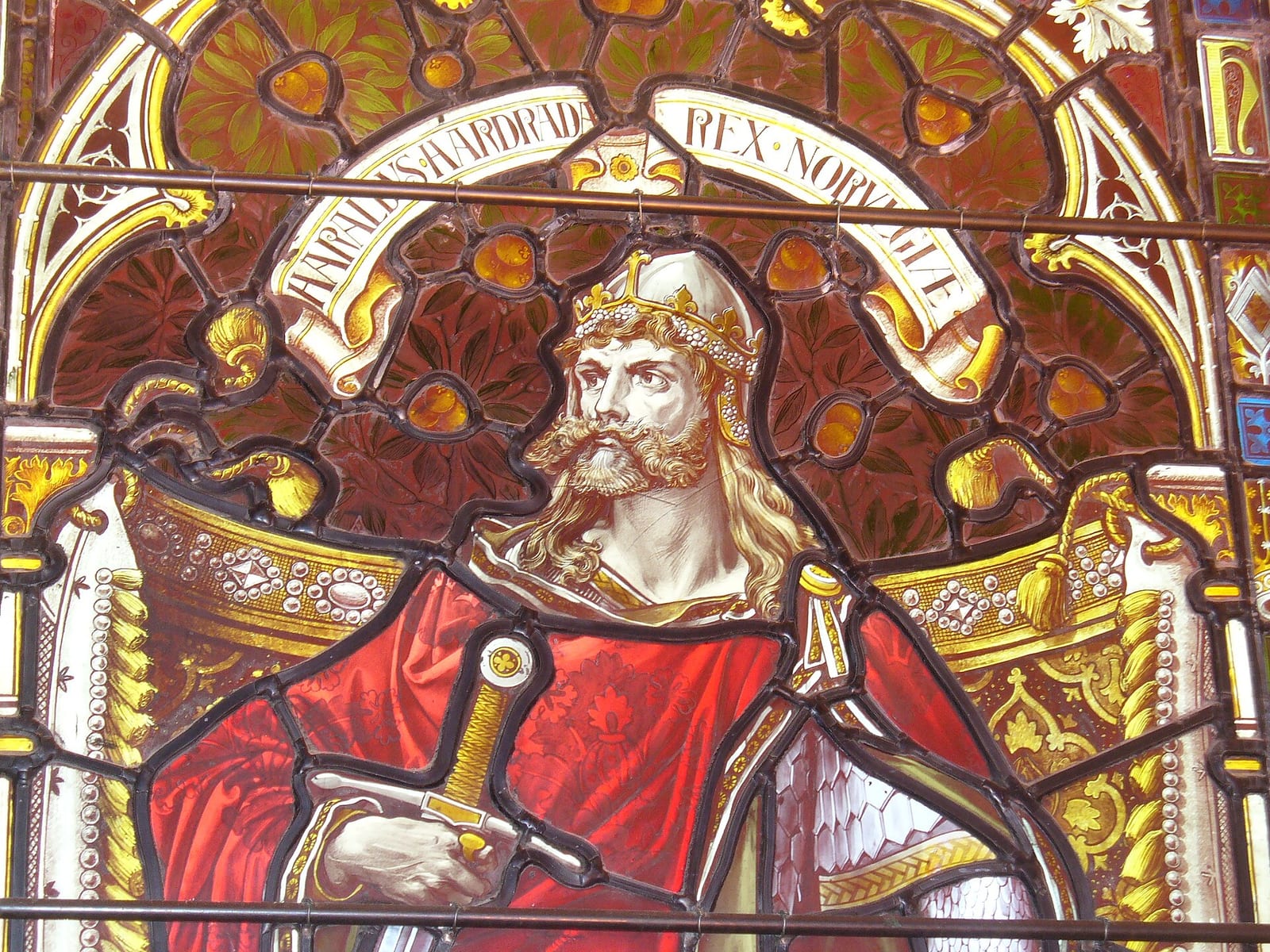
English king Harold Godwinson had taken the throne in January 1066 after the childless Edward the Confessor died, immediately provoking several rivals. His own brother Tostig Godwinson, formerly Earl of Northumbria, had been driven out by the Northumbrians in 1065 for tyrannical rule and had since gone looking for allies against his own brother. He found one in Harald Hardrada, the Norwegian king, who pressed his own claim to the English throne based on an agreement dating back to the reign of King Cnut.
In September 1066, Hardrada’s fleet, reinforced by Tostig’s forces, landed at the mouth of the Humber and advanced on York, the central seat of power in northern England.
Tostig’s expulsion was itself no accident, but the outcome of a long chain of resentment. As Earl of Northumbria, he had levied heavy taxes and had several local nobles killed without proper trial, provoking an open Northumbrian revolt in 1065. King Edward, already weakened, was forced to banish his own brother-in-law Tostig and install Morcar as the new earl in his place - the very man who would soon face the invaders at Fulford. This backstory makes clear that Stamford Bridge wasn’t just a fight between England and Norway, but also the violent continuation of an internal English family feud.
Fulford: The Forgotten Victory Before Stamford Bridge
Before Stamford Bridge entered the history books, there was already a decisive battle: Fulford, right outside the gates of York, on September 20, 1066. There, the combined Norwegian-English force crushed earls Edwin of Mercia and Morcar of Northumbria. York surrendered, and Hardrada received hostages and supplies as tokens of submission. In popular memory this victory is often treated as a footnote to Stamford Bridge, but it was strategically decisive - it lulled Hardrada into lowering his guard. That overconfidence would prove fatal five days later.
The Forced March: How Harold Godwinson Caught the Norwegians Off Guard
What happened next stands as one of the most remarkable military feats of the entire Middle Ages. King Harold Godwinson had been in southern England with his army, expecting a Norman invasion by William the Conqueror. When word of the Norwegian landing reached him, he broke camp and marched his entire army roughly 300 kilometers north in just a few days - a pace that remains extraordinary even by modern military-historical standards.
On September 25, Harold Godwinson reached York before Hardrada’s army had even caught wind of his approach. The Norwegians, believing themselves safe, had left a significant portion of their troops back at the ships on the Humber, and many of the warriors standing at Stamford Bridge had shed their mail shirts because of the unusual heat of the day. When Harold’s army appeared on the horizon, the Norwegian side was first met with sheer confusion, before it dawned on them that this was not a hostage handover but an English army at full fighting strength.
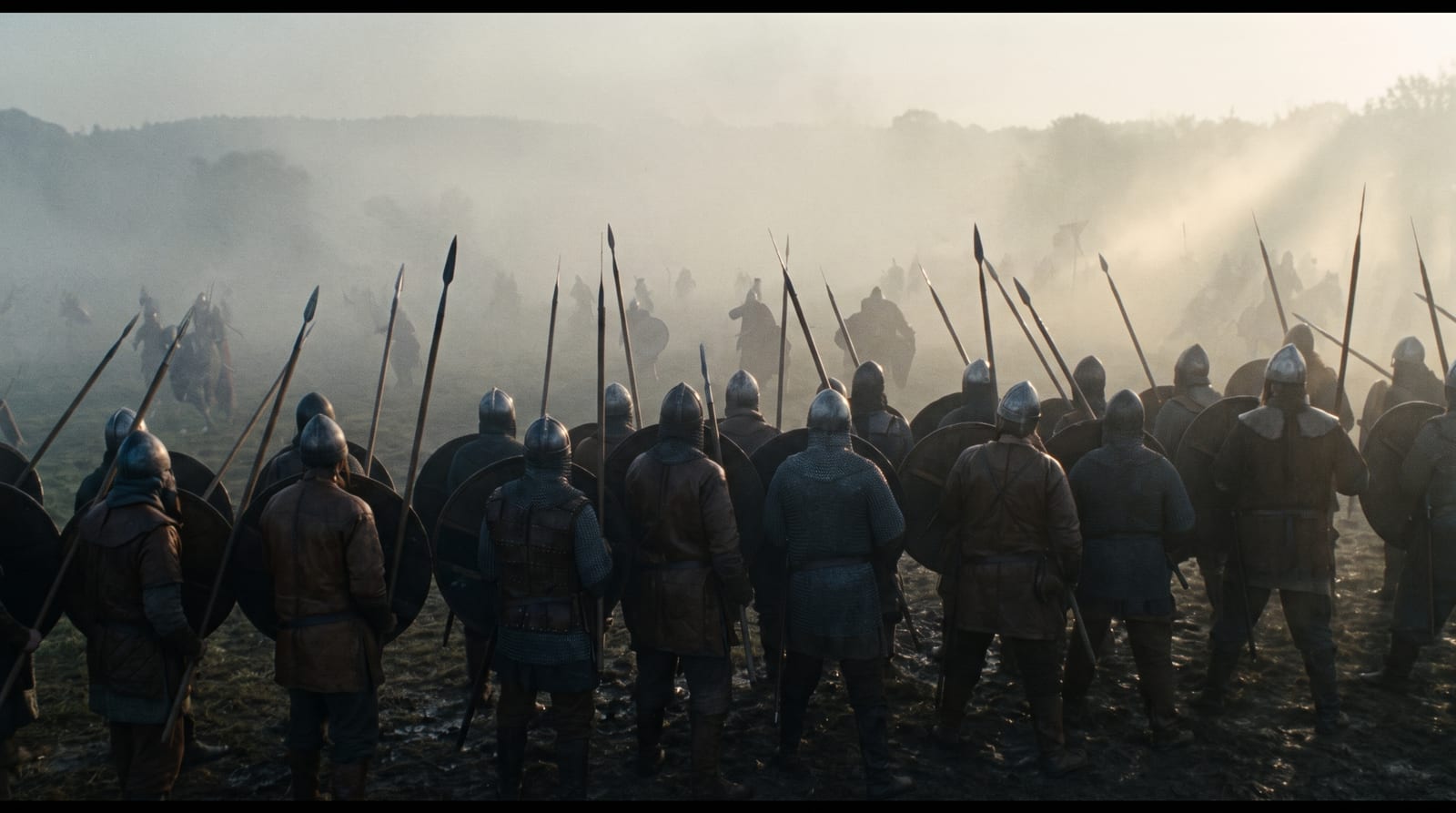
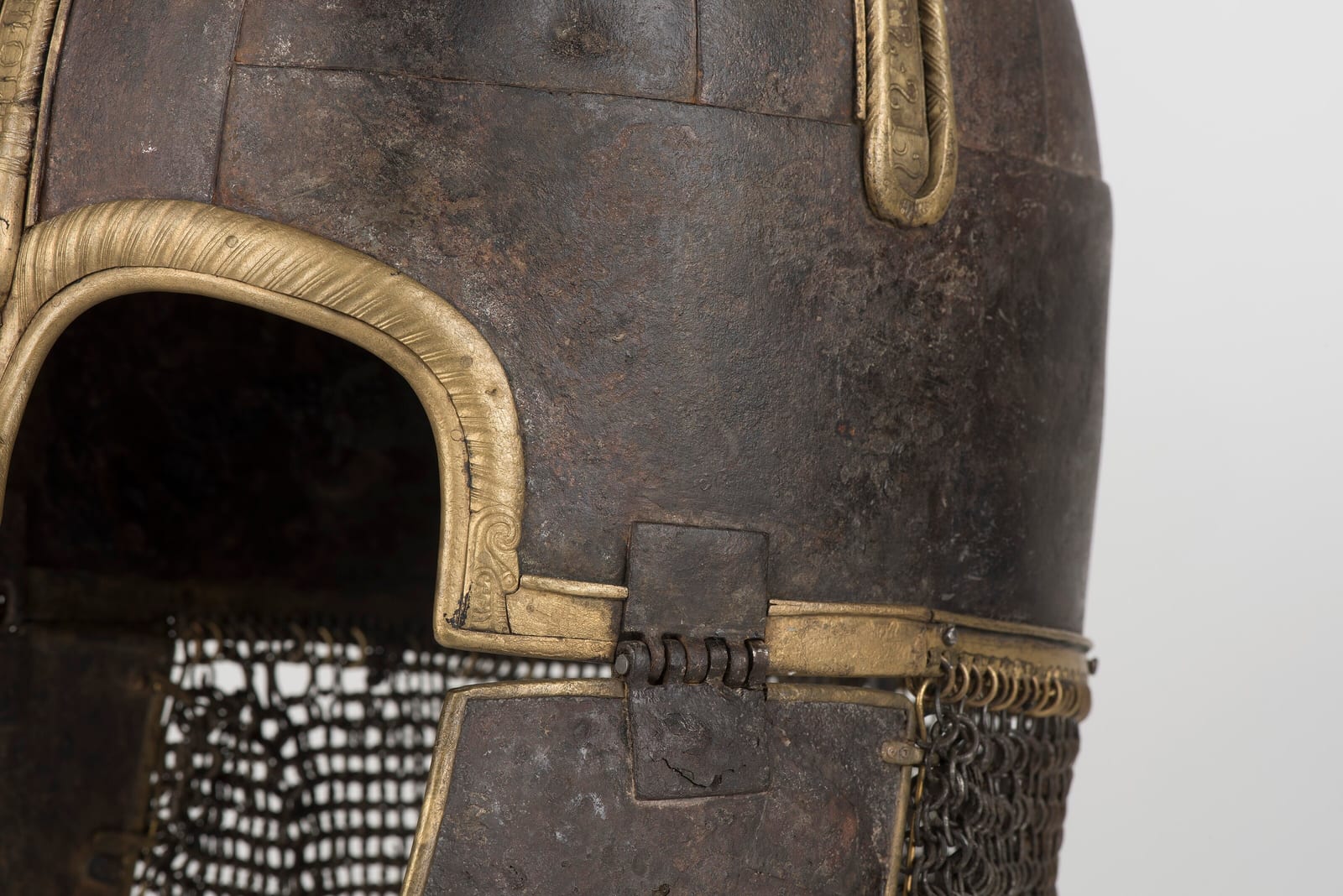
Historians estimate troop numbers on both sides at roughly 6,000 to 9,000 men each, though exact figures from medieval sources should always be treated with caution. A significant part of the English force consisted of huscarls, professional, well-armored elite warriors in the king’s direct service, whose combat effectiveness in open-field battle would later play a central role at Hastings as well. That professionalism was likely one reason the surprised Norwegians, despite the imposing stature Snorri repeatedly praises them for, ultimately had no real chance to form up in time.
| Event | Date, 1066 | Outcome |
|---|---|---|
| Fulford | September 20 | Victory for Hardrada and Tostig |
| Stamford Bridge | September 25 | Defeat, death of Hardrada and Tostig |
| Hastings | October 14 | Defeat and death of Harold Godwinson |
The Axeman on the Bridge: Legend and the Sources
The battle’s best-known episode is one whose historical core is hard to separate from later embellishment: a single Norwegian warrior, unnamed in any contemporary source, is said to have single-handedly defended the narrow wooden bridge over the Derwent against the entire English army, wielding a two-handed Dane axe, and to have cut down numerous Englishmen before he fell. Later, considerably younger accounts claim an English soldier eventually hid in a barrel beneath the bridge and killed the axeman with a spear thrust up through the gaps in the planking.
This episode appears neither in the Anglo-Saxon Chronicle nor in Snorri’s account in this specific form; it only surfaces in twelfth-century chronicles, which makes historians cautious about treating it as literal fact. It’s more likely that an actual delaying action took place at the bridge, during which part of the English army used a ford further upstream to outflank the Norwegian force - a tactically far more plausible explanation for how the initially unprepared Norwegians even found time to form a shield wall at all.
The Fatal Arrow: Hardrada’s Fall and the End of the Invasion
Once the English army had crossed the bridge, a long, bitter battle developed on open ground. The Anglo-Saxon Chronicle reports briefly but unambiguously that Harald Hardrada fell to an arrow through the throat. Tostig Godwinson died in the battle as well. When Norwegian reinforcements under Eystein Orre arrived late from the Humber, they too were defeated. Of the roughly 300 ships in the original invasion fleet, only 24 are said to have been needed afterward to carry the surviving Norwegians, under Hardrada’s son Olaf Kyrre, home - Harold Godwinson granted them safe passage.
“And the Norwegians fled from the English, but some of them were killed before they reached the ships.” - Anglo-Saxon Chronicle, entry for 1066
Harold’s decision to let the defeated enemy withdraw rather than annihilate them is sometimes read by historians as a gesture of chivalric convention, but it was probably mostly pragmatic: Harold needed his army intact, because the real threat was still ahead of him.
Olaf Kyrre, Hardrada’s surviving son, sailed home to Norway with what remained of the fleet and later became king there himself. Unlike his father, he ruled for decades in relative peace, launching no further campaigns of conquest, and historians often read him as a deliberate counterpoint to Harald’s warlike legacy precisely because of that contrast; under his rule the town of Bergen, among other things, grew into a major trading center, a development that proved far more lasting than any Norwegian campaign against England ever did.
Why Stamford Bridge Marks the End of the Viking Age
Just three days after the battle, on September 28, 1066, William the Conqueror landed on England’s south coast at Pevensey. Harold Godwinson had to march his exhausted, depleted army south again at forced pace to meet him, a disadvantage that contributed to the English defeat and Harold’s own death at the ensuing Battle of Hastings on October 14. That two such consequential battles took place within three weeks of each other ranks among the more remarkable coincidences of English history, with far-reaching consequences for both sides involved.
The victory at Stamford Bridge was far from costless for England, either. The English army had suffered significant casualties of its own and was already worn out from the forced march north before it ever went into battle. That double burden, physical exhaustion and thinned ranks, is seen by historians as one reason Harold’s troops couldn’t muster the same fighting strength three weeks later at Hastings that they’d shown at Stamford Bridge. The victory in the north was, in effect, the setup for defeat in the south, a bitter irony that chroniclers of the following centuries were quick to point out.
For the Viking Age narrowly defined, Stamford Bridge marks a clean break. No Scandinavian ruler ever again mounted a serious military attempt to conquer England. The man whose life had once connected Byzantium, Kiev, and Norway, Harald Hardrada, fell here alongside the last great hope of a Scandinavian kingdom on English soil. Within weeks of his death, the political map of northwestern Europe had shifted for good, away from centuries of Norse threat and toward a Norman-shaped future whose effects still echo in English language and culture today. Readers interested in the warrior culture of this final Viking generation can find more in our article on the berserkers, a look at the fighters who defined battles like this one.