Recipes
Viking Hazelnut Honey Cake: Sweetness Without Sugar
A Viking hazelnut honey cake made without a single grain of sugar, baked in roughly an hour, plus the real hazelnut finds from Hedeby, York and Dublin.
Contents
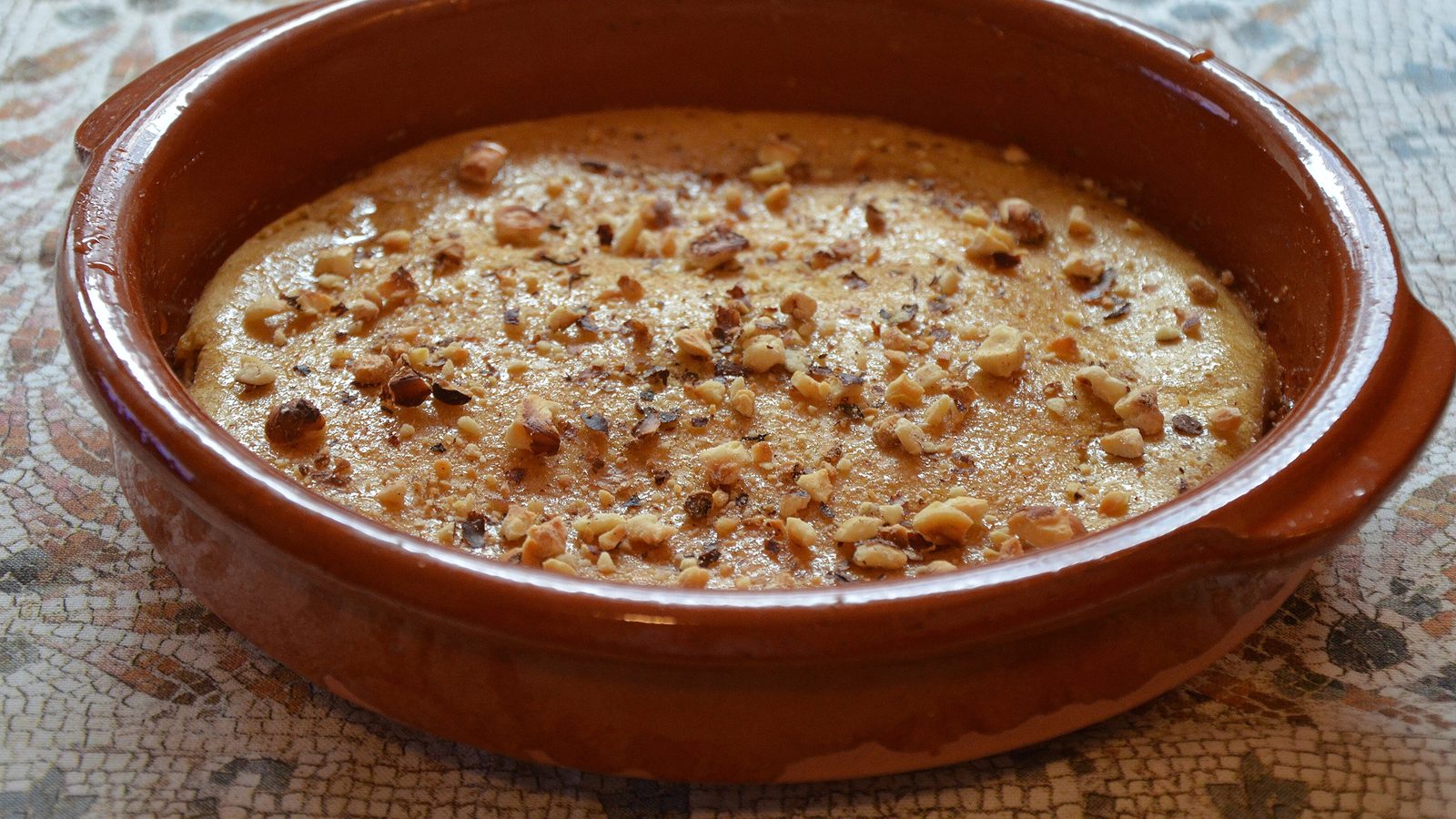
Dig almost anywhere in the Viking world and you will find hazelnut shells. Not swords, not silver, not runestones. Shells. They turn up in the mud of Hedeby, in the rubbish pits of York and by the bucketload under the streets of Dublin, and they say something plain about how people in the North actually ate. Our Viking hazelnut honey cake is built on that evidence: nuts from the woods, honey from the hive, and not a single grain of sugar anywhere in the bowl. It takes about an hour, and it tastes like the North in early autumn.
The Nut That Fed the North Through Winter
The common hazel, Corylus avellana, grows across Denmark, throughout southern Sweden and well up the Norwegian coast. It asks for nothing. No ploughing, no sowing, no manuring. A single well grown bush hands you several kilos of nuts every September, year after year, in exchange for an afternoon of picking.
For a society that had to survive every winter on what it had gathered, that was close to a gift. Hazelnuts are roughly sixty percent fat, which makes them among the most calorie dense foods the northern forest produces. Better still, they keep themselves. Left in the shell somewhere cool and dry, they last until spring without salting, smoking or drying. Grain had to be threshed, milled and kept away from damp. Meat had to be cured. The hazelnut arrived pre packaged.
That shell is also why we know so much. Nutshells rot slowly and survive beautifully in waterlogged, oxygen poor ground, which is exactly the kind of soil Viking Age towns tended to sit on.
| Site | Country | What was found |
|---|---|---|
| Hedeby, on the Schlei | Germany | Hazelnut shells throughout the waterlogged settlement and harbour layers |
| Coppergate, York (Jorvik) | England | Hazelnut shells in the refuse deposits of the Viking Age town |
| Fishamble Street, Dublin | Ireland | Hazelnut shells in great quantity in the Norse occupation layers |
| Oseberg | Norway | Wild apples, wheat and coriander seed placed in the ship burial of 834 |
| Hedeby (building timber) | Germany | Hazel rods used as wattle for house walls and fences |
That last row matters more than it looks. Hazel did not only feed the North, it built it. Long, whippy hazel rods were the standard raw material for wattle walls, baskets and fencing, and a large share of the buildings in the trading town of Hedeby stood on exactly that.
Honey Instead of Sugar: A Genuine Luxury
Cane sugar simply did not exist in Viking Age Scandinavia. It reached northern Europe centuries later through Mediterranean trade, and even then it spent a long time behind the apothecary’s counter. If you wanted something sweet, you wanted honey, taken either from kept hives in the south of Scandinavia or from wild colonies in the woods.
Honey was therefore expensive, and most of it never made it into food at all. It went into the fermenting vat, because honey meant mead, and mead was the drink of status in every hall worth the name. Snorri Sturluson describes the goat Heiðrún on the roof of Valhalla, mead flowing from her udders for the fallen warriors below. You do not attach that kind of imagery to an everyday beverage. If you fancy brewing it, we walk through the process in our guide to making mead at home.
For a cake, that has one consequence. Pouring 150 grams of honey into a mixing bowl would have been genuine extravagance in the ninth century. Do it today and you are treating yourself to something a Norse farmer would have paid silver for.
Did you know? Honey does not only sweeten, it preserves. Nuts and berries stored in honey keep for months, because the high sugar concentration draws water out of any bacteria that try to settle in. The trick is far older than the Viking Age.
Is a Viking Hazelnut Honey Cake Historically Honest?
Time for some straight talk, because the internet is full of so called original Viking recipes that nobody can source.
Myth: Vikings baked cakes as we know them and served them at feasts.
Fact: A risen, oven baked cake in the modern sense is not attested for the Viking Age. Bread in the North was mostly flat, cooked on hot stones or iron pans over an open fire. Built ovens were the exception on ordinary farms, chemical raising agents were unknown, and the period left us no cookbooks at all.
What it did leave is every component of this recipe: hazelnuts in enormous quantities, honey as the only sweetener, butter and milk from livestock, eggs from farmyard hens, and flour ground from barley, oats, rye and wheat. Our Viking hazelnut honey cake is therefore an honest modern assembly of genuinely period ingredients. It does not claim to come out of a saga. It claims to taste like the North, and it delivers.
One more thing about hazel, because it is too good to leave out. In Egil’s Saga a battlefield is marked out with hazel poles before the armies meet, a practice the Old Norse sources call hazelling a field. Winter food, building timber and a legal boundary marker in one shrub.
Ingredients
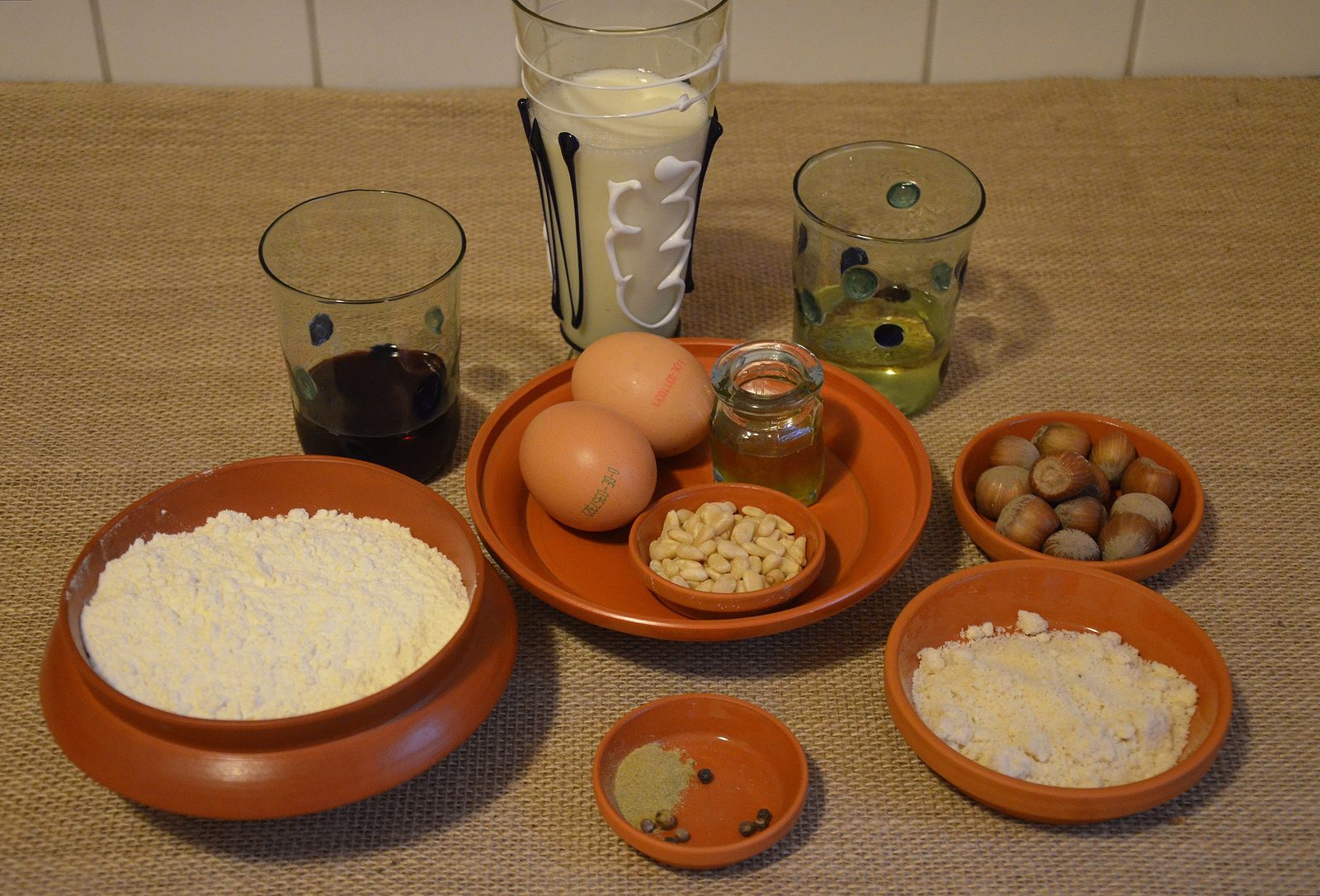
For one 9 inch (24 cm) round tin or a large loaf tin, about 12 slices:
- 7 oz (200 g) ground hazelnuts
- 5 oz (150 g) plain flour (spelt or wheat; rye makes it darker and earthier)
- 5 oz (150 g) runny honey
- 3.5 oz (100 g) soft butter
- 3 eggs
- 3.5 fl oz (100 ml) milk or buttermilk
- 1 tsp baking powder (a modern addition, unknown in the North)
- 1 pinch of salt
- 1.8 oz (50 g) roughly chopped hazelnuts for the top
- Optional: 1 tsp ground coriander
You will also want a mixing bowl, a whisk or hand mixer, and a greased tin. Scatter a handful of coarse nut pieces across the base before the batter goes in and you get a crunchy underside later.
Instructions
- Heat the oven. Set it to 350°F (180°C) and grease the tin thoroughly.
- Cream the honey and butter. Beat the soft butter with the honey for a good three minutes, until pale and smooth. This step decides how moist the cake turns out, so do not rush it.
- Add the eggs one at a time. Work each one in completely before the next goes into the bowl.
- Combine the dry ingredients. Mix the ground hazelnuts, flour, baking powder, salt and the coriander if you are using it.
- Bring it together. Fold the nut mixture into the honey base in alternating additions with the milk, until you have a thick, glossy batter. Stop as soon as it is smooth.
- Bake. Pour into the tin, level the top, scatter over the chopped hazelnuts and bake for 40 to 45 minutes. A skewer should come out clean.
- Cool and glaze. Rest it in the tin for ten minutes, then turn it out. Brush the still warm surface with a spoonful of honey and it will shine like amber.
Tips & Variations
- Toast your own nuts. Toast whole hazelnuts in a dry pan for five minutes, rub the skins off in a tea towel, then grind them. No other change to this recipe makes anything like the same difference to the flavour.
- Use a strong honey. Forest, heather or pine honey brings depth. A mild acacia honey vanishes into the batter entirely. For the most northern character, choose something dark and resinous.
- Skip the baking powder. To get closer to the period, leave it out and whip the egg whites to soft peaks instead. The cake comes out flatter, denser and considerably more rustic, which is arguably the point.
- A winter version. A handful of dried lingonberries or diced apple folded through the batter adds a welcome sharpness against all that honey.
- Serve it right. A spoonful of soured cream or skyr alongside cuts through all that honey. Cold butter on a still warm slice works surprisingly well too.
If this kind of cooking speaks to you, our cookbook “Viking Feast” holds 141 recipes of the North, from flatbreads and feast roasts to mead and the sweet treasures of the storeroom. See the cookbook
Why This Cake Works
Our honest verdict, after several rounds of testing: this cake is considerably better than its short ingredient list suggests, and the reason is chemistry. Honey is hygroscopic, meaning it attracts moisture and holds onto it. A honey cake therefore dries out far more slowly than a sugar cake, and frequently tastes better on day two than on day one. The ground hazelnuts add their own fat, which keeps the crumb soft long after it has cooled.
The second reason is flavour. Sugar is sweet and nothing else. Honey carries flowers, resin and a faint acidity, and that complexity meets the roasted, almost chocolatey note of toasted hazelnuts head on. What comes out of the tin has more character than most supermarket cakes manage with icing and decoration combined.
One caveat we will not hide: this is a heavy cake. Not an airy sponge but a dense, filling, thoroughly serious slab, and one slice is genuinely enough. For the wider picture of what people in the North actually ate, our overview of the Viking diet covers the whole table. And if you spend an afternoon this September gathering hazelnuts yourself, you are doing precisely what people on the Schlei and in Dublin did a thousand years ago. Only the oven is new.
Image credits: Carole Raddato (CC BY-SA 2.0), via Wikimedia Commons