Recipes
Viking Cabbage Stew Recipe: Bacon, Barley and the Winter Feast of the North
A Viking cabbage stew recipe built on smoked bacon, barley and juniper: one slow pot, deep winter flavour and honest Norse food history, ready in 90 minutes.
Contents
Winter in the North was won or lost in the storage pit, not on the battlefield. Cabbage kept in the cold earth, pork hung in the smoke of the hearth, barley sat in the sack, and everything else was luck. This Viking cabbage stew recipe puts those three survivors into one pot and lets them cook until they stop being separate ingredients: salty, smoky, thick enough to stand a spoon in, and cheap enough that a tenth-century farm could afford it on an ordinary Tuesday.
What makes this dish worth writing about is that so little of it needs inventing. Cabbage, pork, barley and onion are all attested for the Viking-age North. The method below is modern kitchen practice, but nothing on the shopping list would have puzzled a household in Jutland or Vestfold.
The Cabbage That Outlasted the Winter
Cabbage is the least glamorous plant in Norse food history and one of the most important. It shrugs off frost, tolerates poor soil and delivers bulk. Old Norse called it kál, and it had a word for the place it grew in too: the kálgarðr, the cabbage garden, which turns up in Old Norse texts as an ordinary feature of a farm. Languages do not invent words for things nobody keeps.
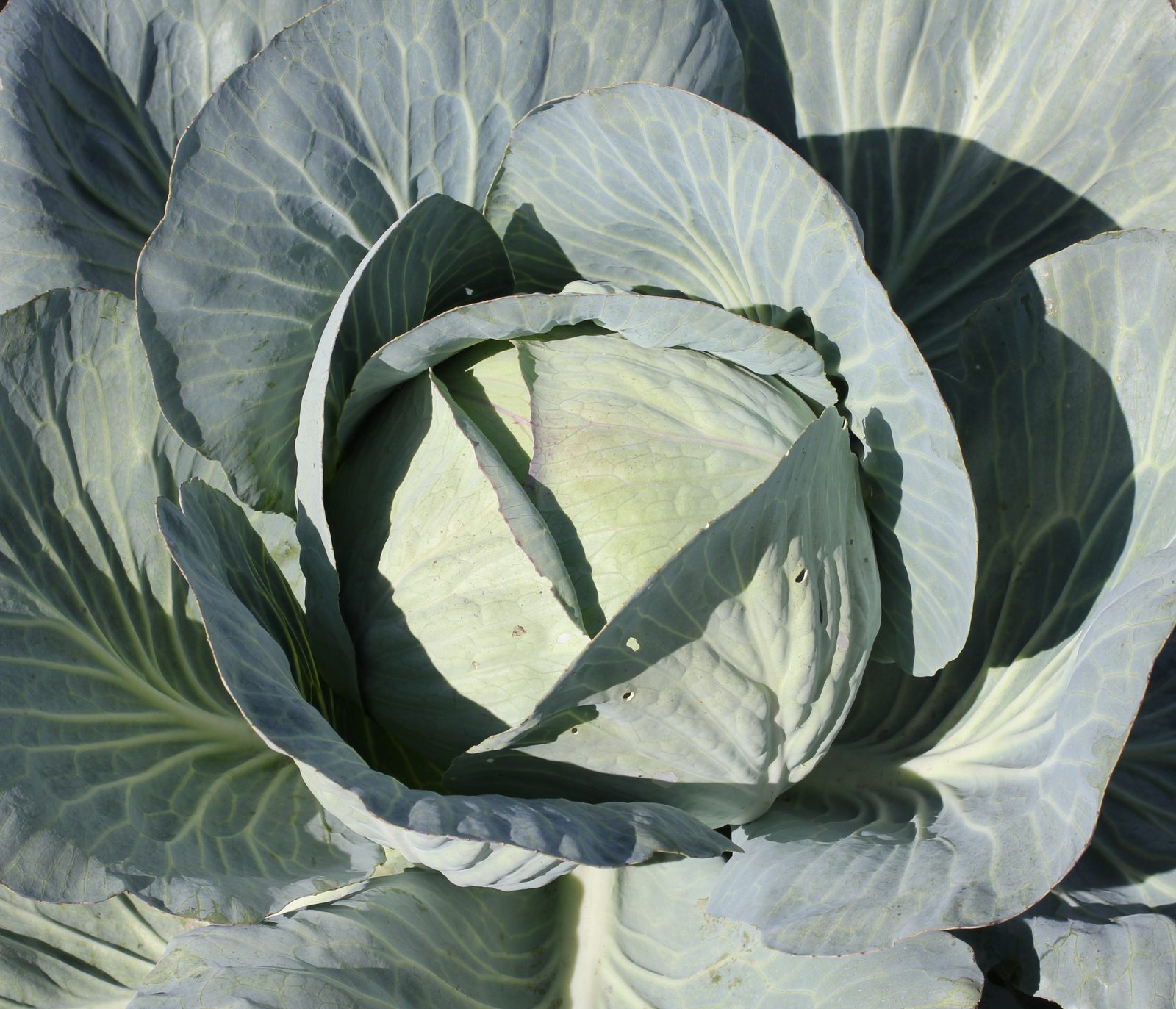
Image credit: George Chernilevsky (Public domain), via Wikimedia Commons
The archaeobotany agrees. Excavations at trading towns such as Hedeby and at Viking-age York, above all the Coppergate site, have produced remains of garden plants including cabbage, celery and dill. This is not banquet food. It is the everyday supply line that decided whether a household reached spring in decent shape.
Storage is the whole point. A firm head of cabbage keeps for months somewhere cold and dark, and cold dark places are exactly what Viking-age settlements had in abundance: storage pits and sunken-floored buildings, excavated many times over across Scandinavia. Cabbage needed no clever preservation technique. It only needed to be left alone.
| Ingredient | In the Viking Age | In this recipe |
|---|---|---|
| White cabbage | kál, grown in the kálgarðr, frost-hardy, stores for months | 1 small head, shredded |
| Bacon | flesk, salted and smoked over the hearth fire | 7 oz (200 g) smoked streaky bacon |
| Barley | the main grain of the North, base of porridge and bread | 1/2 cup (100 g) pearl barley |
| Onion and leek | laukr, named in poetry and runic inscriptions | 2 onions, 1 leek |
| Root vegetables | næpa and its relatives, straight from the storage pit | 10 oz (300 g) swede or parsnip |
| Potato | did not exist here, arrived from the Americas centuries later | not used |
Bacon, Salt and Smoke: Why the Pig Ruled the Pot
The pig was the most practical animal a Norse farm could keep. It eats scraps, breeds fast, and turns into meat that preserves beautifully. In animal bone assemblages from Viking-age settlements such as Hedeby, domestic pig is among the most common species by a wide margin. The Old Norse word flesk still means pork and bacon in Norwegian and Danish today, which tells you how central it stayed.
Three techniques made that meat last: salting, drying and smoking. Salt was expensive, boiled down from seawater or won from burned seaweed, so it was used carefully. Smoke, on the other hand, was free. In a longhouse with an open hearth and no chimney, anything hanging under the roof got cured whether you planned it or not. Medieval Icelandic sources add a fourth method, storing food in sýra, soured whey, a habit that survived on the island for centuries afterwards.
Hávamál, stanza 3: the one who comes in frozen to the knees needs fire, food and dry clothing. The Eddic poem lists hospitality in that order, and a pot hanging over the flames covered two of the three at once.
For the stew this means one thing: the bacon is not a garnish. It is your fat, your salt and your smoke in a single ingredient, doing the work that stock cubes and a shelf of spices do in a modern recipe. Leave it out and you are cooking something else entirely.
Building the Viking Cabbage Stew Recipe Around Real Evidence
The Viking Age left no cookbooks. It left ingredients, cooking gear and eating habits, and those are enough to build an honest dish. Cooking happened mostly in one vessel: iron cauldrons slung on chains above the hearth, alongside soapstone pots traded out of Norway as far as Hedeby. The finds from the Oseberg ship include exactly this kind of kit, from an iron cauldron to a hand quern for grinding grain. A one-pot stew is not the romantic answer to what went in there. It is the obvious one.
Myth: sauerkraut is Viking food. Fact: cabbage yes, sauerkraut unproven. Lactic fermentation of cabbage is documented early in other parts of the world, but for the Viking-age North the clear evidence is missing. Fresh cabbage out of the storage pit was the norm, though a sour note in the pot is very likely, arriving through soured whey, unfermented ale or berry juice.
Our honest verdict from the test kitchen: the usual failure here is impatience. Cabbage given ten minutes tastes like a school canteen. Cabbage given a full hour with bacon and barley turns sweet, almost creamy, and loses every trace of sharpness. The second rule matters just as much. Acid goes in at the end, never at the start. A spoonful of vinegar stirred in before serving lifts the whole pot, while the same spoonful added early turns the cabbage grey and flat.
If you want the comparison, our Viking stew known as skause works on the same cauldron logic with lamb and more root vegetables. The cabbage version is the poorer, more everyday and frankly more winter-proof relative.
Ingredients
Serves 4 generously:
- 1 small white cabbage (about 1.75 lb / 800 g)
- 7 oz (200 g) smoked streaky bacon, diced
- 2 onions, chopped
- 1 leek, sliced
- 10 oz (300 g) swede (rutabaga) or parsnip, diced
- 1/2 cup (100 g) pearl barley
- 5 cups (1.2 l) beef or vegetable stock
- 3/4 cup (200 ml) dark beer, optional, or more stock
- 1 tbsp butter or lard
- 1 tsp caraway seeds
- 4 juniper berries, lightly crushed
- 1 tbsp honey
- 1 tbsp cider vinegar
- Salt and coarsely ground black pepper
- A small bunch of dill or flat-leaf parsley, to serve
Instructions
- Render the bacon. In a heavy pot over medium heat, cook the diced bacon slowly in its own fat until golden and crisp. Lift out about half of it and set it aside for the top.
- Sweat the alliums. Add the butter or lard to the bacon fat, then the onions and leek. Cook gently for eight to ten minutes until soft and pale gold. Do not let them brown hard or the stew turns bitter.
- Toast the cabbage. Quarter the cabbage, cut out the core and slice it into finger-wide ribbons. Add it with the diced swede and fry over higher heat for five minutes, until the edges take colour. This step is where the sweetness comes from.
- Deglaze and season. Pour in the beer and stock, add the barley, caraway and juniper berries, and bring the pot to a boil.
- Let it go quiet. Cover and simmer gently for 60 to 70 minutes, stirring once or twice. It is ready when the barley is tender and the cabbage collapses at the touch of a spoon.
- Balance it. Stir in the honey, vinegar, salt and pepper now and not a minute earlier. Salt carefully: the bacon has already done a lot of that job.
- Serve. Ladle into deep bowls, scatter the reserved crisp bacon over the top and finish with dill or parsley. Dark bread and a mug of beer are the only sides you need.
Tips & Variations
- Over an open fire: a cast-iron pot at the edge of the embers cooks this exactly as written, just slower. Keep it beside the heat rather than in the flames and stir every 20 minutes.
- Without meat: skip the bacon, use butter plus a spoonful of rapeseed oil and an extra teaspoon of salt, and soak a handful of dried porcini in the stock. It replaces the smoky depth surprisingly well.
- The sour route: instead of vinegar, stir a good splash of buttermilk or whey into the pot once it is off the heat. No modern ingredient sits closer to the sýra of the Icelandic sources.
- Day two: this stew improves overnight. Cool it, chill it, reheat slowly the next day and wake it up with a fresh splash of vinegar.
- Strictly historical: white or yellow carrots instead of orange, stock instead of bottled beer, and coarsely cracked barley groats in place of pearl barley.
If this kind of cooking speaks to you, our cookbook “Viking Feast” holds 141 recipes of the North, from flatbread and cauldron dishes to feast roasts, mead and the sweet treasures of the storeroom. See the cookbook
What a Pot of Cabbage Says About the North
Sagas record kings, feuds and sea voyages. People still had to eat every day, and what they ate was usually this: cabbage, barley, a piece of salted meat, a lot of hot broth. The stew is the ordinary life behind the famous stories, and it works for the reasons it always worked. Cheap, filling, buildable from a storeroom, warm to the fingertips. Lift the lid on a pot like this in February and you are not looking at a museum piece.
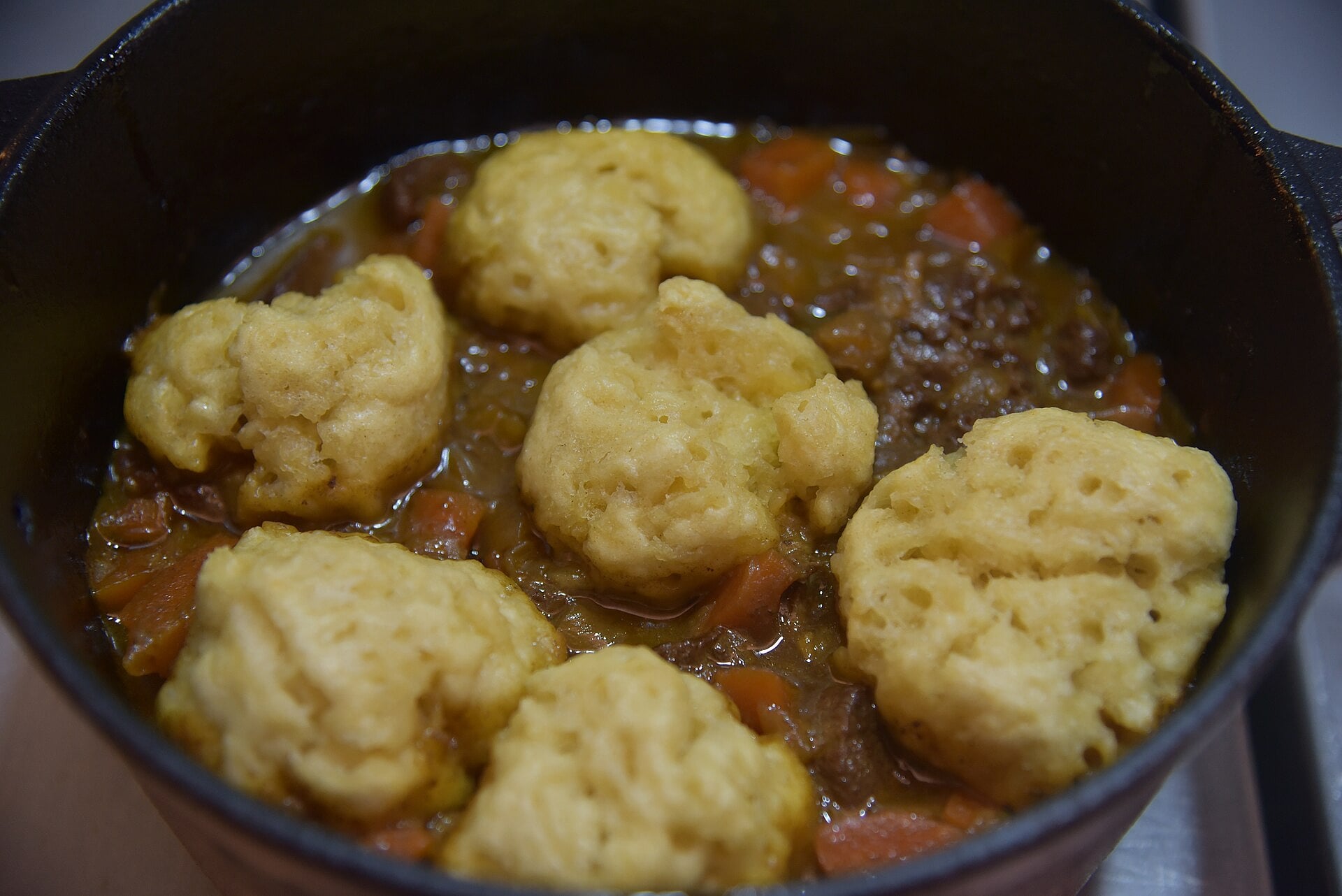
Hero image credit: young shanahan (CC BY 2.0), via Wikimedia Commons