Recipes
Forest Berries With Honey and Skyr: A Viking Berry Dessert Recipe
This Viking berry dessert recipe pairs warm honey berries with cold skyr in 20 minutes - plus the real berry finds from Hedeby, York and the Oseberg ship.

Contents
No dessert trolley ever rolled through a Norse hall. Yet the people of the Viking Age understood perfectly well that after roast meat, bread and ale, the meal deserves a sweet ending. Their answer used the three things the North handed out freely in late summer: wild berries, honey, and thick soured milk. This Viking berry dessert recipe pulls that trinity into one bowl - forest berries with honey and skyr, half warm compote, half cool cream, done in 20 minutes. And the history behind it is far better documented than you would expect from a pudding.
Sweetness Before Sugar
In 9th century Scandinavia, sugar simply did not exist. If you wanted sweetness, there was exactly one source: honey. It was produced in southern Scandinavia and around the Baltic, traded, hoarded, and treated as a valuable good. A large share of it never reached the table at all, because honey was the raw material for mead, the prestige drink of every feast.
That scarcity is what made honey special. A drizzle over berries or a milk dish was not an everyday habit; it was a small celebration. Anyone who casually loops honey over their breakfast today is enjoying a luxury that would have cost a Viking Age farmer real silver.
The other sweetness of the North grew free of charge. Raspberries, blackberries, bilberries, elderberries and sloes lined the forest edges and moors, and in August and September they came in ridiculous abundance. In a diet built on grain, fish and meat, they also delivered vitamins the body badly needed before winter - our overview of the Viking diet shows where they fit in the bigger picture.
The Berry Evidence: What Archaeologists Actually Found
Berries do not leave ruins behind, but they do leave seeds - and seeds survive astonishingly well in waterlogged soil. Thanks to archaeobotany, we know in unusual detail what people in the Viking world really picked and ate. The major sites read like a shopping list for this recipe:
| Fruit | Site | What was found |
|---|---|---|
| Raspberry | Hedeby (Schleswig) | seeds in settlement layers from the 9th to 11th century |
| Blackberry | Hedeby and York (Coppergate) | large numbers of seeds in refuse deposits |
| Bilberry | York (Coppergate) | seeds in the Viking Age layers of Jorvik |
| Elderberry | Hedeby | seeds in strikingly high quantities |
| Sloe | Hedeby | fruit stones from the settlement area |
| Wild apple | Oseberg (Norway) | a whole bucket of apples placed in the ship burial of 834 |
The trading town of Hedeby on the Schlei inlet is a treasure chest for this kind of research: its permanently wet harbour layers preserved plant remains for a thousand years, including masses of seeds from gathered wild fruit. Excavations at Coppergate in York, Viking Age Jorvik, produced a remarkably similar range across the North Sea. And the magnificent Oseberg ship burial shows fruit was considered fine enough to accompany the dead on their final voyage.
In short, Norse berry eating is not a cosy assumption made up for reenactment fairs. It is literally written into the ground.
What Makes This a True Viking Berry Dessert Recipe
That leaves the third ingredient: skyr. The thick, nearly fat-free dairy staple was part of Norse storage economy and sailed with the settlers to Iceland, where it has been made continuously ever since. The sagas mention it in passing as completely ordinary food - in Egil’s saga, a thirsty poet is famously served bowls of skyr at a farm before anything stronger appears. Combining soured milk with fruit and honey was not exotic to the Norse; it was the most obvious sweet dish their world offered.
One honest note before the pot goes on the stove:
Myth: Vikings finished their feasts with a dessert course, just like us. Fact: The Viking Age knew no separate dessert course at all. But berries, honey and skyr are each superbly documented on their own - this combination is a modern interpretation built entirely from authentic parts.
We think that distinction matters, because it separates this dish from the many invented “original Viking recipes” floating around the internet. The Viking Age left no cookbooks. It left ingredients, tools and eating habits - and from those you can build a dessert that very likely lands close to how the North actually tasted. The idea never really died, either: rødgrød, the beloved Danish national dessert of cooked red berries under cold cream, is essentially this dish a thousand years on.
Did you know? Crowberries and bilberries still grow wild across Iceland in huge quantities. Berry picking remains a national pastime there in late summer - and skyr with fresh berries is considered a grandmother’s classic to this day.
Ingredients
Serves 4:
- 500 g (about 1 lb) mixed forest berries (bilberries or blueberries, raspberries, blackberries; fresh or frozen)
- 500 g (2 cups) plain skyr
- 4 tbsp honey (a bold one, like forest or heather honey)
- 50 ml (3 tbsp) milk or cream
- 1 pinch of salt
- 2 tbsp chopped hazelnuts or rolled oats (optional)
You will also need a small saucepan, a whisk and four bowls - wood or stoneware sets the mood, but porcelain works just as well.
Instructions
- Make the skyr cream. Whisk the skyr with 1 tbsp honey, the milk and the pinch of salt until thick and smooth. Chill until serving.
- Warm the berries. Put half the berries in the saucepan with 2 tbsp honey and 2 tbsp water. Simmer over medium heat for 5 minutes, until the fruit bursts and the juices turn syrupy.
- Fold in the rest. Take the pan off the heat and stir in the remaining berries. They bring freshness and bite, and they cool the compote to lukewarm.
- Assemble. Spoon the cold skyr cream into bowls and ladle the warm berry compote generously on top.
- Finish. Drizzle with the last of the honey. If you like, toast the hazelnuts or oats briefly in a dry pan and scatter them over.
Tips & Variations
- The temperature trick: The whole point of this dessert is contrast - cold, tangy cream under warm, sweet berries. Prepare both separately and only unite them at the table.
- Winter version: Frozen berries work beautifully and can go into the pan straight from the freezer; just simmer 2 to 3 minutes longer.
- No skyr available: Greek yogurt or quark with a squeeze of lemon juice comes closest to skyr’s tart character.
- A wilder edge: A handful of elderberries or a few crushed juniper berries in the compote push the flavour even closer to a Viking Age forest edge.
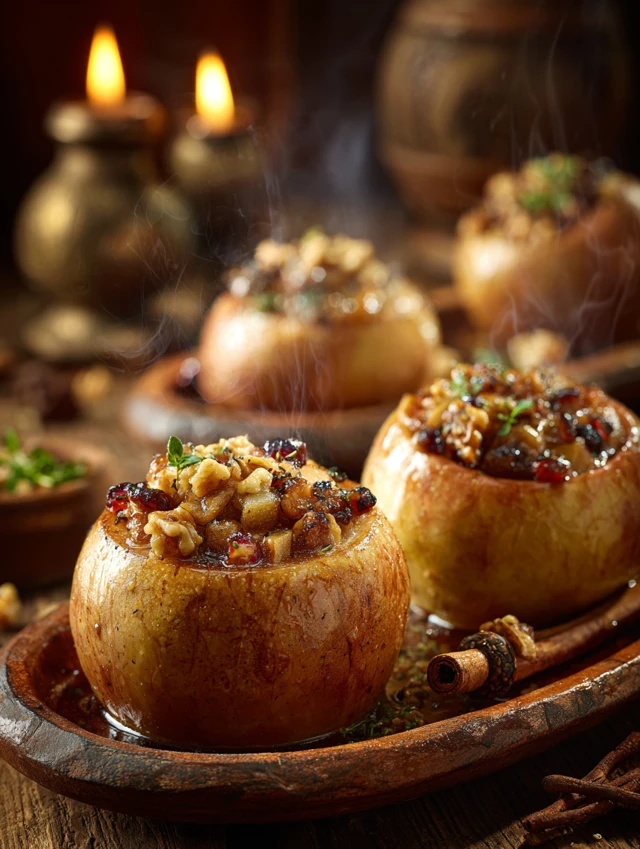
- Prefer it warm from the oven: Our honey-baked apples are this recipe’s cosy sister dish.
If this kind of cooking speaks to you, our cookbook “Viking Feast” holds 141 recipes of the North - flatbreads, feast roasts, mead and the sweet treasures of the storeroom. See the cookbook
A Spoonful of Late Summer
Our honest verdict: this dessert is greater than the sum of its three parts. The tart skyr grounds the sweetness, the warm berry juice bleeds slowly into the cold cream, and the honey ties everything together into something both rustic and quietly elegant. It is also that rare recipe that takes 20 minutes, is nearly impossible to ruin, and still tells a story - of gatherers at the forest edge, of honey worth silver, and of a dairy tradition that survived a thousand years on a volcanic island.
Make it in August with berries you picked yourself, and you are eating closer to the Viking Age than any museum restaurant could serve it. This is what the North tastes like, just before winter arrives.
Image source: Olaf Simons (CC BY-SA 3.0), via Wikimedia Commons