Mythology
Ragnarok Meaning: What the Doom of the Norse Gods Really Signifies
Ragnarok meaning explained simply: the prophecy, the Fimbulwinter, the death of the gods, Surtr and Fenrir-and why in the end a new world is reborn.

Contents
- The Ragnarok Meaning - One Word, Two Readings
- The Prophecy - the Gods Know Their End
- The Fimbulwinter - When the Omens Appear
- The Chains Break - Fenrir and Surtr
- The Death of the Gods
- The Rebirth - Why Ragnarok Is No Mere Doom
- Balder - the Death That Sets It All in Motion
- What Ragnarok Reveals About the Vikings
Few terms from Norse mythology are as famous-and as often misunderstood-as this one. The Ragnarok meaning is usually given as “the end of the world” or “the twilight of the gods,” yet that only tells half the story. For Ragnarok is not simply the end. It is the end and the beginning, a collapse out of which a new world rises.
So what really lies behind this word? And why did the Norsemen build their greatest myth around the defeat of their own gods? Let us look more closely.
The Ragnarok Meaning - One Word, Two Readings
Let us begin with the language, because the confusion starts right there.
The Old Norse term Ragnarök is made up of ragna (“of the gods”) and rök (“fate,” “doom,” “destiny”). Literally, then: the fate of the gods. That sounds soberer than one might expect-no fireworks, but a doom that has been fixed from the beginning.
Yet there is a second, almost identical form: Ragnarökkr, with a double “k.” And rökkr means “twilight.” It was precisely this confusion-whether deliberate or not-that produced the famous rendering “twilight of the gods,” later taken up by Richard Wagner for his opera. Many scholars regard rökkr as a later, poetically heightened variant.
The true Ragnarok meaning is therefore less romantic: the inescapable fate to which even the gods are bound. And that, when you think about it, is the far more interesting idea.
The Prophecy - the Gods Know Their End
The unsettling thing about Ragnarok is not that it happens. It is that the gods know about it.
In the Völuspá, the “prophecy of the seeress” that opens the Poetic Edda, Odin summons a dead seeress from her grave to reveal the future to him. Line by line she unrolls the coming end: the decay of morals, the breaking of every oath, the death of the gods, the ruin of the world-and what comes after.
Snorri Sturluson takes up these images in his Prose Edda and arranges them into a connected narrative. Both sources paint the same bleak picture: the end is not chance but destiny.
And here lies the heart of the whole myth. Odin gathers his fallen warriors in Valhalla not out of vanity, but because he knows the final battle is coming-and that he will lose it. He acts all the same. That is the Norse answer to an unavoidable fate.
The Fimbulwinter - When the Omens Appear
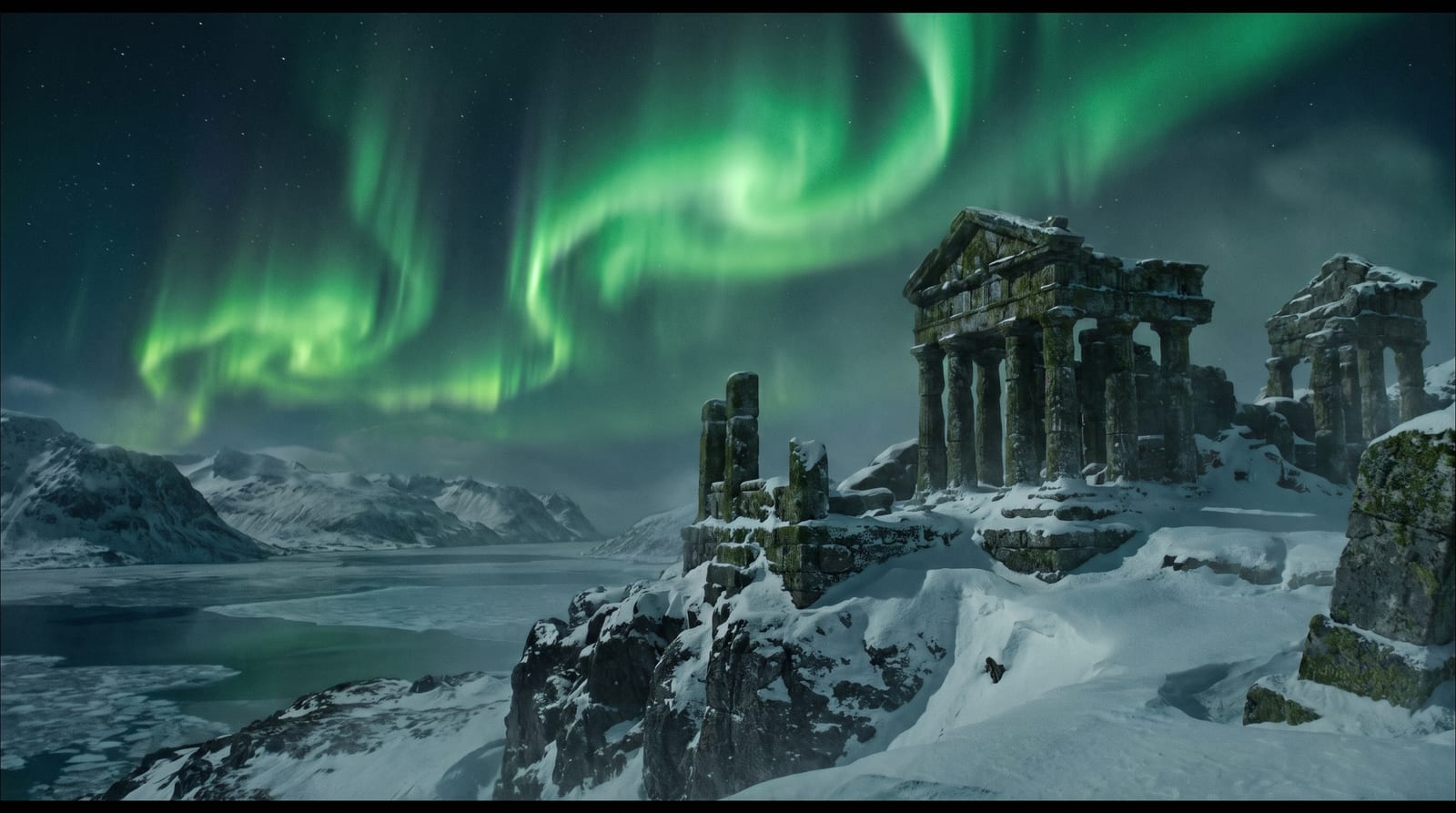
Ragnarok does not fall without warning. First comes the Fimbulwinter (“mighty winter”).
Three winters follow one upon another with no summer in between. Snow drives in from every direction, the frost bites, the sun gives no more warmth. It is a time of cold-but also of moral collapse. The Völuspá describes it with eerie precision:
“Brothers will fight and kill each other, kinsmen break the bonds of blood. Hard is the world, full of whoredom-an axe age, a sword age, shields are split.”
Man against man, blood against blood. Some scholars suspect that this image carries the memory of a real climate catastrophe-perhaps the extreme cold events around 536 AD, when volcanic eruptions darkened the sky and triggered famine across Scandinavia. It cannot be proven. But the notion that a myth might hold a real disaster within it has something haunting about it.
The Chains Break - Fenrir and Surtr
When the winter is at its deepest, the old bonds come loose.
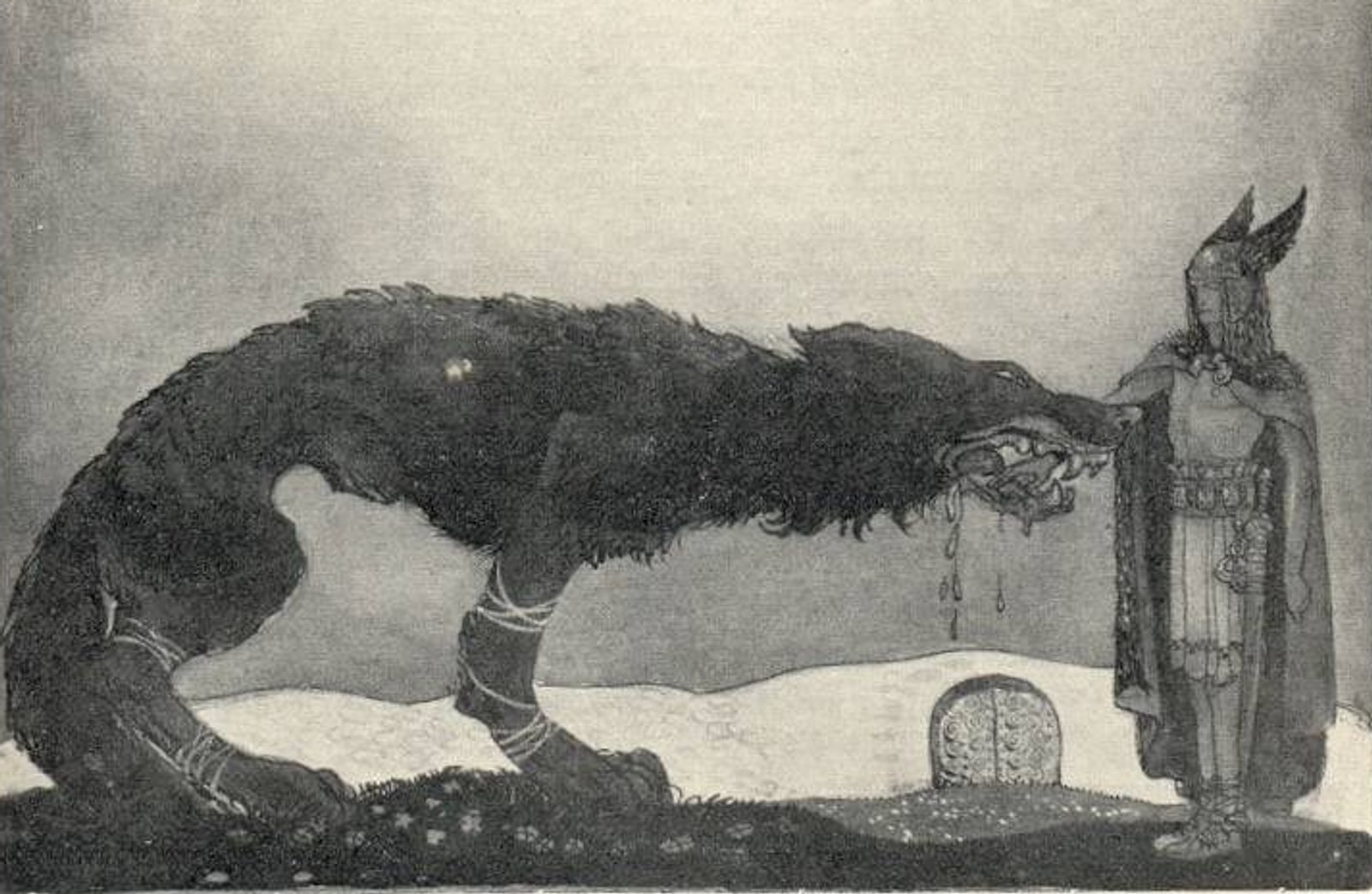
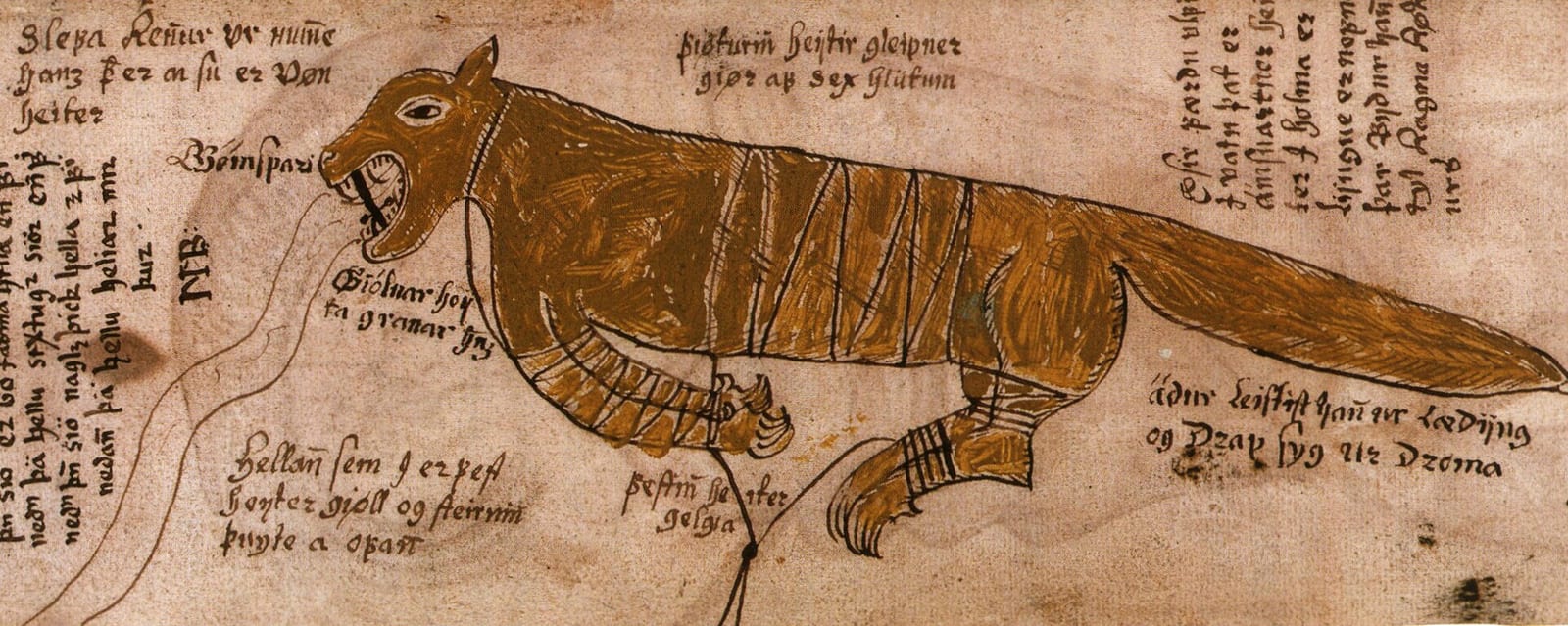
First there is Fenrir, the monstrous wolf, son of Loki. Fearing him, the gods had once bound him with a magical fetter called Gleipnir-but only at the price of the god Tyr losing his hand in the doing. At Ragnarok, Fenrir tears free. His jaws gape so wide they touch the sky, and he swallows Odin himself. The Allfather, wisest of all gods, falls to the wolf-just as the seeress foretold.
Then comes Surtr, the fire giant from Muspelheim, the realm of flame in the south. He wields a blazing sword brighter than the sun and crosses into the world of the gods over the shattering rainbow bridge Bifröst. In the end Surtr hurls his fire across all nine realms. The entire cosmos burns.
The other monsters rise as well: the world serpent Jörmungandr climbs from the sea, Loki leads the dead out of Helheim, the frost giants march to battle. Everything that was ever bound or banished returns for this single day.
The Death of the Gods
The last battle is fought on the field of Vígríd, and it has almost no victors. Nearly every duel ends with the death of both fighters-a cruel symmetry.
- Odin is swallowed by Fenrir. His son Vidar avenges him and tears the wolf apart.
- Thor slays the world serpent Jörmungandr-but staggers only nine steps before he dies of its venom.
- Tyr and the hound of Hel, Garm, kill one another.
- Loki and Heimdall, eternal adversaries, fall by each other’s hand.
- Freyr dies against Surtr because he had once given away his good sword-a detail the Norsemen preserved for a reason.
Then the world sinks. The stars fall from the sky, the earth slips beneath the sea, the fire devours what remains. It is a complete, uncompromising end.
The Rebirth - Why Ragnarok Is No Mere Doom
And here Ragnarok parts ways with every other vision of the world’s end.
For the story does not stop at the fire. The Völuspá goes on: from the sea a new earth rises, green and fresh, and the fields bear fruit though no one has sown them. Some of the gods survive-Vidar and Vali, sons of Odin, along with Modi and Magni, the sons of Thor, who inherit Mjölnir. And Balder, the shining god who had died before, returns from the land of the dead.
Humankind endures, too. Two people, Lif and Lifthrasir, have hidden themselves in a grove called Hoddmímir and emerge again to repopulate the world.
This is the real, deeper Ragnarok meaning: not annihilation, but renewal. The old order, weighed down by broken oaths and guilt, must pass away so that something purer can begin.
Balder - the Death That Sets It All in Motion
Strictly speaking, Ragnarok does not begin with the Fimbulwinter but far earlier-with a single, quiet death that changes the gods forever.
Balder, Odin’s shining son, is reckoned the fairest and most beloved of all the gods. Yet he is troubled by dark dreams that foretell his death. His mother Frigg therefore takes an oath from every thing in the world to do him no harm. Only the humble mistletoe she passes over-too young, too small, she thought.
Loki learns of this. He shapes a dart from the mistletoe and places it in the hand of the blind god Höd, while the other gods throw weapons at the now seemingly invulnerable Balder for sport. The dart strikes home. Balder dies. And because Loki also contrives to prevent his return from the land of the dead, the doom is sealed.
With Balder’s death, the light leaves Asgard. Snorri tells this episode as the turning point after which the end draws unstoppably closer. As punishment the gods bind Loki to a rock with the entrails of his own son, a serpent above him dripping venom onto his face. There he lies-until, at Ragnarok, he tears free and returns with the powers of chaos.
What Ragnarok Reveals About the Vikings
Why would a people devise a faith in which even their own gods lose?
Perhaps because it was honest. The Vikings lived in a hard, unpredictable world of cold, sea and war. A faith that promised eternal bliss would have said little to them. A faith that said instead-the end is coming, it cannot be escaped, and you fight with honour anyway-that suited their lives.
Ragnarok is therefore less a threat than a stance. It teaches that courage does not depend on whether you win. That even Odin cannot escape fate, but meets it with open eyes.
And in the end, when the ash has settled, green grass grows over the scorched ground. Perhaps that is the most comforting message a myth of the world’s end can possibly give.