Runes & Symbols
Understanding Runes: The Elder Futhark and the Language of the Norsemen
What do the runes really mean? An accessible introduction to the Elder Futhark—its origins, meaning, and why runes were far more than an alphabet.
Contents
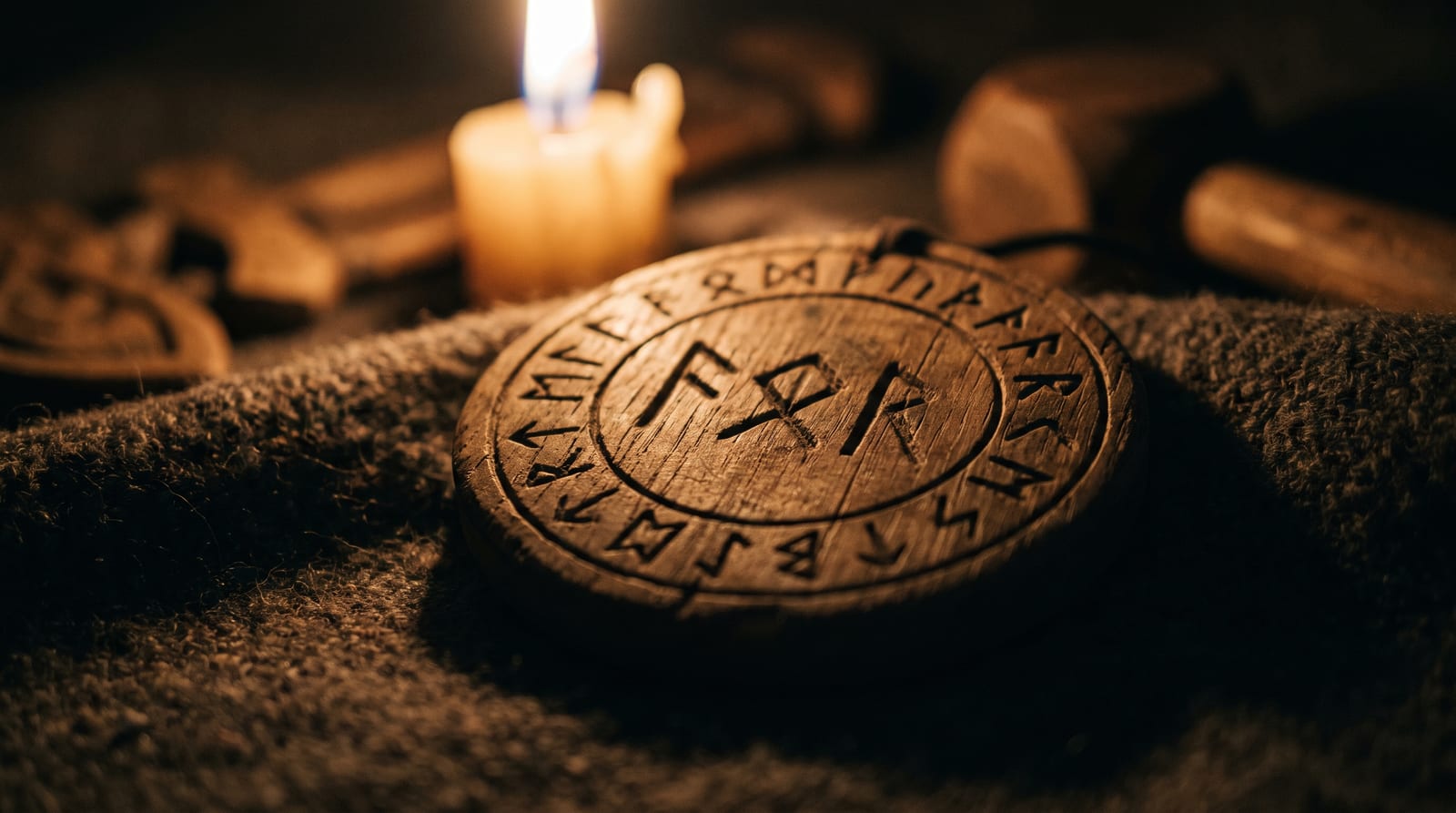
If you ever spot a rune tattooed on someone’s arm or set into a piece of jewellery, the odds are good that it comes from what we call the Elder Futhark. But what do these angular symbols actually mean—and why are they so straight, so sharp-edged, so unlike our own flowing script?
The answer to that last question is surprisingly practical. But more on that in a moment.
Where the Strange Name Comes From
“Futhark” is not some mystical term but simply a mnemonic. It is built from the sound values of the first six runes: F – U – Þ (th) – A – R – K. In exactly the same way our word “alphabet” is stitched together from the Greek letters alpha and beta.
The Elder Futhark comprises 24 characters and was in use from roughly the 2nd to the 8th century—that is, long before the Viking Age proper. Later it was simplified into the shorter Younger Futhark of only 16 runes, and it was this version that the Vikings themselves actually used.
Why Runes Look So Angular
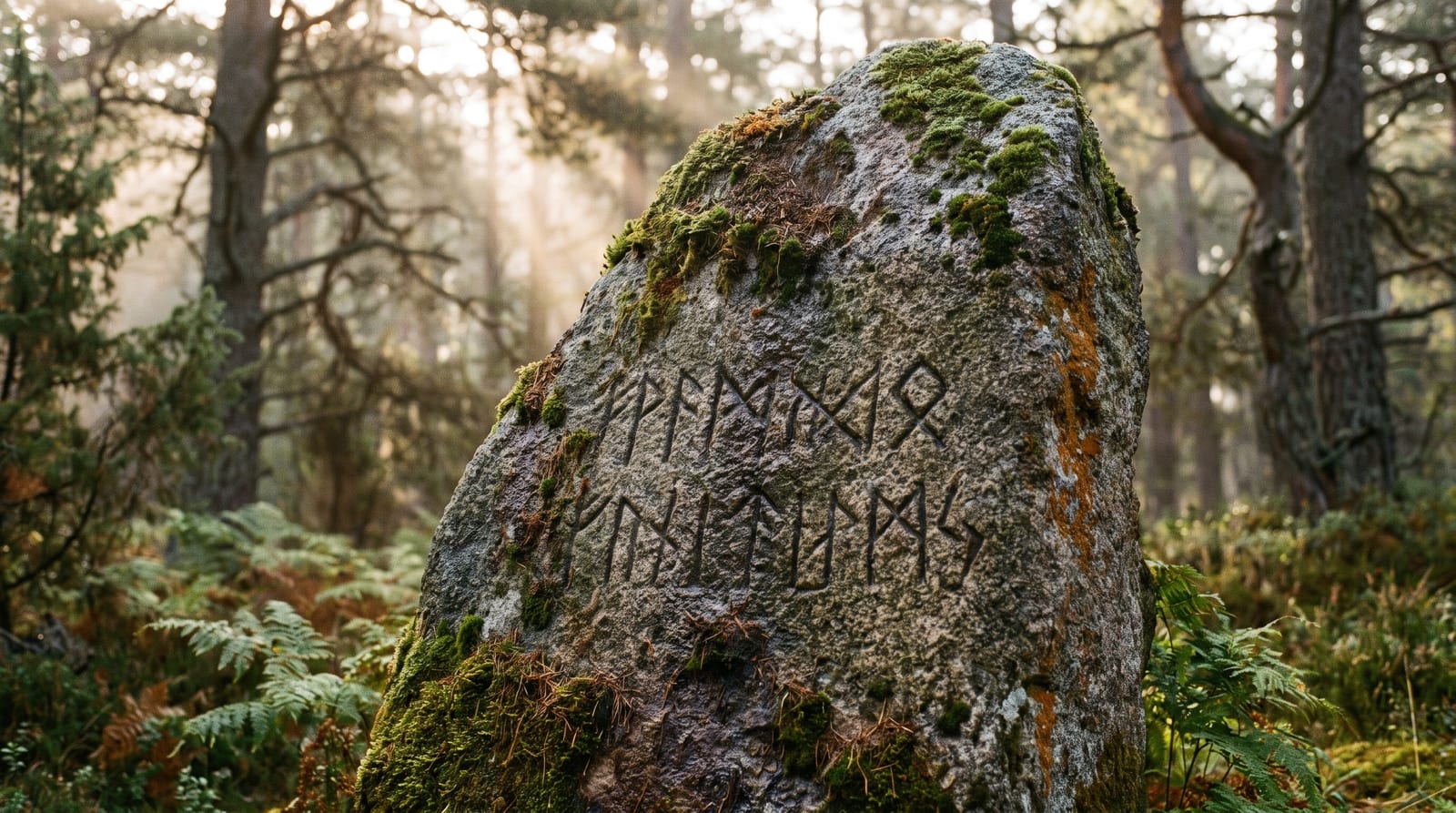
Here is where the practical explanation comes in. Runes were not written with ink on parchment; they were carved—into wood, bone, or stone.
And anyone who has ever tried to whittle wood knows the trouble: horizontal lines run with the grain and blur into it. Rounded shapes are laborious. So the carvers consistently avoided both. What remained were vertical and diagonal strokes—the distinctive, angular form we associate with runes today.
It is a lovely example of how the tool shapes the writing.
Every Rune Is a Word
This is the point at which runes become genuinely fascinating. Unlike our letters, which merely represent sounds, each rune also carried a meaning of its own. Its name was, at the same time, a concept drawn from the everyday world of the Norsemen.
A few examples from the Elder Futhark:
- ᚠ Fehu – “cattle, property, wealth.” Prosperity was measured in livestock.
- ᚢ Uruz – “aurochs.” Strength, wild and primal force.
- ᚦ Thurisaz – “giant” or “thorn.” An ambivalent sign, bound up with Thor.
- ᚨ Ansuz – “god” or “Odin.” The divine rune of wisdom and the spoken word.
- ᛗ Mannaz – “man.” Community, and the very fact of being human.
It is easy to imagine how a script like this became more than mere communication. When the sign for “god” or “strength” is also a letter, the line between writing and invoking begins to blur.
Runes and Magic—What’s Really There
Here a sober look is worthwhile, because a great many modern myths cling to the runes. Were runes magical?
The honest answer is: partly. The overwhelming majority of surviving runic inscriptions are astonishingly mundane. They say things like “Thorstein made this stone for his father,” or even “keep the comb clean.” Runes were, first and foremost, an everyday script.
But there is another side, too. In poetry—in the Edda, for instance—Odin wins the runes through an act of self-sacrifice, hanging for nine nights on the world-tree Yggdrasil. And there really are inscriptions bearing protective formulas, curses, and incantations. The word rún itself means, in Old Norse, something close to “secret” or “whisper.”
Runes, then, were both: the tool with which a trade was noted down—and the signs with which one called upon the powers of fate.
How to Take It Further Yourself
If the subject grips you, the best way in is to write out the 24 characters of the Elder Futhark yourself—carved, ideally, rather than penned. You will feel at once why they look the way they do.
And if you want to set your own name in runes, bear in mind that there is no one-to-one translation. Runes represent sounds, not our letters. A “C” becomes, depending on how it is pronounced, either ᚲ Kaunan or ᛊ Sowilo—and that is part of the charm.
The Norsemen themselves would probably have taken a level-headed view of it. For them the Futhark was a tool like a knife or an oar: useful, everyday—and, on occasion, sacred.